The Department of Housing and Urban Development (HUD) is receiving significant pushback for its proposed rule that would eliminate prorated housing assistance for families with mixed immigration statuses.
The proposal was announced in February, with HUD stating in a press release, “Illegals, Ineligibles, and Fraudsters: Pack Your Bags.” HUD Secretary Scott Turner positioned the change as closing a “roommate loophole,” saying it would “guarantee that all residents in HUD-funded housing are eligible tenants.”
But opponents argue that eliminating the prorated rental assistance model may increase homelessness, with mixed-status families in HUD housing having to choose between separating their household or remaining together and facing potential eviction.
A 60-day public comment period on the proposed rule change opened on Feb. 20 and will continue until April 21. As of Wednesday at 12:30 p.m. EDT, there were 1,585 responses.
Scotsman Guide has reviewed all the responses, which include comments from individuals, politicians, municipalities and a variety of community organizations.
Of the public comments, 1,443 appeared to be opposed to HUD’s change (91%); 111 were in favor (7%); and 2% were either duplicate responses or comments without a clear stance. Of the submissions, 42% of those in favor were submitted anonymously, and 23% of those opposed were submitted anonymously.
HUD had claimed in February the proposed rule would “ensure that taxpayer-funded housing benefits only go to American citizens and eligible individuals for the first time in history.” It also stated that “approximately 24,000 illegal aliens, ineligibles, and fraudsters in 20,000 ‘mixed status households’ benefit from HUD assistance.”
On Monday, HUD responded briefly to a list of questions from Scotsman Guide, stating that after the public comment period ends, it would review the comments and publish a final rule with an effective date, “consistent with the regulatory process.”
HUD also told Scotsman Guide it “anticipates that any illegal immigrants or ineligible noncitizens that are removed from federal housing will return to their home country.”
Additionally, the department said it estimates the proposed rule would deliver between $167 million and $218 million in housing assistance to “fully eligible American households who are currently on waitlists,” stating that “only 1 in 4 eligible Americans who apply for HUD assistance actually receive it.”
House Democrats voice opposition
Twenty-one Democratic members of the U.S. House of Representatives’ Committee on Financial Services were among those who submitted formal opposition to the proposed HUD rule, saying it would “separate families with mixed immigration status and evict them from the major HUD housing programs.”
Led by ranking member Maxine Waters of California, the lawmakers claimed the proposal “will ultimately exacerbate the affordable housing crisis for citizens and immigrants alike by worsening the very housing conditions that HUD has a mission to improve: stability, homelessness, affordability and poverty.”
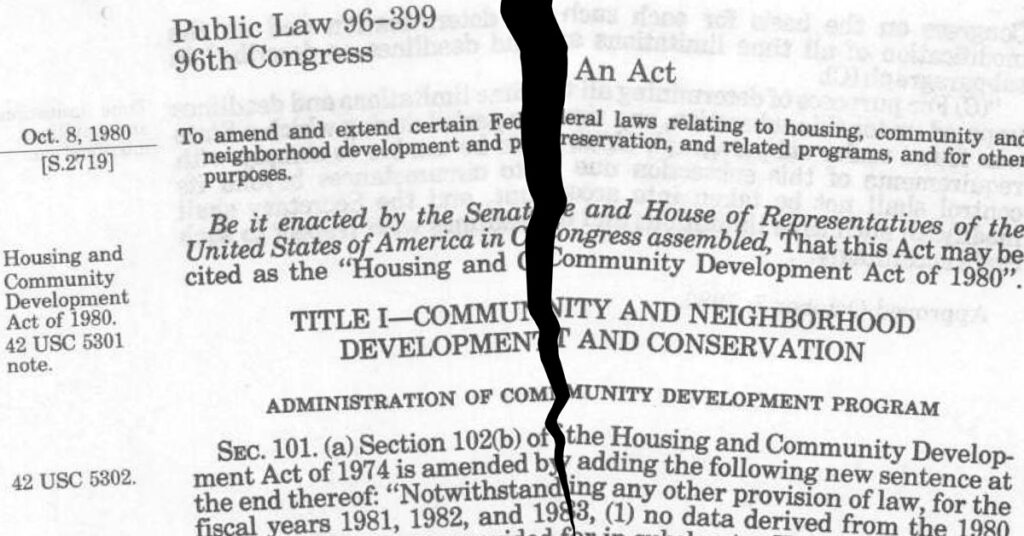
The proposed rule change pertains to Section 214 of the Housing and Community Development Act of 1980. The law has undergone several modifications over the ensuing decades, with the prorated assistance model established in 1995.
Currently, eligible mixed-status families — meaning those with members whose eligibility or ineligibility for HUD housing assistance programs differs based on citizenship or immigration status — receive partial rental assistance that is prorated to cover only the eligible family members. The proposed rule would limit that decreased assistance period to a 30-day window.
The Democratic lawmakers argue the proposed rule change reflects a fundamental misinterpretation of the existing law, claiming the intent of Section 214 is to limit housing assistance to eligible individuals and “preserve family integrity by allowing families with mixed immigration status to live together under the same roof.”
“HUD’s proposal to prohibit mixed status families from living together in HUD-subsidized housing and to end prorated rental assistance for these families ignores this congressional intent and is wholly inconsistent with the policy that Congress crafted in Section 214,” the letter stated.
The lawmakers also expressed concern over the proposed use of the Department of Homeland Security’s Systematic Alien Verification for Entitlements (SAVE) system to verify citizenship status of HUD residents.
“SAVE is not a reliable tool for proving a person’s citizenship in part because this function is so new,” they stated. “With reports of SAVE inaccurately flagging citizens as noncitizens and kicking them off voter rolls, we are wary of HUD’s proposal to use this system to verify status for housing benefits and its negative impact on U.S. citizens in the housing programs.”
Family impacts highlighted
Rep. Nanette Diaz Barragán, D-Calif., was among 52 members of the lower chamber of Congress who penned a separate letter opposing the HUD rule changes. Elected to the House in 2016, Barragán is the first Latina to represent California’s 44th Congressional District, located just south of Los Angeles.
In a statement shared with Scotsman Guide, Barragán said: “HUD’s proposed rule is a punishment to working families who are at risk of losing their home. Under current policy, only the residents with eligible immigration status within a home can receive housing assistance.”
“HUD’s proposal would make entire households ineligible for assistance just because one person in the home lacks an eligible immigration status,” she continued. “The fight is not over. The public will have 60 days in which to comment on this proposed rule — I encourage everyone to join me and call out HUD’s ridiculous proposal.”
Among those who are in favor of the proposed rule, one commenter identified as Mary Brennan maintained that the changes would “prevent indefinite benefits to ineligible individuals, and ensure limited resources go to American families who truly qualify,” adding that “these reforms promote fairness, protect scarce HUD funding, and reflect the Administration’s commitment to responsible stewardship of public resources.”
Another, identified as LeShun Coleman of Los Angeles, cited firsthand knowledge of “how difficult it is for eligible families to access housing assistance during times of crisis,” believing that “establishing clear and consistent verification procedures will help protect the integrity of these programs and ensure that housing assistance reaches the eligible families who depend on it.”
No organizations submitted attached statements in favor of the proposed rule. The majority of individuals commenting in favor did not focus on the policy aspects, but instead were proponents of not allowing anyone in the country who are not U.S. citizens.
A December 2025 report released by the Center on Budget and Policy Priorities (CBPP) found that nearly 80,000 people in mixed-status HUD-assisted households would have to separate or lose their rental assistance based on the proposed rule.
Of the projected 79,600 people impacted, children would be among the hardest hit, the center warned. Nearly 37,000 children — 35,400 of whom are U.S. citizens — would lose their rental assistance under the proposed rule, according to CBPP’s analysis of 2024 HUD administrative data. These figures were cited by many of the public commenters who are opposed to the rule change.
Popular Democracy in Action, a network of grassroots organizations, pointed to the displacement of children as a major reason in opposing the proposal.
“They would be deprived of assistance not because of their own ineligibility but solely because they live in a mixed-status household,” the group stated. “The rule would force many families to choose between staying together and retaining housing assistance.”
Along with sharing comments, many groups attached letters opposing the proposed change. Some of those organizations included:
- California Association of Housing Authorities
- Kentucky Housing Corporation
- City of Oceanside, Calif.
- Center for Disability and Elder Law
- Housing Oregon
- Los Angeles County Board of Education
- Missouri Coalition Against Domestic and Sexual Violence
- Family Rescue
- Housing authorities of the cities of Santa Barbara, San Luis Obispo and Santa Cruz, Calif.