
House Financial Services Committee leaders have introduced the Housing for the 21st Century Act, a comprehensive legislative package aimed at tackling the nation’s affordable housing shortage.
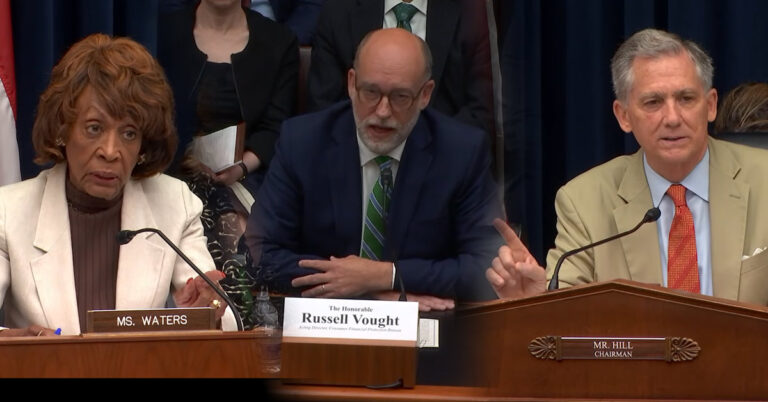
Committee chairman French Hill, R-Ark., and ranking member Maxine Waters, D-Calif., unveiled the bill, which has already garnered immediate endorsements from major mortgage and housing advocacy groups ahead of a scheduled committee markup on Dec. 17.
The legislation seeks to modernize outdated federal housing programs and reduce regulatory barriers to construction — efforts that industry leaders argue are critical as affordability hits historic lows.

With the median U.S. household income now sufficient to purchase a home in only 128 metropolitan areas, down from 287 in 2019, the bill proposes a coordinated strategy to expand supply, streamline Federal Housing Administration (FHA) limits and improve financing for rural and manufactured housing.
“Housing affordability is a bipartisan issue that demands federal, state and local solutions,” said Bob Broeksmit, president and CEO of the Mortgage Bankers Association (MBA), in a statement Friday.
“MBA welcomes the heightened focus on this important issue from both the Trump administration and Congress,” he added.
The bill is co-led by Rep. Mike Flood, R-Neb., who chairs the Housing and Insurance Subcommittee, and ranking subcommittee member Emanuel Cleaver, D-Mo., signaling broad cross-party support for the initiative.
Key measures in the package include updating FHA multifamily loan limits, streamlining federal housing program offerings and improving financing options for Rural Housing Service loans. It also provides targeted support for construction and rehabilitation while fostering better coordination among federal agencies.
David M. Dworkin, president and CEO of the National Housing Conference, praised the bill for addressing the “housing affordability crisis” that he noted now affects middle-class Americans as well as low-income households.
“The housing shortage did not happen overnight,” Dworkin said. “We got into this crisis one unit at a time, and we will get out of it the same way.”
The MBA highlighted the bill’s alignment with the Senate’s parallel ROAD to Housing Act, led by Senate Banking Committee Chairman Tim Scott, R-S.C., which the association also supports. The ROAD to Housing Act was recently stripped from the House version of the 2026 National Defense Authorization Act, a broader “must-pass” defense bill.
Beyond supply expansion, the Housing for the 21st Century Act emphasizes transparency, consumer protections and accountability in the housing market.
As lawmakers prepare to mark up the legislation next week, proponents are optimistic about its chances.
“We will work with House and Senate leaders on both sides of the aisle to reconcile differences and to build momentum toward pushing meaningful legislation across the finish line as soon as possible,” Broeksmit said.