Rents for zero- to two-bedroom apartments in December declined for the 29th consecutive month on an annual basis as housing inflation continues receding from pandemic-era excesses.
However, multiple years of easing rents is “increasingly concentrated among higher-priced rentals, leaving many lower-cost renters with little relief,” says a new report from Realtor.com.
The median asking rent across the 50 largest U.S. metros by population was $1,689 last month, down 0.7% year over year. Rent declines are flattening, however, with that 70-basis-point drop in December being the smallest since March.
“National rent declines have been remarkably persistent, but the distribution of that relief matters,” said Danielle Hale, chief economist at the listings platform, in her analysis.
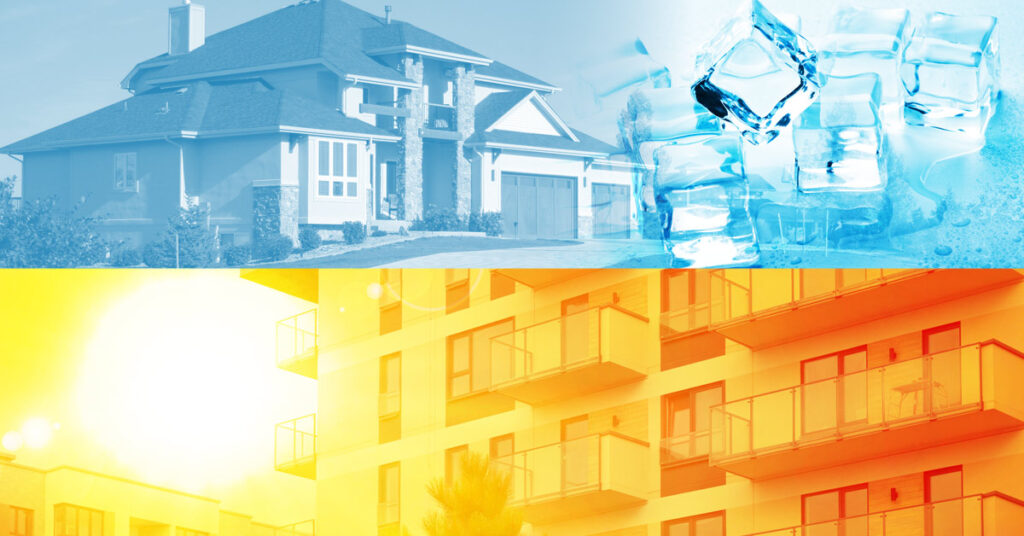
From December 2019 to December 2025, median asking rents across all price tiers increased 16.9%. But the 25th percentile of lower-priced units climbed 19.9% compared to 12.5% price growth for the 75th percentile of most expensive rentals.
In another example of how the K-shaped economy manifests in housing, “much of the recent rent relief has been felt at the top of the market, while renters seeking more affordable options continue to face outsized price pressure,” the rent report concludes.
The findings arrive on the heels of a report from investor-focused real estate analytics provider Yardi Matrix indicating that typical multifamily rents declined in December, ending 2025 at essentially the same level ($1,737) as the start of the year.
December was the first month since 2020 that rents failed to rise nationally, per Yardi Matrix data, as a weak fourth quarter erased gains made earlier in the year. Renting is now more affordable than owning a home with a mortgage in every one of the nation’s 100 largest metropolitan areas, LendingTree reported this week.
Shelter inflation accounts for roughly 40% of the consumer price index (CPI), which the Labor Department reported this week rose by 2.7% year over year in December, unchanged from the annual gain recorded in November.
Taken together, price signals from the rental market suggest that most households’ largest monthly expense is responding positively to the Federal Reserve’s multiyear campaign to bring inflation back down to its stated 2% target for annual growth.
Speaking on Wednesday at an economic forum in Athens, Greece, Fed Governor Stephen Miran cited multiple years of declining rent growth as evidence of consistent disinflationary trends in service inflation, supporting his calls for significant rate reductions in 2026.
The Labor Department released a government shutdown-delayed report on supply-chain inflation for November this week showing wholesale prices reheating somewhat heading into the final month of the year. Those pressures may emerge as future gains in the CPI.
But the data suggests that lower-income households are not feeling the same degree of relief in cooling shelter inflation as higher-income households, who are better positioned to weather the U.S. central bank’s higher-for-longer rate campaign.
“Many renters shopping for more affordable homes may not feel much change,” added Hale, “because lower-priced rents have risen more since 2019 while the biggest markdowns have shown up at the high end.”
A housing market that has been prohibitively expensive for typical earners for multiple years has thereby increased demand for rentals among marginal buyers who have been stuck renting, leading to upward price pressure on more affordable rental units.
“With more concessions and slower price growth at the high end, there’s less urgency to buy and fix the bulk of monthly housing costs,” said Joel Berner, a senior economist at Realtor.com, “while competition remains tight for renters seeking the most affordable options.”