Immigration and Customs Enforcement (ICE) officers have been patrolling metropolitan Minneapolis and its twin city St. Paul for close to a month, on a stated mission to apprehend and deport city residents lacking legal status to live in the U.S. while pursuing investigations into social services fraud across Minnesota.
Federal agents have aggressively detained citizens and noncitizens alike in their operations.
Just five years after the death of George Floyd in May 2020, following the shooting death of Renee Good by ICE officers on Jan. 7, Minneapolis has led the national news cycle once again with images of protesters toe to toe with federal agents, streets clogged with smoke and traffic, and crowds calling for the removal of federal immigration enforcement from the city.
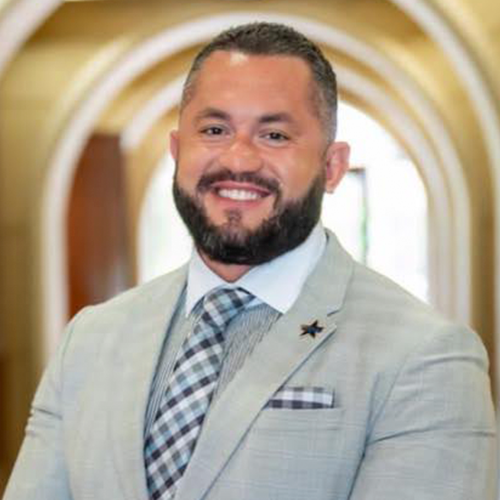
“What people see on their phones of the protests, being here, it’s worse than what you see,” says Alexander Gripp, a mortgage loan originator who has lived in downtown Minneapolis for the past decade. People who see coverage of protests and clashes with federal agents on social media often miss the broader point, he says.
“Minneapolis is an amazing city filled with strong and resilient people and I’m really proud of the way they’ve rallied around each other as they’re being terrorized,” said the 35-year-old, who joined brokerage CFR Mortgage in 2021 after pivoting out of a budding career in accounting. Gripp closed $20 million in 2025.
The government’s controversial intrusion into the Minnesota state capital escalated on Friday when the U.S. Department of Housing and Urban Development (HUD) announced it was launching a fair housing investigation into the city’s housing policies, alleging that “racial favoritism” in Minneapolis rental and housing policies violates the Fair Housing Act, a 1968 civil rights law that broadly prohibits discrimination in access to housing.
In a Friday press release unveiling the investigation, Craig Trainor, assistant secretary for Fair Housing and Equal Opportunity at HUD, described Minnesota as “a Third World failed state, where criminals engage in massive, unchecked fraud and decent Minnesotans are held captive to the riotous impulses of left-wing cultural arsonists.”
Mortgage professionals who work on the front lines of home lending in Minneapolis refute those claims.
“Living here, it’s been a little crazy,” said Steve Conklin, co-owner of Satori Mortgage, speaking with Scotsman Guide about the intersection of escalating federal intervention in Minneapolis and the city’s housing market, now under scrutiny. “It’s been eerie.”
The federal government stepped up its presence in Minnesota in late December amid ongoing investigations by the U.S. Department of Homeland Security, which oversees ICE, into rampant fraud involving federally funded programs for health care, nutrition assistance and housing. Federal prosecutors allege that billions of dollars have been stolen, and a majority of the defendants named by prosecutors are Somali or Somali American.
Conklin says the current spate of protests and surging federal presence have increased uncertainty for borrowers in his pipeline “a little bit.” His optimism for the spring market remains strong due to higher volumes of affordable listings on the market than a year ago and corporate return-to-work mandates bringing employees of a number of the Fortune 500 companies headquartered in Minnesota back to the state.
“We have a large database of [Spanish-speaking] and Somali clients, but very few have been affected by what’s happening,” said Conklin, who was raised in the Minneapolis suburbs and has been originating loans in the area since joining Satori more than two decades ago.
Mortgage activity in January has already been “10 times busier than 2025,” says Conklin, though inbound leads from the Hispanic community “have been a little bit slower.” He says first-generation homebuyers comprise a large percentage of the city’s purchase volume as the metro area has a large and active immigrant population.
“Air traffic control doesn’t make the news for a successful flight, they just make the news when there’s a crash,” says Gripp, of CFR Mortgage. “I think that when people think about the protests, they don’t focus on how a person was murdered by the federal government, but what that means for real estate is not that everyone just wants to leave Minneapolis,” contesting the crime narrative the Trump administration has turned on Minneapolis.
“The city’s still drawing people to move here and put down roots,” he said.
Gripp, Conklin and other Minneapolis mortgage professionals who spoke with Scotsman Guide conveyed optimism for a strong spring homebuying season as affordability continues to make incremental gains. Some voiced that optimism with a nose-to-the-grindstone outlook on the potential impacts of current protests and federal activities.
“I haven’t seen a dramatic change in where people are moving or want to live, but I also don’t focus on that stuff,” says Justin Boldthen, a mortgage loan originator with U.S. Bank who has been in and out of the industry for the past 20 years.
Boldthen looks forward to a stronger purchase market this year after sitting out much of 2025 with major health issues. “There are some people who want to move to the city and some people who want to move to rural areas,” he says. “I’m just focused on where I’m going to get my next loan.”
Others shared concerns with Scotsman Guide that a protracted federal presence in the city, and escalating retaliation from the Trump administration, could put the spring homebuying season in jeopardy — after three consecutive years of low production.
Roughly five years after the murder of George Floyd in May 2020 sparked nationwide protests — and subsequent clashes with federal agents — during Trump’s first term, current protests feel like a reverberation.
Alex Mysinek has been originating mortgages in the Minneapolis suburbs since 2020. A former executive chef, the 40-year-old branch manager for The Money Store says he does not see a lot of out-of-state movers buying homes in the metro area, but rather, a trend out of the city and into the suburbs fueled by volatility downtown.
“I think it will actually make our business stronger as people decide they don’t want to deal with that in the city and move out,” says Mysinek, who lives about halfway between downtown Minneapolis and Bloomington, home to the Mall of America, south of the city.
Mysinek closed 77 loans in 2024, 90 in 2025 and plans to exceed 120 loans in 2026 by incorporating first-time homebuyer webinars into his leads strategy. But it’s too soon to tell, he says, if the current protests and federal immigration crackdown are forefront on the minds of prospective homebuyers in the city.
“The market’s definitely been stronger, but it’s not necessarily flowing into Minneapolis,” says Mysinek.
That sentiment was echoed by Eric House, who founded his brokerage, MLS Mortgage, more than 20 years ago in suburbs northeast of downtown. Loan production has been slow the past few years, House says, though it “helps being smaller to adapt a little bit quicker.”
“I think it’s a little too quick for any strong commentary for what we’ve been seeing in the past couple of weeks,” says House, who was raised in the Minneapolis suburbs. “I get the general sense that people aren’t super stoked to moving in next to where people are protesting.”
House attaches the likelihood of an impact on the upcoming homebuying season to the duration of the ongoing standoff between state and federal leaders. The Trump administration drew its proverbial pistols on Tuesday, firing off subpoenas to Minneapolis Mayor Jacob Frey, Minnesota Governor Tim Walz, the state’s attorney general and other Democratic state officials being investigated for their response to the immigration crackdown.
“A lot of people are not wanting to sell their homes because of their low rates,” said House. “When people are distracted by those other things, they’re not thinking about buying a home either.”
If heavy-handed intervention in Minneapolis, like the potential activation of the Insurrection Act, continues for several months, “it’s more likely than not that it’s going to have a negative impact on housing this spring,” says House. If it lasts for a month of two, he says, the spring homebuying season should avoid any lasting impact.
Michael Kopiecki is the owner of M&M Mortgage, a brokerage he founded in 2006. The 61-year-old joined the mortgage industry during the savings and loan crisis in the 1980s and says that Minneapolis residents mostly just want life to return to normal.
“The average voter in the metropolitan area is not looking for this type of protest,” says Kopiecki. “They’re sick of the protests, sick of the immigration crackdown, sick of being in the news cycle,” while describing the alleged social services fraud as a “black eye” for the city.
He warns, however, that escalating actions by the federal government in response to ongoing fraud investigations threaten funding for lenders. The U.S. Department of Agriculture, which backs mortgages on homes in rural areas, suspended more than $120 million in federal assistance on Jan. 9 that was earmarked for programs in Minnesota.
“If they cut off funding for FHA loans,” says Kopiecki, referring to the HUD-administered Federal Housing Administration insurance program for low-downpayment borrowers, “that could be a real problem for the metro area, and that would mean a few people wrecked it for everybody.”
No one knows how long a heightened federal presence in Minneapolis may last, separate from escalating legal fights between the local, state and federal entities. But mortgage companies in the city may find the spring homebuying season hangs in the balance of a delayed resolution.
Kopiecki says a prolonged intervention “is really going to impact our state, not just in housing, but business formation as well.” Still, he is optimistic about the homebuying season. Competitive listings are selling at or over asking price, though they are receiving just a handful of competitive offers compared to “hundreds of offers” during the pandemic.