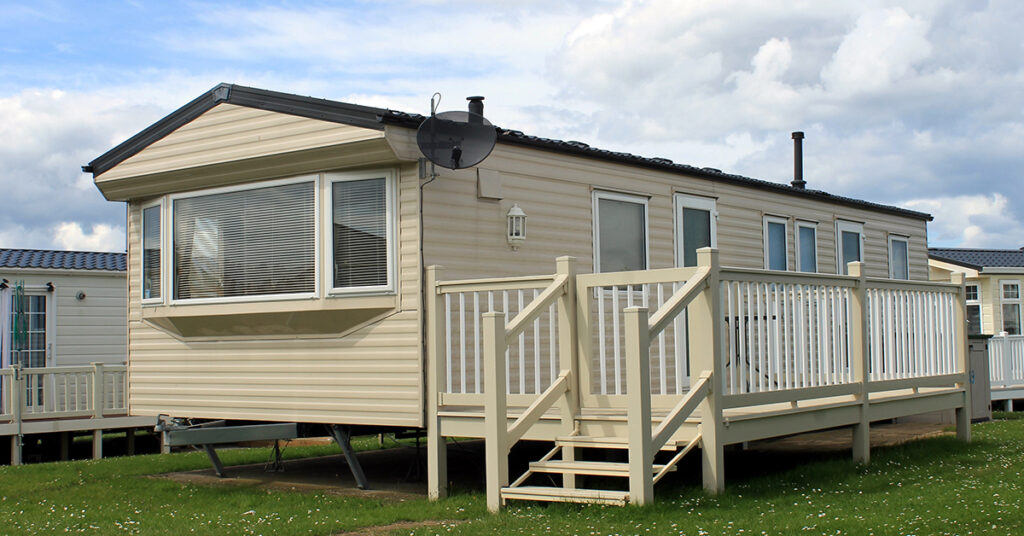
Manufactured homes offer a promising solution to the nation’s severe housing shortage, but outdated state laws classify them as personal property rather than real estate. This is locking buyers out of traditional mortgages and costing them tens of thousands of dollars in extra financing fees, according to a report from The Pew Charitable Trusts.
The issue brief, released on Feb. 17, reveals that treating manufactured homes like vehicles instead of real estate forces many buyers into expensive “home-only” or chattel loans. Reforming these state titling laws to classify manufactured homes as real estate could save a typical borrower roughly $49,000 over the life of a $100,000 loan, expanding access to affordable homeownership, the Pew report found.
The United States is facing a shortage of between 1.5 million and 7.1 million housing units, according to Zillow research cited in the analysis. Manufactured homes, Pew posits, represent an affordable alternative to bridge this gap. Because they are built in a factory, manufactured homes require less labor to produce, and their average cost per square foot is roughly half that of a site-built home, the report noted, citing U.S. Census data.
Pew emphasized that modern manufactured homes must conform with federal building standards set by the U.S. Department of Housing and Urban Development, ensuring they are comparable in safety and durability as site-built dwellings.
Despite this, most states automatically title manufactured homes as personal property by default, treating them similarly to cars or boats. To qualify for real estate titling — and enable traditional mortgages that come with it — buyers typically must own the land, place the home on a permanent foundation and undergo a complex, time-intensive process of legal filings and home inspections to convert the title.
In Pew’s view, these hurdles are causing manufactured-home buyers to miss out on the lower interest rates and consumer protections of standard mortgages. Between 2018 and 2024, approximately 366,000 manufactured home buyers used home-only loans, representing 44% of those who financed their purchase, according to data analyzed by the group. And at least 88,000 of these borrowers owned their land and were likely eligible for a standard mortgage, yet still ended up with costlier home-only financing.
The financial disparity is substantial. According to Pew’s analysis, standard mortgage borrowers pay roughly 10% less per month than if they had used a home-only loan. The researchers highlighted New Hampshire, a state that allows manufactured homes connected to utilities to be titled as real estate regardless of land ownership. In New Hampshire, a home-only mortgage on a $100,000 loan would cost a median of $745.57 per month, compared to a national average of $826.09 for a typical personal property loan. With the lower rates and shorter loan terms, New Hampshire borrowers would save roughly $49,000 over the life of a loan.
The report noted there is growing momentum to remove unnecessary regulatory barriers holding back owners of manufactured homes. For example, Washington state recently enacted legislation allowing buyers in resident-owned communities to title their homes as real estate, joining New York state in manufactured home titling reform.