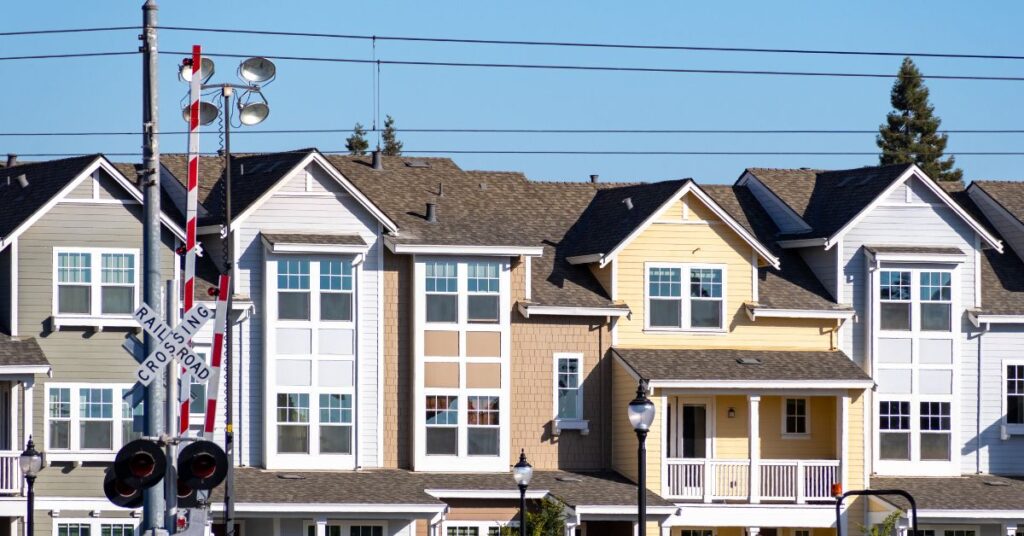
National rents maintained a sustained decline in April, as new units expected to hit the market in coming quarters are projected to keep downward pressure on prices into 2027.
Median rents declined $29, or 1.7%, on an annual basis to $1,673 last month, down 5.2% from peak levels recorded in August 2022 but still about 18% higher than April 2019 levels, according to Realtor.com’s recently published rental market report for April.
Continued rent relief appears to be in the pipeline, said the listings platform, as new multifamily projects begin construction at an accelerated pace.

“Many renters have experienced meaningful relief over the past nearly three years, and although completions have slowed, forward-looking indicators are renter friendly,” noted Danielle Hale, chief economist at Realtor.com, in the report.
While multifamily lending volumes plunged 30% on a quarterly basis in the first three months of 2026, according to the Mortgage Bankers Association (MBA), dollar volumes of multifamily loan production were roughly 50% higher than a year ago. Multifamily originations surged in 2025 after slowdowns in 2023 and 2024.
The MBA’s head of of commercial research, Reggie Booker, called the slowdown “consistent with typical first-quarter seasonality” that “does not detract from the broader improvement in market conditions,” dismissing concerns that the quarterly drop may signal deeper sector challenges.
Multifamily developers and builders polled by the National Association of Home Builders (NAHB) last month offered a circumspect outlook, however, reporting confidence in current multifamily production conditions as matching year-ago levels.
But sentiment is split between new multifamily production opportunities and occupancy trends for existing units, even after three years of easing national rents.
The NAHB’s Multifamily Production Index (MPI), which measures outlooks on current production conditions in the apartment and condo market, registered 44 in the first quarter, flat from a year ago and below the 50-point threshold indicating more respondents reporting conditions are poor than good.
Sliding 13 points lower over the year, the NAHB’s Multifamily Occupancy Index (MOI), which measures the multifamily sector’s perception of occupancy rates in existing units, fell to 69 — still exceedingly positive but a notable adjustment lower in aggregate sentiment.
“The MPI and MOI continue to show that the market for garden and low-rise apartments typical of outlying areas is stronger than the market for mid- and high-rise apartments,” said Robert Dietz, chief economist at the home builder trade group. He cautioned in the April survey that “current production rates are unlikely to be sustained through 2027.”
Realtor.com, however, says the nearly 20% annual jump in new multifamily starts in the first quarter bodes well for renters for the foreseeable future, even if the production pipeline narrows. Units typically reach the market within 12 to 24 months after breaking ground, said Hale, “pointing to continued downward pressure on rents well into 2027.”
Multifamily projects under construction averaged 684,000 units on a seasonally adjusted annual basis in the first quarter, more than 11% above the pre-pandemic average of roughly 614,000. While still below a post-pandemic peak annualized pace of 971,000 in early 2024, markets have sustained elevated activity in an era of higher financing costs.
Though units already under construction in early 2026 were 10.6% lower than a year ago, credit spreads benchmarking multifamily mortgages to yields on 10-year U.S. Treasury bonds have tightened over the past year, signaling strong demand for commercial paper, according to CBRE Group, a commercial real estate (CRE) services and investment firm.
In its first-quarter report on capital market activity in CRE lending, the company said margins on multifamily mortgages declined 13 basis points over the year to 136 basis points, which reflects even more dramatic tightening from around 190 basis points in the first quarter of 2024.
CBRE also flagged strong annual lending growth by government-sponsored enterprises Fannie Mae and Freddie Mac, which increased their multifamily purchase caps by more than 20% from 2025 levels to $88 billion per agency for 2026.
Fannie Mae reported in its first-quarter earnings statement that its multifamily acquisitions declined to $17.1 billion from $25.8 billion in the fourth quarter, while Freddie Mac’s new multifamily business activity shrank to $13 billion from $29 billion in the fourth quarter. Between the two agencies, however, CBRE says first-quarter volumes were 35% higher than a year ago.