
The “yes in my backyard” (YIMBY) movement, backed by supply-and-demand dynamics, offers a simple solution to the housing affordability crisis — just build more houses. But some analysts believe that increased supply may arrive through a separate, more inevitable channel.
The baby boomer generation is the largest cohort of seniors in United States history. As they age out of homeownership, some have predicted that a “silver tsunami” of housing supply will cascade onto the market.
Cotality’s analysis of the latest national deed records gives some support to this narrative. A new indicator of inheritance events shows that a record-breaking 340,000 homes were inherited in the 12 months ending in October 2025. This represents more than 7% of all property transfers, higher than the share for any previous year. All of this can be seen in the chart below:
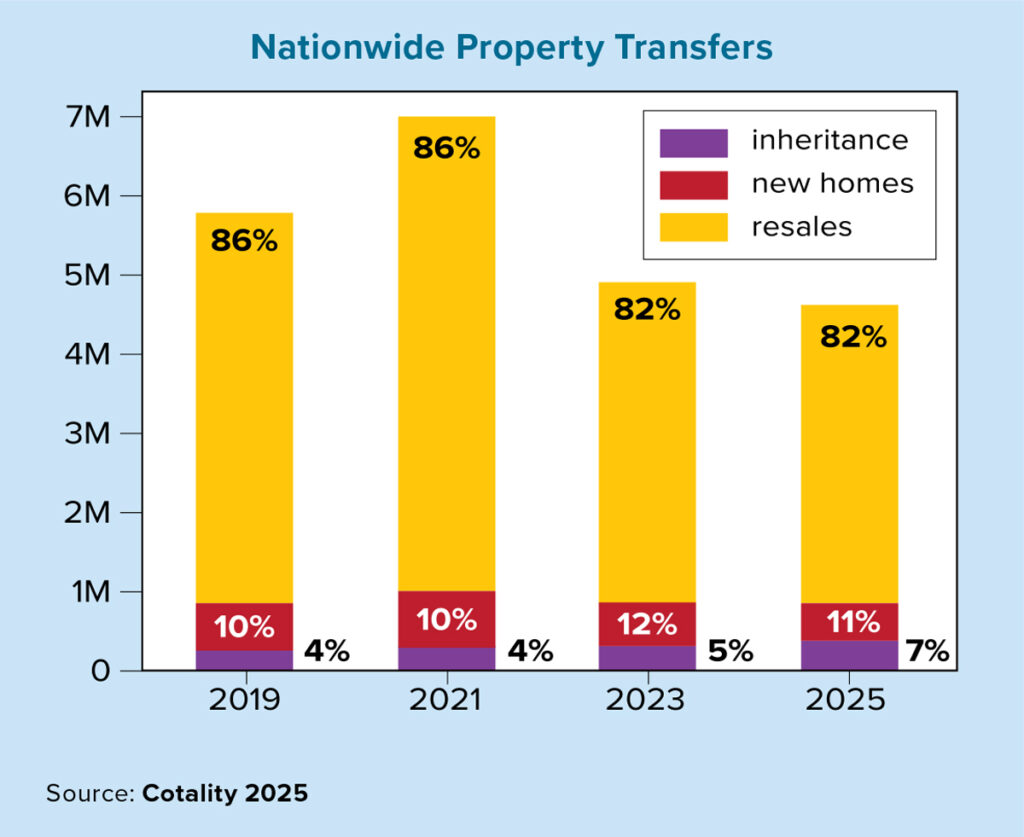
In California, where state tax laws reward inheritance, nearly 60,000 homes were handed down over that 12-month period. That totals more than 18% of all property transfers in California in 2025 — and, for the first time ever, is more than double the number of newly constructed homes sold over the same period.
Are we seeing the beginning of a demographically destined tsunami? Maybe. But Cotality’s analysis of the latest U.S. Census data indicates the wave may not be as big, or arrive as soon, as some hope.
The current generation of seniors is staying in their homes longer than previous generations. We can see this in the following chart:
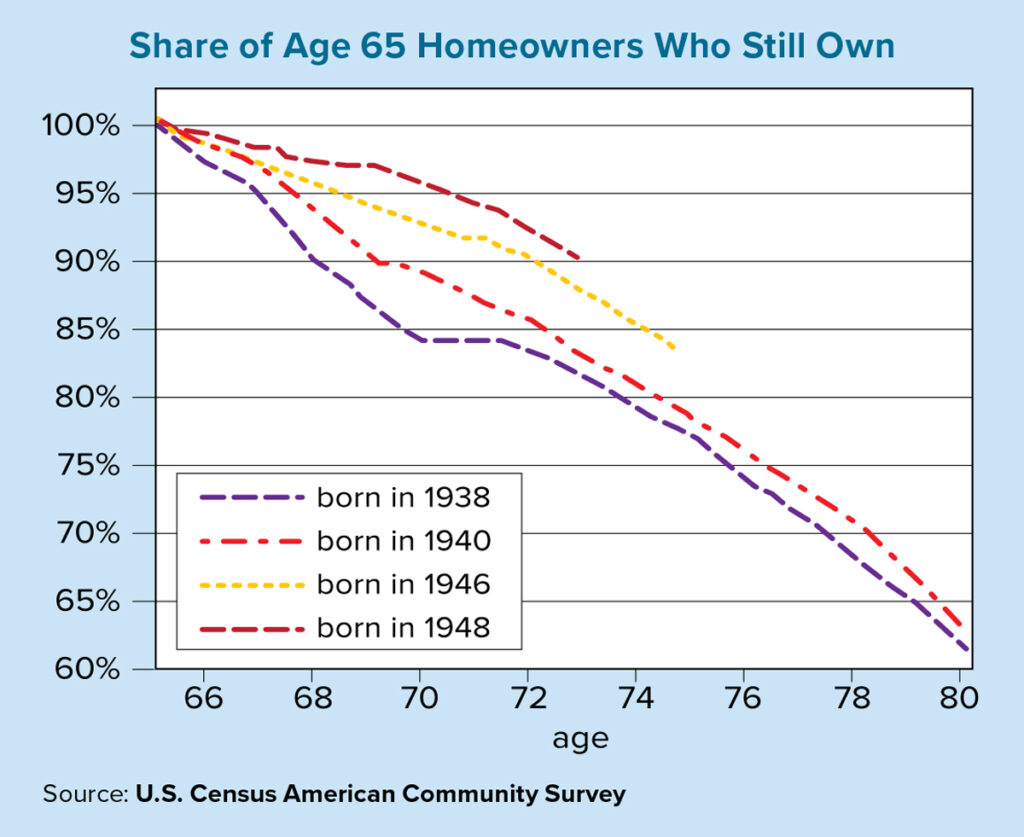
We constructed the data for this chart by adding the number of homeowners born in each of the selected birth years, at age 65 and for each age after that. Then we divided the number of homeowners at each age by the number of homeowners at age 65, to get the share of age-65 homeowners who still own. This allows us to show each birth cohort starting out at 100% of their age-65 homeownership level, then declining over time.
The results of this calculation are revealing. More than 22% of homeowners born in 1938 left their homes between the ages of 65 and 75. But only 17% of homeowners born in 1946 left their homes during the same decade of life.
If seniors opt to age in place rather than downsizing or moving in with children, their homes will arrive on the market later. If heirs choose to keep parents’ homes for their primary residences — which California tax law incentivizes them to do, for example — those properties may skip the open market entirely.
Inheritance is likely to play an increasingly important role in the transfer of property in the U.S. going forward. While this will be a boon for beneficiaries, demographics alone are unlikely to significantly improve affordability in the near term.