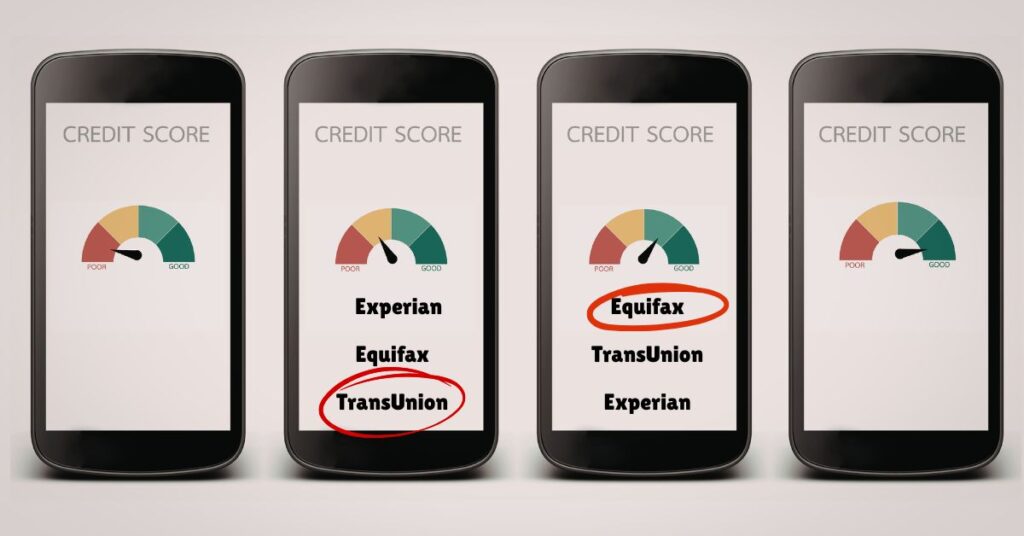
As stakeholders across the mortgage industry debate the ripple effects of a controversial proposal to replace tri-merge credit score requirements with a single-bureau option, recently published research says such a move could increase risks and mortgage costs.
A tri-merge credit score blends consumer data from the three major credit bureaus — Experian, Equifax and TransUnion — into a single score that helps forecast a borrower’s likelihood of short-term delinquency.
Conducted by Andrew Davidson and Co., an analytics and risk management advisory serving mortgage and financial services firms, the research published Feb. 20 underscores the grainier picture secondary markets teams would have available to model collateral performance, potentially leading to higher mortgage rates.
“Even in the absence of score shopping, such a moving from the tri-merge could lead to less accurate pricing and mortgage qualification,” the report said. “Minority and lower-scoring borrowers would be more heavily impacted. Ultimately, if investors require higher compensation for greater uncertainty, mortgage rates could be higher for everyone.”
Shifting to a single-bureau framework has been pitched by advocates as an immediate option to boost affordability for homebuyers, reduce lender costs and introduce incentives for the credit reporting agencies to compete on price and innovation within a highly concentrated market.
Longstanding reliance on the tri-merge model and unanswered questions about how ending the tri-merge requirement would align with current risk frameworks across nearly every dimension of mortgage underwriting has raised concerns that reductions in borrower or lender credit costs would be offset by higher risk premiums charged elsewhere.
At the root the debate, as Scotsman Guide has previously reported, is a lack of transparency and available research on how the proposal may play out in the marketplace.
‘Meaningful negative impact’ in ending tri-merge shift
The new white paper from Andrew Davidson and Co. broadly concluded that scores based on data from a single credit bureau differed from the current tri-merge standard of taking the median of three scores “often enough to impact loan pricing in meaningful ways.” The analysis examined VantageScore 4.0 credit scores for a data set of 245 million consumers.
Across that sample, 35% of consumers had at least one score that varied from the tri-merge standard by at least 10 points, while 18% had a single-bureau score that differed by at least 20 points and 7% had a score that varied by 40 or more points.
“Those percentages were higher for consumers in credit score ranges where it matters most (600-779),” the report stated. It added that even the Mortgage Bankers Association’s proposal to only allow a single-bureau option for borrowers with credit scores 700 and higher “does not eliminate the existence of meaningful score discrepancies.”
Around 18% of consumers in the 700 to 779 range had at least one score that varied from the tri-merge standard by 20 points or more, the research found. Nearly 6% of consumers with a median score below 700 had a maximum score of 700 or more, with about 8% of consumers with median scores between 660 to 679 having a maximum score above 700.
It was possible to select a single score that differed from the tri-merge median by 20 points or more for approximately one-quarter of consumers in the 600 to 639 range of credit scores and one-fifth of consumers in the range of 640 to 779, the study noted.
Overall, the firm said its findings validate claims that shifting away from the tri-merge standard would incentivize score shopping, meaning loan originators and lenders could selectively pull single credit scores from the distinct bureau that they thought would return the highest score for a particular borrower.
For consumers with median scores in the 640 to 779 range, score shopping to select the highest score would shift borrowers to a lower-priced outcome 26% of the time, Andrew Davidson and Co. found.
“In short, this study showed that the call to move away from the tri-merge standard could have a meaningful negative impact and may not result in the most optimal outcome in terms of risk and price assessment for consumers or investors,” the analysis concluded.