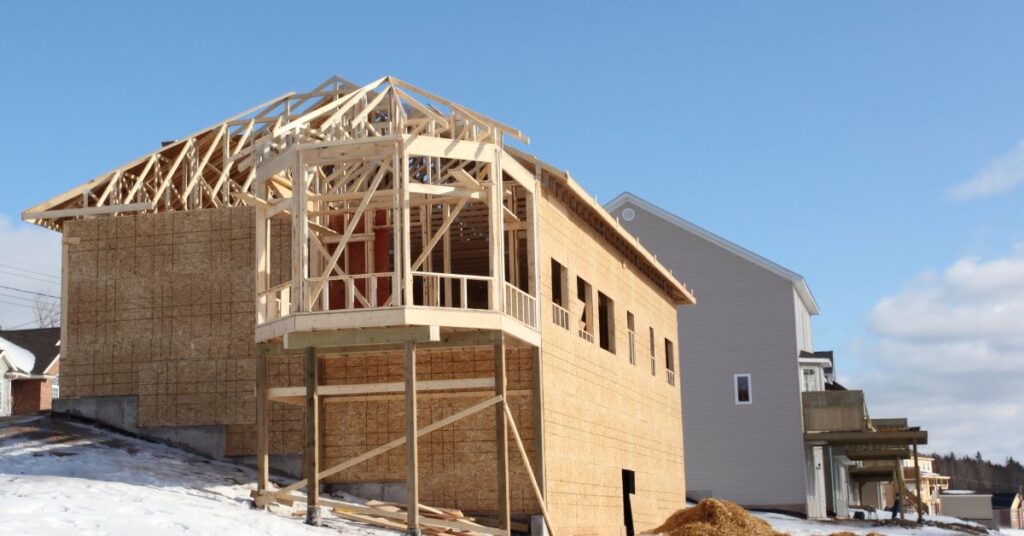
A much-needed rebound in housing supply did not materialize in 2025 as new residential construction activity weakened considerably compared to 2024, according to government estimates published Wednesday by the U.S. Census Bureau and Department of Housing and Urban Development (HUD).
Total building permits shrank 3.6% over the year. Overall housing starts dipped 0.6% and completed housing units decreased 7.9%. Compared to annual totals for 2024, new single-family construction fared worse than the multifamily sector, the preliminary year-end totals reveal.
Single-family starts declined by 6.9% in 2025 compared to 18% growth in multifamily starts, while single-family permits dropped 7.4% compared to a 4.3% rise in multifamily permits. Single-family, one-unit completions outpaced multifamily deliveries (five units or more), falling 0.8% compared to the multifamily sector’s steeper 20.3% drop.
Wednesday’s release highlights a slight reversal of October’s sharp contraction in activity, suggesting that builders across both sectors closed out 2025 with some momentum. Interruptions from the federal government shutdown last fall caused November and December reporting to be delayed.
On a seasonally adjusted basis, total housing starts increased 3.9% over the month in November and a further 6.2% in December. The annual starts rate of 1.404 million in December remained 7.3% below December 2024 levels, however.
Mirage of year-end momentum
Permits for new residential construction projects declined 1.6% from October to November, then rose 4.3% in December to a seasonally adjusted annual rate of 1.448 million, about 2.2% lower over the year, mostly driven by multifamily authorizations.
Completions, meanwhile, climbed 6.6% over the two-month period to an annual rate of 1.525 million in December, 0.1% shy of a year ago.
“The November and December housing data show construction ended 2025 on firmer footing,” said Odeta Kushi, chief economist at First American Financial Corp., sharing her reaction to Wednesday’s construction estimates with Scotsman Guide.
Amid a longstanding housing shortage that market watchers broadly measure in the millions of homes, more single-family than multifamily inventory was delivered to the market in December, however. Single-family completions came in 10.2% higher over the year compared to a 15.9% yearly decline in multifamily completions.
“Importantly, single-family permits are no longer consistently declining as they did through the first half of 2025. Instead, they appear to have stabilized in recent months,” added Kushi.
Hopes that the hefty supply gap may narrow sooner rather than later confronted the reality in Wednesday’s year-end estimates that single-family homes actively under construction were 8.4% lower at the end of 2025 than at the close of 2024. Nearly 13% fewer multifamily projects were under construction.
Recent sentiment surveys from the National Association of Home Builders (NAHB) show six-month sales optimism contracted among its members in January as the busier spring and summer homebuying months approach. Though diminishing, demand-side pressures that slowed new-home sales in 2025 will likely continue this year, with mortgage rates around 6% and high home prices sidelining borrowers.
Single-family’s clouded outlook
Supply-side pressures persist for builders too, according to Lisa Sturtevant, chief economist of multiple-listing service Bright MLS.
“A lack of construction labor, elevated land costs and often wide-ranging local regulations will continue to make it challenging to build new housing, particularly housing at lower price points,” said Sturtevant, sharing her reaction to the year-end figures with Scotsman Guide. “Builders will continue to be cautious to start 2026, waiting for consumers to feel more confident.”
Looking at single-family activity specifically, Wednesday’s release from the Census Bureau and HUD highlights how multifamily construction earns most of the building momentum heading into 2026.
On a year-over-year basis, single-family starts were 9% lower in December, compared to a 1% annual decline in multifamily starts. The disparity was even more pronounced in estimates of permitting, which dropped 10.9% over the year in December for single-family units compared to a robust 18.7% increase in multifamily permitting from a year ago.
Permitting data provides a market-level basis for forward-looking sentiment among builders, as it concerns the volume of new projects they may undertake. A 1.7% monthly slide in the pace of single-family permitting in December — versus an 18.1% monthly jump in multifamily permitting — underscores how builders may continue to struggle to increase single-family volumes while slow sales activity persists.
Speaking with Scotsman Guide on Wednesday morning from NAHB’s annual International Builders’ Show in Orlando, Fla. — which drew upward of 70,000 industry participants from more than 100 countries — NAHB Chief Economist Robert Dietz said the mood among U.S. builders in attendance was “somewhat optimistic,” but the industry “recognizes the challenges given current affordability conditions,” like home price-to-income ratios on new builds that remain historically high.