“America will not become a nation of renters,” declared President Donald Trump during a closely watched speech at the World Economic Forum in Davos, Switzerland, in early January. In the long run, however, he may not have much say in the matter.
Homeownership has long been a cornerstone of economic and intergenerational mobility in the U.S. But amid yearslong home purchase affordability challenges that have sidelined first-time homebuyers and narrowed access to homeownership, millions of households find themselves locked out of homebuying and locked into leases.
In a recent op-ed, the chief consumer finance analyst at personal finance platform LendingTree, Matt Schulz, explained the decision facing prospective borrowers in the post-pandemic housing market as akin to debates over whether the hefty price of college is justified by future earnings.
“Homeownership has historically been framed as a guaranteed wealth-building strategy, but when the monthly cost of owning exceeds renting by more than a third, the assumption deserves scrutiny,” wrote Schulz, citing a LendingTree analysis from January showing that renting was more affordable than buying a home in the 100 largest U.S. metros in 2024.
That analysis underscored how mortgaged homeowners in 2024 paid nearly 37% more per month than renters in combined housing costs. That gap has widened since 2020 amid high home prices, elevated mortgage rates and spiking ancillary costs of homeownership like property taxes and insurance and homeowners association fees.
“For many households, the decision ultimately becomes a question of priorities rather than pure economics,” said Schulz. “Renting, once seen as a temporary phase on the path to ownership, is increasingly becoming a longer-term housing strategy.”
A recently published rental analysis by Realtor.com underscores how in the “Land of Opportunity,” options are increasingly limited for renters of all ages and household sizes.
Examining the same batch of 2024 American Community Survey data as LendingTree, published annually by the U.S. Census Bureau, Realtor.com found that young renters no longer dominate coastal hubs they once defined like New York, Los Angeles and San Francisco.
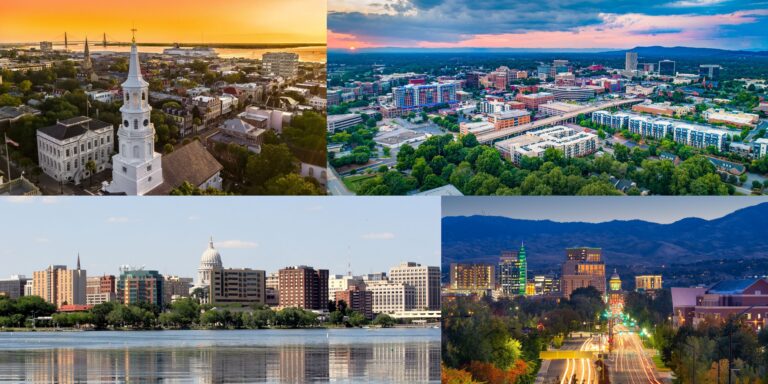
Instead, young renters are concentrating in midsize inland cities like Indianapolis, San Antonio, Denver and Colorado Springs, Colo., where young renters represent 40.1%, 38.7%, 43.5% and 45.7% of all tenants in those cities. Comprising about 32% of all renter households nationally, the typical young-renter household in 2024 was headed by a 28-year-old, with a household size of two people living in a two-bedroom unit and earning $65,000 annually.
A “massive affordability gap” helps explain the geographic shift for young renters, the Realtor.com report found, 52.6% of whom can afford fair market rents in the top 10 young renter markets compared to just 32% who can afford fair market rent in Miami and 33.6% in Los Angeles.
More abundant job opportunities are also drawing young renters to midsize inland metros. The average unemployment rate was 3.6% across the top 10 young-renter markets in December, observed Realtor.com, compared to a national rate of 4.1%.
“Family renters,” who represent 44.3% of all U.S. renter households, face an entirely different set of challenges when it comes to the decision to rent or buy a home. The typical family-renter household is a family of three living in a two-bedroom unit, headed by a 42-year-old and earning $68,000 annually.
“The geography of family renting is, to a significant degree, the geography of minority America,” noted Realtor.com, which faces a “double barrier” to homeownership — high home prices that make home purchases inaccessible compounded by longstanding homeownership gaps disproportionately affecting minority households.
Typical long-term renting households are headed by a 55-year-old adult residing in a two-bedroom unit with one other person and a median household income of $48,500. The intersection of family renters and long-term renters who have resided in the same unit for five or more years represents the most “locked-in” portion of tenant households.
Concentrated in rent-regulated anchor cities like New York and Los Angeles, where market rents have priced out younger renters, a majority of long-term renters cannot afford area rents in the metros where they have resided for years.
Realtor.com says about 40% of renting households in the top 10 long-term renter cities would confront “severe affordability stress” if forced to relocate within the same metro at today’s fair market rents (assuming the same household incomes and bedroom sizes).
“When you look beneath the national averages, you see a market that is failing to provide mobility,” explained Jiayi Xu, an economist at the listings platform. “The lack of new, affordable inventory means that for many, the ‘American Dream’ of choosing where you live has been replaced by the necessity of staying exactly where you are.”