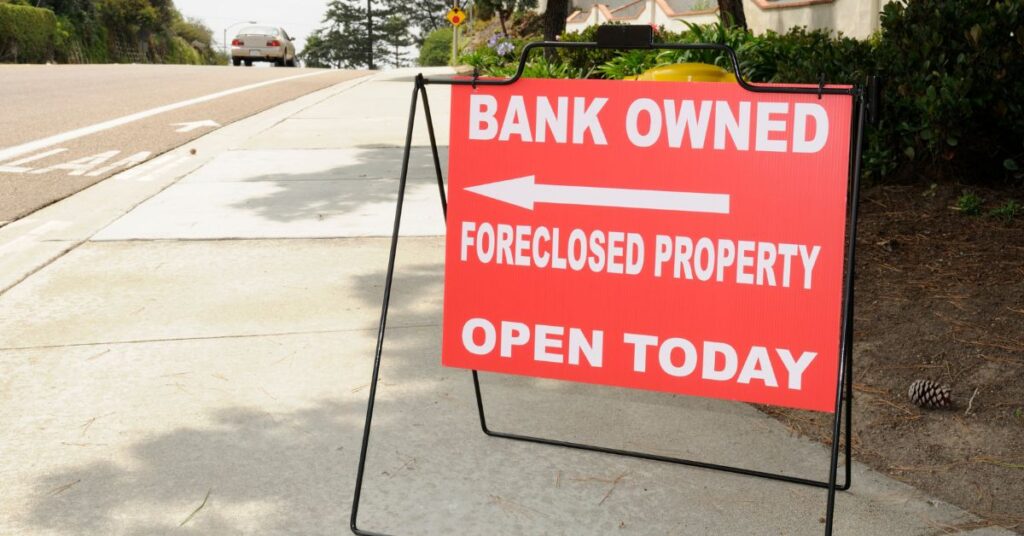
Foreclosure inventory increased to its highest level in six years in March as new delinquencies declined but growth in late-stage borrower distress continued, new data published Friday by Intercontinental Exchange Inc. (ICE) shows.
The company reported in its initial snapshot of last month’s mortgage performance trends that the national delinquency rate fell by 37 basis points to 3.35% in March, “in line with the typical seasonal improvement for the month” but still 14 basis points higher over the year.
The slowdown represented a nearly 10% decline in foreclosure activity over the month, but was 4.4% higher year over year. Total foreclosure starts hit 39,000 in March, up 9.6% from February and 16.6% higher from a year ago.
Andy Walden, head of mortgage and housing market research at ICE, noted that fewer loans rolled into delinquency last month. But he offered a caveat on the broader delinquency picture: New delinquency inflow declined by 23% seasonally in March to land effectively unchanged from year-ago levels.
“While overall mortgage performance remains healthy for most borrowers,” said Walden, “the continued buildup in late-stage delinquencies and foreclosure pipelines remains worth watching.”
About 154,000 more borrowers were 90 days or more past due on their mortgages or in active foreclosure last month compared to a year ago. Active foreclosure inventory rose to 273,000, up from 213,000 a year ago, the largest such volumes since February 2020.
Real estate analytics firm Attom separately reported last week that foreclosure filings in March were 18% higher than February and 28% higher than a year ago.
The total number of loans 30-plus days past due or in some stage of foreclosure declined by 194,000 from February to land at 2.12 million in March, which remains about 8.2% above year-ago levels.
Pockets of persistent distress among some government and non-qualified mortgage (non-QM) borrowers has taken on sharper focus in recent weeks as consumers and credit analysts await economic fallout from the Iran war, which has pushed inflation forecasts higher and outlooks on labor markets and consumer spending sharply lower.
Energy and trade shocks impacting a wide range of sectors are broadly expected to raise costs across supply chains and store shelves. The consumer price index (CPI), a widely studied government measure of inflation, rose from 2.4% in February to 3.3% in March, sailing higher on spiking energy costs, a first-order impact from the war.
The energy component of the CPI surged 10.9% month over month in March, its largest monthly increase since September 2005, as the all-energy commodities index rose 21.3%, gasoline prices spiked 21.2% and the fuel oil index leaped 30.7%.
While some economists warn the U.S. economy may already be experiencing a recession, others have cautioned it is too soon to decipher the drawn-out disruptions on inflation or unemployment the war may ultimately cause.
Fed Governor Christopher Waller, typically a policy dove who favors less interest rate intervention to combat inflation, warned last week that oil futures prices and securities markets “seem to be undervaluing the risk” that the Strait of Hormuz remains closed and the conflict continues.
Cure activity also strengthened in March, however, even as foreclosure volumes climbed and serious delinquencies continued to “broadly trend higher,” according to ICE. Total cures rose to 547,000, roughly 27% higher than February.
Prepayment speeds jumped to 1.06%, up 24 basis points from February and the highest level in nearly four years.