Housing economists widely expect regional variations to drive narratives of housing market performance in 2026, from home prices to inventory growth to sales volumes.
Early odds are on Midwest housing markets to outperform other regions. With mortgage rates dipping below 6% last week for the first time in three years, affordability is gradually improving for homebuyers nationwide.
Diverging performance along regional trends accelerated in 2025 as the post-pandemic housing market continued to recalibrate after the boom years spanning 2020 to 2022.

Take inventory growth last year, for example, which saw active listings rise to within 12.5% of typical 2017 to 2019 levels as of December, according to Realtor.com. More new construction across the Sun Belt in recent years has led to larger inventory gains in states like Florida and Texas, translating to accelerated price softening and stronger purchasing power for borrowers.
Tighter inventory across Northeast metros like Hartford, Conn., and Providence, R.I. — which lag their pre-pandemic inventory levels by 76% and 57%, respectively, leading major U.S. metros — has translated to price resilience and seller-friendly sales conditions.
Counties across the South and West dominated the list of local housing markets most at risk of market declines in 2025, when accounting for housing affordability, unemployment rates, home equity and wages, according to a September report from real estate analytics firm Attom.
A new analysis from Neighbors Bank underscores how such regional affordability trends could shape opportunities for first-time homebuyers in 2026, a cohort that saw their purchase share tumble to 21% in 2025 from 24% in 2024 and 40% pre-2008.
“When you layer in the persistent gap between wages and home prices,” wrote Jake Vehige, president of mortgage lending at the Missouri-headquartered Neighbors Bank, “affordability remains a central pain point for new buyers, particularly first-timers who typically lack equity and funds for downpayments and closing costs.”
Neighbors found that eight of the 10 “best” U.S. cities for first-time homebuyers in 2026 were in the Midwest. The analysis included all U.S. cities with populations exceeding 115,000.
The report considered total monthly housing costs for first-time buyers applying for a mortgage, living expenses like utilities, food, transportation and health care, as well as quality-of-life factors like crime and unemployment rates, commute times and entertainment options.
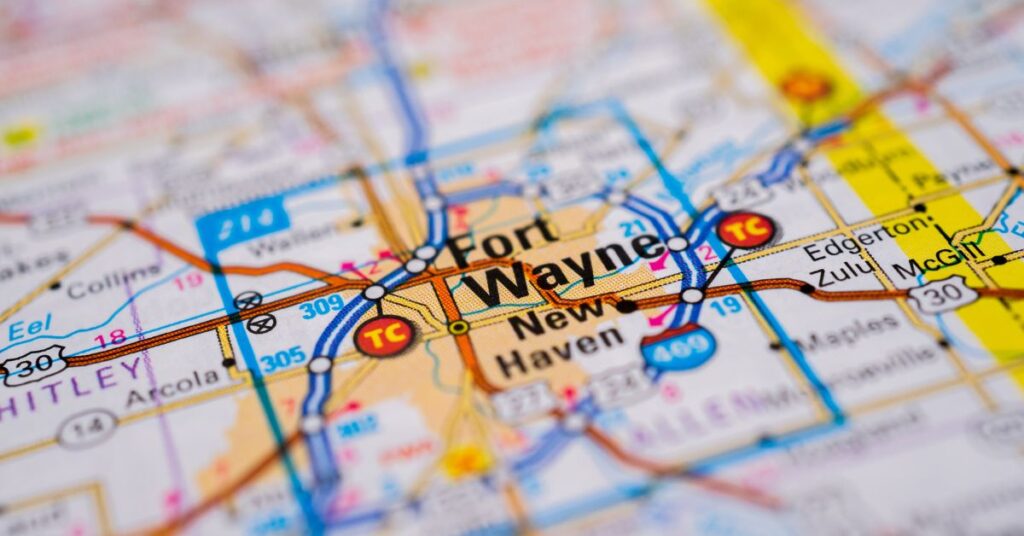
With a median home price of $161,868, median monthly housing cost of $1,492 and housing cost as a percentage of income at 25%, Peoria, Ill., took the top spot. Fort Wayne, Ind., followed, with a median home price of $246,963, median monthly housing cost of $1,880 and housing cost as a percentage of income at 33%.
Pittsburgh, South Bend, Ind., and Davenport, Iowa, rounded out the top five on Neighbors Bank’s list.
“These pockets of opportunity are where first-time buyers can find a realistic path to ownership without sacrificing quality of life,” said Vehige.
A separate analysis published Monday by WalletHub, a personal finance platform, assessed that five of the top 10 states for raising a family in 2026 were in the Midwest, with the other five in the Northeast.
Across “50 key indicators,” including median annual family income, housing affordability, health care quality, crime rates and school performance, WalletHub put Massachusetts in the top spot, followed by Minnesota, North Dakota, Wisconsin and Nebraska.
“The best states combine affordability with safety, strong job opportunities, and access to quality education, health care, and entertainment,” the analysis read.
New York, Connecticut, New Hampshire, Illinois and Maine rounded out the top 10. Though in a different order, the same list of states made WalletHub’s top 10 list for 2025, an indication that fault lines in regional housing market performance could harden in 2026.
The worst states projected for raising a family in 2026, according to WalletHub, were concentrated in the southeastern, south-central and southwestern U.S., the states ranked from 40 to 50 being: Florida, Georgia, South Carolina, Oklahoma, Arkansas, Louisiana, Alabama, Nevada, Mississippi, West Virginia and New Mexico.
“Raising a family has become significantly more expensive in recent years as the cost of living has risen quickly,” said Chip Lupo, a WalletHub analyst, in the report. “It’s important to live in a city that is affordable while still providing quality health care, education, safety and opportunities for enrichment.”