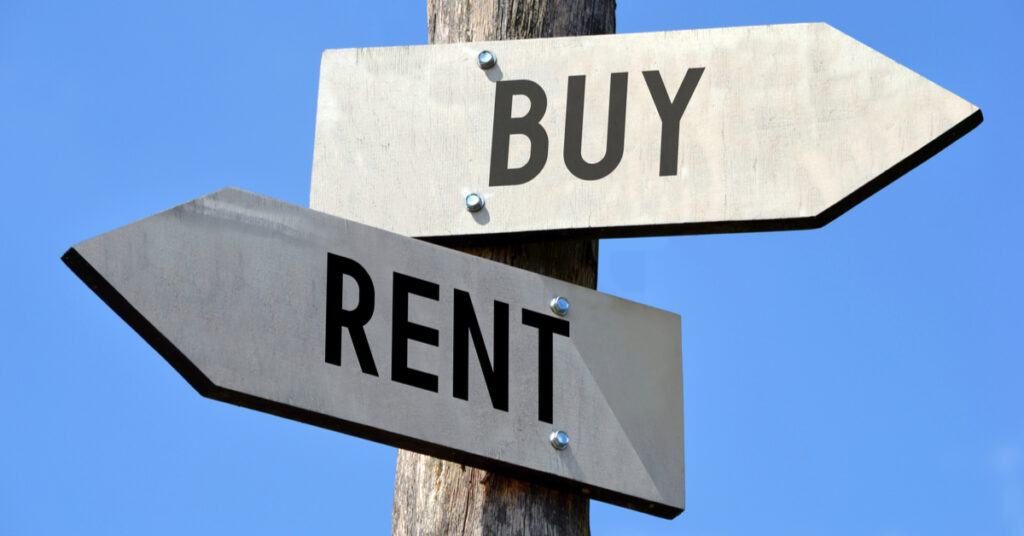
Renting is now more affordable than owning a home with a mortgage in every one of the nation’s 100 largest metropolitan areas, according to a new analysis by LendingTree.
The report, released Jan. 12, reveals that the financial divide between tenants and homeowners — which already existed — has widened significantly. Nationally, homeowners with a mortgage now pay 36.9% more per month than renters.
In dollar terms, the median monthly gross rent in the U.S. was $1,487 in 2024, compared to $2,035 for median monthly housing costs on homes with a mortgage. This results in a monthly gap of $548, or roughly $6,576 annually. LendingTree data shows this spread has grown, increasing by $50 from the previous year, when the difference was $498.
The widening gap is driven by unequal growth rates in housing costs. According to the LendingTree analysis of U.S. Census Bureau data, median rent prices rose 5.8% between 2023 and 2024, while homeownership costs climbed by 6.9% over the same period.
“People are waiting longer to buy their first home,” said Matt Schulz, LendingTree’s chief consumer finance analyst, in the report. “They’re choosing not to buy a new home because they’re reluctant to trade their current low-rate mortgage for one at today’s higher rates. Some people are even becoming resigned to the fact that they’ll never be able to own a home.”
Coastal hubs see widest disparities
The study found that the financial penalty for owning is steepest in major coastal markets. San Francisco topped the list with the largest difference: The median monthly housing cost for homeowners there is $1,565 higher than the median rent.
Bridgeport, Conn., and New York City followed, with monthly ownership premiums of $1,427 and $1,409, respectively.
New York City presents the most extreme disparity in terms of percentages. Homeowners with mortgages in the New York metro area pay 76.1% more per month than renters. Bridgeport (75.3%) and Providence, R.I. (66.5%) also showed significant percentage gaps.
In total, homeowners pay at least 50% more than renters in 22 of the 100 largest metros analyzed.
Sun Belt markets offer narrower margins
While renting remains the cheaper option across the top 100 metros, the gap is significantly narrower in certain Sun Belt cities.
Phoenix recorded the smallest cost difference in the nation. In the Phoenix metro area, renters pay $1,819 a month compared to $2,003 for homeowners — a difference of just $184. Orlando, Fla. ($257 gap) and Columbia, S.C. ($271 gap) rounded out the list of markets where the buy-versus-rent equation is most competitive.
Despite the immediate savings renting provides, Schulz noted that the decision to buy often transcends monthly cash flow.
“The choice isn’t just about money,” he said. “Homebuying can represent accomplishment, security, safety and plenty of other things. There’s a reason why homeownership has long been considered part of the American Dream.”
He added that homeownership remains a primary vehicle for wealth building, noting that equity can eventually provide financing options for renovations or debt consolidation — benefits that renting cannot offer.