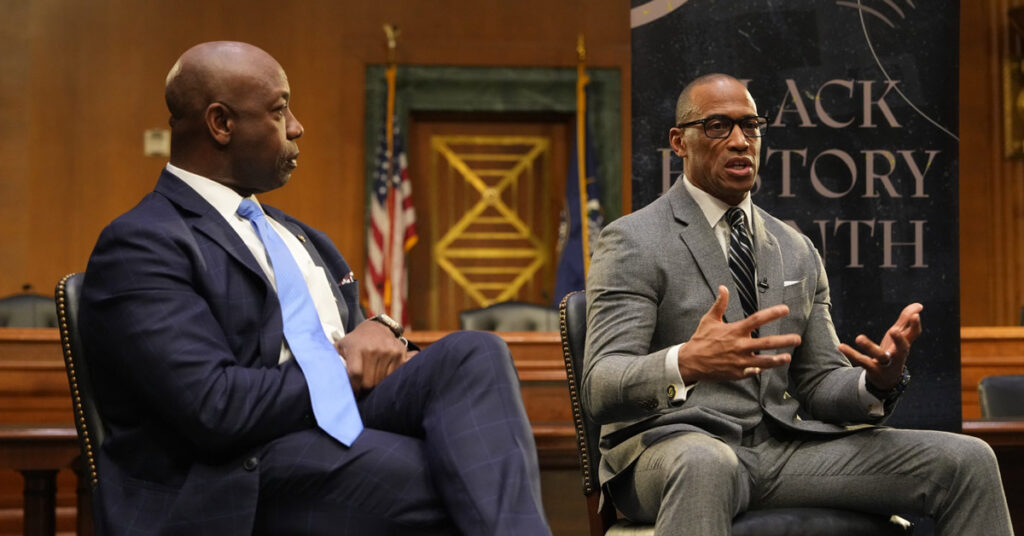
As Black History Month nears its end, Sen. Tim Scott, R-S.C., held a fireside chat with U.S. Department of Housing and Urban Development (HUD) Secretary Scott Turner this week, focusing on economic opportunity, housing affordability and driving investment in historically underserved communities.
The conversation was a featured part of a Black History Month program hosted by Scott, the chairman of the Senate Committee on Banking, Housing, and Urban Affairs. The talk explored “how public-private partnerships and innovative investment strategies can unlock growth in areas that have historically lacked access to capital, helping families build wealth and create generational impact,” according to a press release from Scott’s team.
The senator is one of the primary architects and drivers behind Opportunity Zones, which are areas designated by state governors in economically distressed census tracts. Created under the Tax Cuts and Jobs Act of 2017, the zones are intended to boost economic growth and job creation in low-income communities while providing tax benefits to investors.
During the chat, Scott praised President Donald Trump for “really leaning into the vision of Opportunity Zones very early” in his first term. The senator told the room that “as a result of that teamwork and partnership, we’ve seen over $100 billion dollars invested in majority-minority communities.”
“There were talented kids in the neighborhoods that I was growing up in who would never see access to opportunities because they didn’t come to your zip code,” Scott said. “So I designed Opportunity Zones to come to them, as opposed to them having to come to opportunity.”
Turner praised the senator’s work on the Opportunity Zones framework, saying it has made a generational impact and is a “great road map” to help underserved communities prosper.
The two leaders did acknowledge that there are some adjustments that will need to be made on the legislative and regulatory sides to unleash capital.
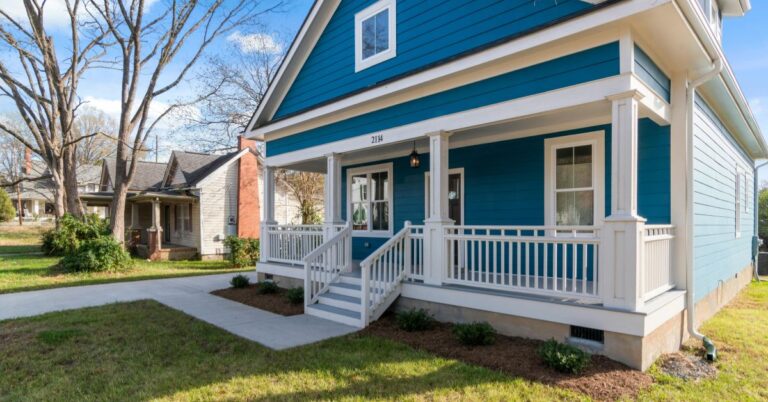
“We need about 7 million units of housing in our country right now,” Turner said. “We’ve been talking about how do we use Opportunity Zones to spur single-family development, to spur development so that first-time homebuyers inside of these said communities can purchase homes.”
The pair also discussed the ROAD to Housing Act, a bipartisan package designed to address the nation’s housing affordability crisis. It was included in the Senate’s version of the 2026 National Defense Authorization Act in October but was stripped from the NDAA during House negotiations.
Meanwhile, the House overwhelmingly passed a separate housing package called the Housing for the 21st Century Act on Feb. 9, meaning the Senate will now face nuanced questions on how to reconcile the two pieces of legislation.
Noting that the ROAD to Housing Act would provide more incentives to local jurisdictions, Scott believes Opportunity Zones can be used as a “centerpiece” with an “apparatus” built around it.
“Housing is a local issue. It is not a D.C. issue,” the senator stated. “We do not want to federalize housing in America. We actually want to make it easier and more cost effective for local jurisdictions to increase supply and take some of the bite out of the cost of a closing. And so the legislation, with 40 different provisions, accomplishes that objective.”