
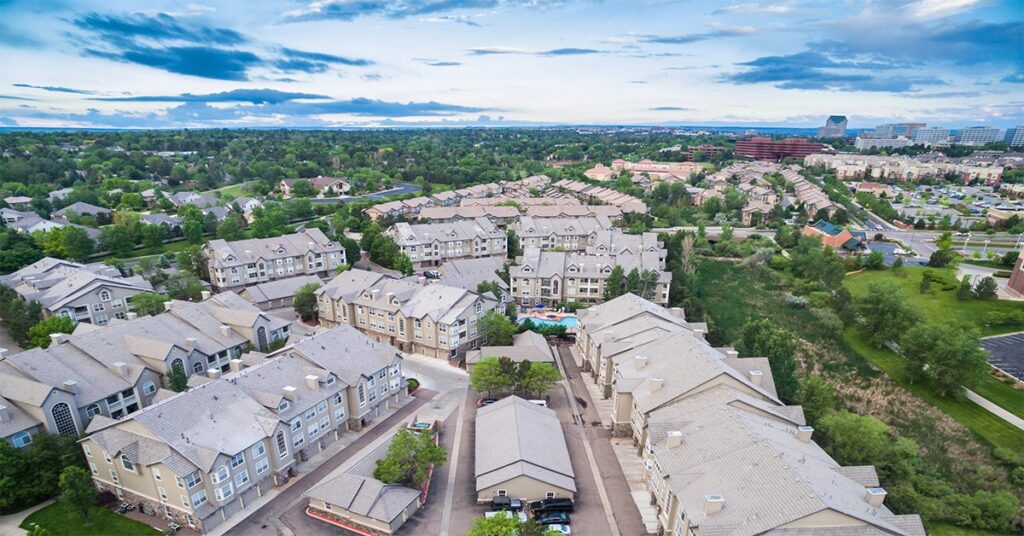
Fannie Mae significantly expanded its financing footprint in 2025 to hit its highest year of multifamily production since 2020, the company reported in a data release this week.
The $74 billion in financing that the government-sponsored enterprise (GSE) injected into multifamily housing markets in 2025 reflects 34% growth from $55 billion in 2024. That growth includes more than $8.3 billion in funding for affordable units, a 31% annual rise.
The Federal Housing Finance Agency (FHFA), which regulates Fannie Mae and Freddie Mac, has prepared the GSEs to sustain last year’s multifamily growth through 2026, raising multifamily loan purchase caps to $88 billion per agency in November, or more than 20% from 2025 levels.
Multifamily loan purchase caps only increased from $70 billion to $73 billion the previous year.
“We’re grateful to all our partners and, with $88 billion in capital allocation this year, we look forward to accomplishing even more in 2026,” said Kelly Follain, head of the multifamily channel at Fannie Mae. Follain also noted that Fannie crossed the $500 billion benchmark in its multifamily book of business.
The multifamily sector more broadly is being pushed to expand rental supply amid a nationwide lack of affordable units, which some economists have found is limiting the extent to which multiple years of cooling shelter inflation has benefited renters on the lower-half of the price spectrum.
That reality bears knock-on effects for mortgage lenders. Headlines about cooling rent growth sometimes obscure the fact that rents across the board are still at a notably higher level than just five years ago, amplifying the challenge of saving for a downpayment with home prices having risen precipitously.
Even with national rents increasing less than 1% for consecutive years, typical rents are approximately 20% higher for units in the 25th percentile of lower-priced units since 2020, according to Realtor.com, compared to about 12.5% growth for the most expensive quartile of units.
Freddie Mac recently reported similarly outsized growth in its multifamily volume last year, topping $77 billion in production, a 17% rise from 2024. That included a “record investment” of $1.2 billion in low-income housing tax credits after the FHFA doubled the GSEs’ cap on LIHTC equity investments.
Though the expansion of multifamily financing at the GSEs comes amid a broader push for more affordable housing supply, multifamily rent growth was flat in 2025, according to recent data from Yardi Matrix, a subsidiary of property management technology firm Yardi Systems Inc.
It was the first year since 2020 that rents failed to appreciate on a national level, the company said, with the slowdown more pronounced toward the end of 2025. Rents shrank by 0.9% in the fourth quarter, erasing gains made earlier in the year.
Elevated financing costs and slowing rent growth have hurt the economics of multifamily housing investors in recent years, but recent forecasts from the Mortgage Bankers Association (MBA) offer optimism that the GSEs will be able to extend their momentum in the multifamily market into 2026.
After total multifamily volumes topped $480 billion in 2021 and 2022, higher borrowing costs from the Federal Reserve cut production by nearly half to $246 billion in 2023 and $289 billion in 2024, according to MBA data.
As borrowing costs eased, the market grew by 14.4% to more than $330 billion in 2025 and is projected to grow by another 20% to around $400 billion in 2026, on par with the FHFA’s increase in multifamily loan purchase caps for the GSEs. While robust growth is not projected past 2026, the MBA forecasts multifamily production to settle around $390 billion through 2027 and 2028.
Yardi Matrix said in a fourth-quarter forecast that up to 407,000 new rental units are expected to come online in 2027, an almost 13% revision higher from its previous-quarter estimate. Earlier projections of 3% headline multifamily rent growth in 2027 have subsequently been cut to 2%.
National rents are expected to return to growth this year, according to property management platform RealPage, which projects average nationwide rent growth of 2.3% in 2026.
Credit performance across the GSEs’ multifamily lending has remained strong amid post-pandemic distortions in the sector. Freddie Mac reported a multifamily delinquency rate of 0.44% in December, a slight improvement from 0.48% in November. Fannie Mae reported a serious delinquency rate of 0.74% in December, essentially flat from November but up from a 2025 low of 0.61% in June.
Fannie Mae also published a list of 10 lenders that closed the largest volume of multifamily loans through its delegated underwriting system, led by Walker & Dunlop at $8.95 billion in production in 2025. Wells Fargo Bank, CBRE Multifamily Capital, Berkadia Commercial Mortgage and Newmark completed the top five, producing between $5.5 billion and $7.75 billion last year.