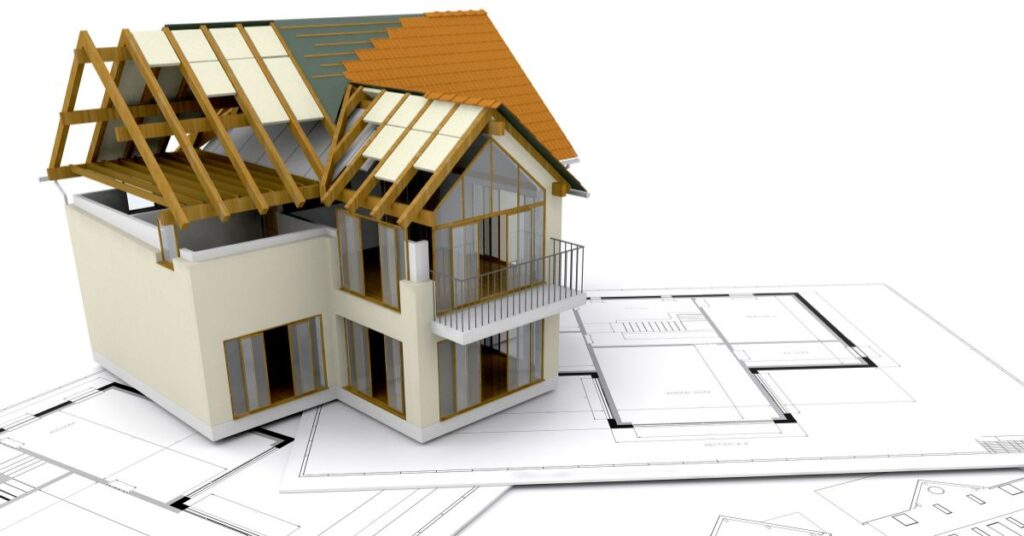
The U.S. housing market has a longstanding shortage of single-family homes that cannot be corrected overnight. Houses don’t grow out of the ground. They don’t materialize with the snap of a finger.
Houses can, however, be built more quickly if sales conditions cooperate and effective regulations are adopted to facilitate rather than foil new-home construction. But U.S. home builders found little of either in 2025.
Instead, they weathered difficult sales conditions that most across the new-home construction industry expected would ease last year. Elevated financing costs raised builders’ expenses while poor homebuyer affordability drove a slow pace of sales, requiring elevated use of sales incentives, ultimately hurting margins.
Sluggish sales have led to a slow pace of new-home starts heading into 2026. Until home builders feel confident that the homes they build will sell for the profits they project, adding stock to a growing backlog of completed homes erodes their pricing power, especially as existing-home inventory rises.
“Single-family home construction slowed in 2025 due to rising inventory, particularly in some of the faster-growing markets,” said Robert Dietz, chief economist of the National Association of Home Builders (NAHB), in a recent chat with Scotsman Guide. “Demand fell as rates didn’t drop as quickly as earlier forecasts had predicted.”
Recent reporting from the U.S. Census Bureau shows the median new-home sales price fell to $392,300 in October, a decline of 3.3% from $405,800 in September and an 8% decline from $426,300 a year ago. The median existing-home sales price rose in October, however, up 2.1% annually to $415,200.
That, in a nutshell, is the demand-side conundrum plaguing U.S. home builders amid a supply-side quandary impacting the broader U.S. housing market.
As consumers and policymakers clamor for more entry-level, single-family homes to drive down the price of housing, the pace of new-home starts in October — the most recent month for which official data is available due to the federal government shutdown last fall — was 7.8% below the pace of starts in October 2024 and 4.6% below the pace of starts in September.
Elevated financing costs and uncertainty linked to President Donald Trump’s signature tariff policies have consistently been cited by home builders as undermining confidence in new-home construction. At the same time, NAHB has urged Congress to reform burdensome regulations that significantly drive up the cost of building — and buying — new homes.
Buddy Hughes, a home builder and developer from North Carolina who serves as NAHB chairman, explained as much to lawmakers on the U.S. House of Representatives’ Subcommittee on Economic Growth, Energy Policy and Regulatory Affairs last week.
“Regulations account for nearly 25% of the cost of a single-family home and more than 40% of the cost of a typical apartment development,” said Hughes. “The time and costs associated with complying with a multitude of government regulations can be significant for small- and medium-sized builders and ultimately limit housing supply.”
As new-home construction stalls and housing policy inertia compounds ahead of a Friday deadline to avert another, though partial, government shutdown, Dietz forecasts that annual single-family housing starts for 2025 will likely come in 7% or 8% below 2024 totals, though official figures have not been reported.
“A lot of heavy lifting is going to have to be done at the state and local level to bend the cost curve and provide more attainable for-sale and for-rent housing,” said Dietz, who expects new-home sales for 2025 to be flat or down slightly from 2024, which totaled 686,000 units. He anticipates only “a slight pickup” in single-family new-home starts and sales in 2026.
Government new-home sales data has only been reported through October, but estimates from the Mortgage Bankers Association show sales fell 15% from October to November and a further 2% from November to December, to an annual pace of 640,000 units.
“A lot of prospective homebuyers are on the sidelines,” said Dietz. “A big challenge for a lot of buyers remains the downpayment requirement, when the sales price-to-income ratio remains in the 5s, when historically it was closer to 3.” Downpayments as a share of homes’ final sales prices have risen sharply in recent years, driving a housing access shift.
In the new-home construction market, the downpayment gap has shifted market share toward custom-home builders, who accounted for around 19% of new homes built in 2025 compared to 17% in 2024. Custom-home builders typically serve older and wealthier buyers, “and that particular sub-market is more directly correlated with stock market and household net worth, enabling them to put together larger downpayments,” said Dietz.
Elsewhere, spec-home builders will continue to adjust their strategies in line with affordability thresholds, as sellers of existing homes are forced to do the “price discovery” that home builders started doing back in 2023 and 2024. Construction will likely continue to favor smaller housing footprints on smaller lots, reflected in the rising share of townhouse new builds, aligning with policies to improve zoning reform and housing density.
Two-thirds of home builders reported using sales incentives in January, according to NAHB survey data, which also marked the third consecutive month that at least 40% of builders said they slashed prices — the first three-month stretch of sorts since May 2020. As builders continue to sweeten the deal for buyers, real estate investors have noticed.
“We don’t have mortgage rates dipping below 6% for a sustained period of time this year,” said Dietz, leaving borrowing costs elevated for typical homebuyers. “Anecdotally, we likely saw an increase in the cash-buyer share in 2025.”