
As average rates for 30-year fixed-rate mortgages have reset above 6% in the first full week of the U.S. war with Iran, mortgage lenders are facing the reality that reducing borrowing costs to address housing affordability in 2026 may be a second-order concern of the United States president.
But to mortgage companies that for multiple years have found production volumes hinging on every one-eighth won or lost on rates, stubbornly high borrowing costs have already necessitated nimble lending strategies.
Since 2022, first-time homebuyers have watched affordability barriers erode their purchase share to around 20% in 2025, as investors’ share of single-family purchases has remained around 30%. Without a notable uptick in new listings activity or a material drop in borrowing costs, escrow costs or home prices — none of which are forecast — the purchase mortgage market may be looking at a repeat of the past three years of slow sales activity.

As the performance of a broader K-shaped economy evolves through housing indicators, a new report from real estate analytics firm Cotality underscores a shift among higher-wealth households and borrowers who are able to buy in today’s market, as the sustained pressure on affordability reshapes borrower qualification.
“We are entering a new, hybrid era of home financing, where adjustable-rate loans are becoming the primary option instead of the traditional 30-year fixed mortgage,” wrote Archana Pradhan, a principal economist at Cotality who authored the report.
Adjustable-rate mortgages (ARMs) are more commonly associated with rising interest rate environments because borrowers are making a bet that when the fixed entry rate expires after five, seven or 10 years, the period of higher rates will have cycled through by the time the adjustable portion of the loan resets, unless they refinance or sell first.
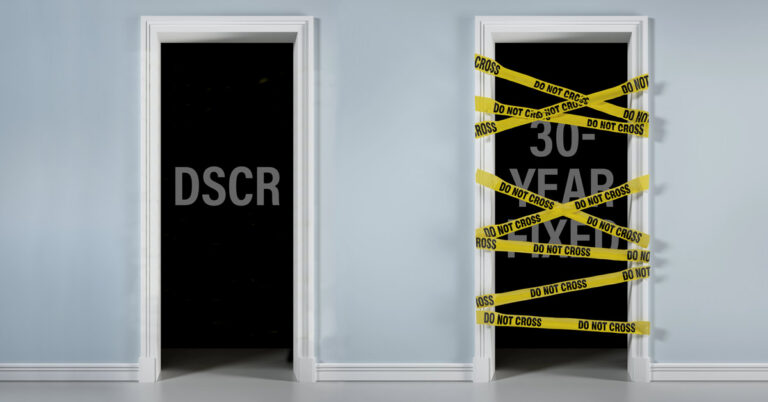
But Cotality explains that the pricing on traditional, 30-year fixed-rate mortgages is being beaten by ARM products that respond to affordability barriers in the current market. Average 30-year fixed rates around 6.1% to start the year cost around $500 more per month on mortgage payments than the 5.3% on a 5/1 ARM, says Cotality.
Notably, the trend has been especially pronounced among high-cost and high-end housing markets, where by December 2025 nearly half of all mortgage originations exceeding $1 million were ARMs. In markets like California where high home prices, rising insurance costs and current mortgage rates make qualifying for large loan amounts — or coming up with large downpayments — even more difficult, the ARM share rose to 31% in 2025.
“As affordability remains the dominant hurdle, long-term stability has been replaced by short-term cash flow survival, and the industry is embracing a shift toward more dynamic debt solutions,” said Pradhan. “Ultimately, a significant and sustained drop in overall mortgage rates would likely be the primary catalyst for a return to tradition.”
The report underscores how increasingly more of the higher-wealth borrowers supporting home sales are turning to adjustable-rate mortgages that offer a meaningfully lower-entry interest rate. They are willing to bet that future borrowing costs will be lower than current levels or are comfortable saving cash in the near term at the risk of higher payments later.
It signals, too, that the longer various affordability pressures continue exerting their influence on the market, the more concentrated certain lending distortions can become.
“For many, choosing an ARM is less about preference and more about necessity — a bridge to affordability that comes with the expectation of refinancing or managing higher payments in the future,” said Pradhan.