The median price of a newly built home sold in March was $387,400, more than 6% lower than a year earlier, the U.S. Census Bureau reported this week. But that figure is less than half of what a new-home buyer may pay in an urban zip code, however.
On account of higher land availability, zoning, regulatory and funding hurdles, urban tracts represent just 10.9% of all new-home listings, according to Realtor.com’s first-quarter report on the new construction sector, published Thursday. The difficulty of building in urban zip codes is therefore “priced in,” noted Joel Berner, senior economist at the listings platform.
“New construction is overwhelmingly a suburban story in the United States, and that has real consequences for buyers who want to live in cities,” Berner commented in a press release. But he nevertheless underscored that demand for new construction in urban zip codes is high.

“As more jurisdictions streamline permitting and adopt more permissive zoning, builders will follow the opportunity,” explained Berner, adding that “the question is whether the policy environment will allow supply to catch up.”
Localities across the U.S., as well as federal agencies, are looking to cut red tape slowing the construction of much-needed housing supply.
However, the 21st Century ROAD to Housing Act, a massive bipartisan bill that would enact those reforms and more, has stalled in congressional negotiations amid White House demands for restrictions on institutional single-family home investors and build-to-rent providers.
In mid-April, a bipartisan group of 76 lawmakers in the House of Representatives sent a letter to House Speaker Mike Johnson, R-La., and Minority Leader Hakeem Jeffries, D-N.Y., saying the restrictions would undermine the housing bill’s broader supply goals. Rep. Mark Alford, R-Mo., who serves as co-chair of the House Real Estate Caucus, has described the provisions as “disastrous” in public remarks.
Signals sent by new-home sales in urban versus suburban zip codes suggest that the pricing consequences of delaying regulatory reform will maintain the pricing premium that new construction enjoys in urban markets. Nearly 80% of new homes for sale are in suburban zip codes, compared to slightly more than half of existing homes.
Realtor.com reported that urban new construction had a median list price of $738,662 in the first quarter compared to $414,000 for existing homes, representing a 78.4% price premium. New homes in suburban zip codes carry only a 7% premium over existing homes.
“Suburban new construction is plentiful, competitive, and concentrated in the South, where listing prices tend to be lower,” said Realtor.com. The scarcity of urban zip code new construction is not reflected in all metro areas, however.
In Austin, Texas, for example, where the urban share of new-home listings is just 8.6%, below the national figure, new builds have a negative premium of 6% compared to existing-home prices. Urban new construction share is around 3% in Boise, Idaho, and Cape Coral, Fla., where new homes have a negative price premium of 4.8% and 13.5%, respectively.
While new homes saw price reductions at a higher rate than existing homes for the second consecutive quarter, the overall price premium between new and existing homes rose to 15.1% compared to 14% a year ago. Realtor.com says the median list price — not the sale price — for new construction came in at $449,373 in the first quarter of 2026, roughly flat from a year ago.
The new-home price premium was largest in Miami in the first quarter, with the median new-home list price of $2.59 million outpacing the existing-home price of $459,000 by nearly 462%. The Florida metro area encompassing Sarasota had a 302% premium, while the Tampa area’s premium was 203%.
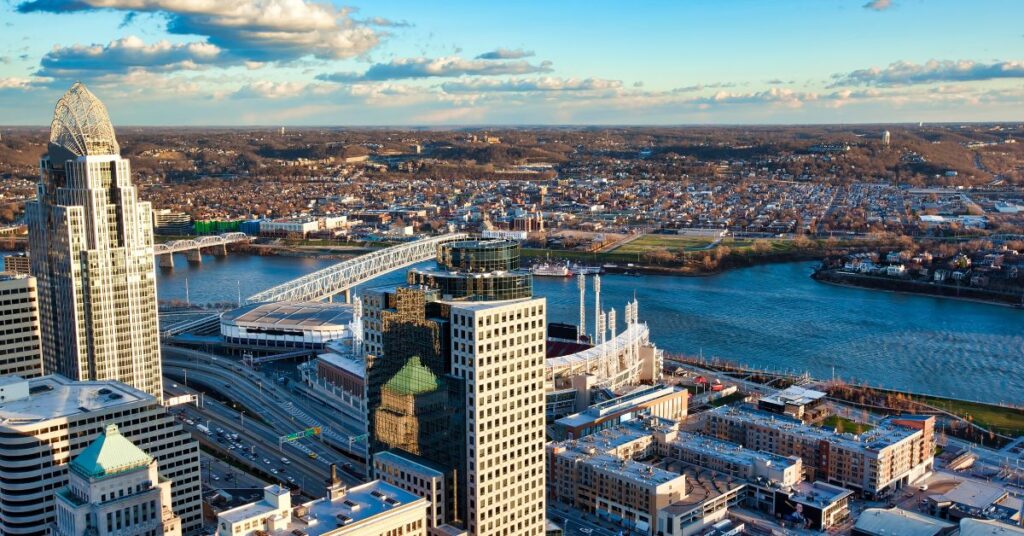
But noncoastal metros in the Midwest also saw heightened urban new construction premiums, including St. Louis (202%), Detroit (176%), Chicago (170%) and Cincinnati (169%).
For the second consecutive quarter, new homes have seen price reductions at a higher rate than existing homes — even as overall new construction prices have remained stable. That combination points to active price management by builders, who are listing homes higher and adjusting down to meet buyers.
The home building sector saw lower sales and starts in 2025 than the prior year, the continuation of a post-pandemic slowdown in buyer and builder activity as financing costs have soared.
“Builders are navigating a difficult environment,” concluded Berner, citing rising labor and material costs and competition for buyers “already stretched” by mortgage rates that have jumped since February amid elevated economic uncertainty.
“The uptick in price reductions tells you the pressure is real,” he added.