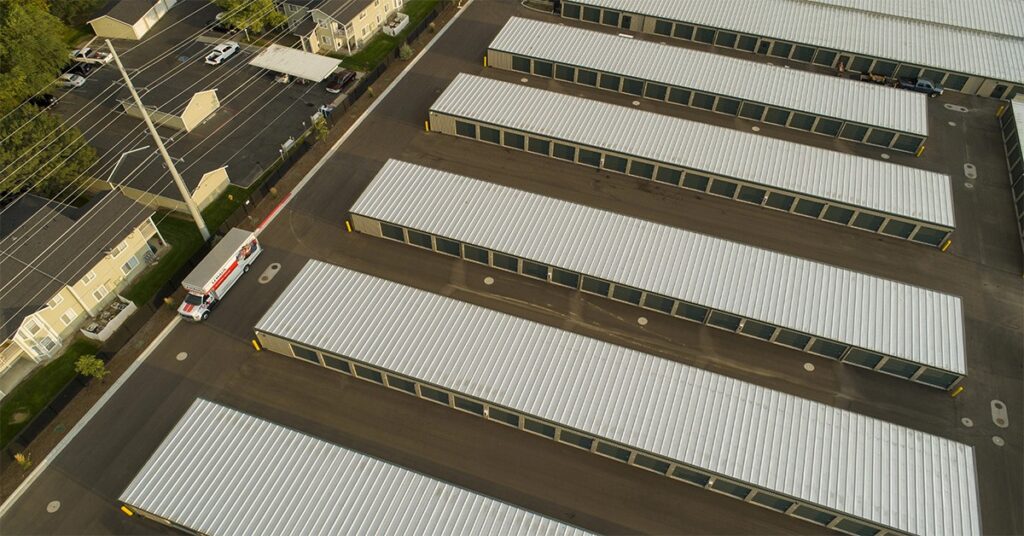
The self-storage sector, which has suffered from overbuilding following a pandemic-era construction boom, may be seeing new signs of life in 2026. Occupancy rates and in-place rents increased in the second quarter, prompting industry leaders to raise full-year same-store guidance, according to a report from Yardi Matrix.
Storage-sector real estate investment trusts reported an increase in weighted-average revenue growth of 10 basis points between the first and second quarters of this year as occupancy rates increased 10 bps and in-place rents rose 0.5%. Yardi Matrix, however, notes that the improvement this year has been entirely because of fewer move-outs rather than stronger demand.
Net move-in/move-out activity rose to 1.6% of units, the strongest level in five years, as the number of units being vacated declined. New rentals also fell for the fourth consecutive year, but the lower turnover rate has provided some support for rents and occupancy rates.

Advertised self-storage rates were down 1.6% year over year in July to an average of $16.47 per square foot across all unit sizes and types. The good news was that half of the top 30 metropolitan areas in the country posted higher year-over-year rate growth in July than in June. The bad news was that nearly all the metros continued to post annual advertised rate declines.
Year-over-year same-store advertised rates rose in only four metro areas for both non-climate-controlled and climate-controlled units. The increases were led by Austin, Texas, where advertised rates were up 2.1% from a year ago in July. The turnaround in Austin was impressive, as street rates were up 650 bps from an annual decline of 4.3% in July 2025. Los Angeles saw the highest month-over-month increase, with rates rising 1.8% in July.
The growth in the supply of new storage facilities continues to moderate, with the trailing 12-month deliveries representing 2.4% of the starting inventory. That is down from 3% of starting inventory last year. All top 30 metro markets have seen a decrease in trailing 12-month supply since the beginning of 2026.
The three metro areas seeing the highest increase in net rental square feet in the past three years were all in Florida, and were led by Sarasota-Cape Coral, where NRSF rose 24%. Tampa was next with an increase of 18.2%, followed by Orlando with an increase of 17.2%.
Yardi Matrix writes that the lower turnover in rental units provides near-term support, as the current situation protects occupancy, extends tenant stays and limits rent rolldown, with move-in rents nearly 40% below move-out rents.
Once the housing sector normalizes and storage activity increases, operators will need to “push asking rents more aggressively to limit rent rolldown and support future revenue growth,” Yardi maintains.