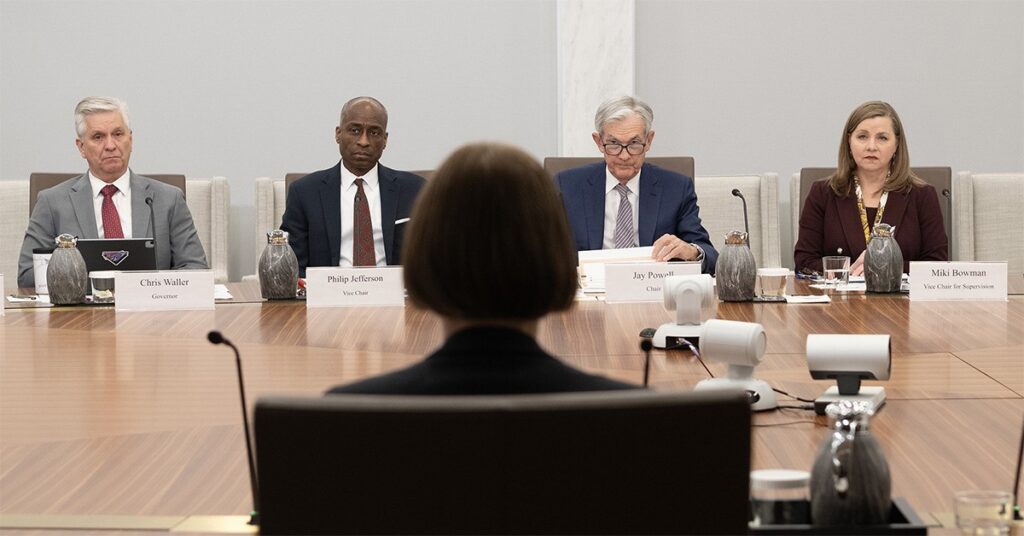
The April monetary policy meeting of the Federal Open Market Committee (FOMC) saw its most formal dissents since 1992.
There were four dissents among the 12 voting members of the Federal Reserve’s rate-setting body, to be exact, with one predictably coming from Stephen Miran. In his final meeting as a temporary Fed governor, Miran disagreed with the consensus decision to hold interest rates steady, preferring a quarter-point rate cut.
In an exceptionally rare move, three other FOMC members were on board with the rate hold but objected to an “easing bias” in the policy statement, referring to language that implies the Fed will eventually resume interest rate cuts.
But the minutes from the April meeting, released Wednesday, suggest there was more widespread unease over the decision. The minutes note that “many participants indicated that they would have preferred removing the language from the postmeeting statement that suggested an easing bias regarding the likely direction of the Committee’s future interest rate decisions.”
Additionally, the minutes state that “a majority of participants” indicated “some policy firming would likely become appropriate if inflation were to continue to run persistently above 2%.”
Dallas Fed President Lorie Logan, one of the formal dissenters, noted in a statement issued two days after the meeting that she is “increasingly concerned about how long it will take inflation to return all the way to the FOMC’s 2% target.” She added that the ongoing Iran war “raises the prospect of prolonged or repeated supply disruptions that could create further inflationary pressures.”
Regional Fed presidents Beth Hammack and Neel Kashkari also explained their dissents in subsequent public remarks, both citing heightened economic uncertainty and inflation concerns.
Hammack also observed that her “baseline” forecast is for the federal funds rate to remain anchored in its current 3.5% to 3.75% range “for a really long period of time.”
The FOMC minutes amplify that circumspect policy approach, noting that meeting participants “generally judged that the continued elevated inflation readings,” combined with uncertainty over the duration and implications of the Middle East conflict, “could necessitate maintaining the current policy stance for longer than previously anticipated.”
The next FOMC meeting is scheduled for June 16 and 17. It will be Kevin Warsh’s first meeting as Federal Reserve chairman and Jerome Powell’s first meeting in a non-chair capacity since January 2018.