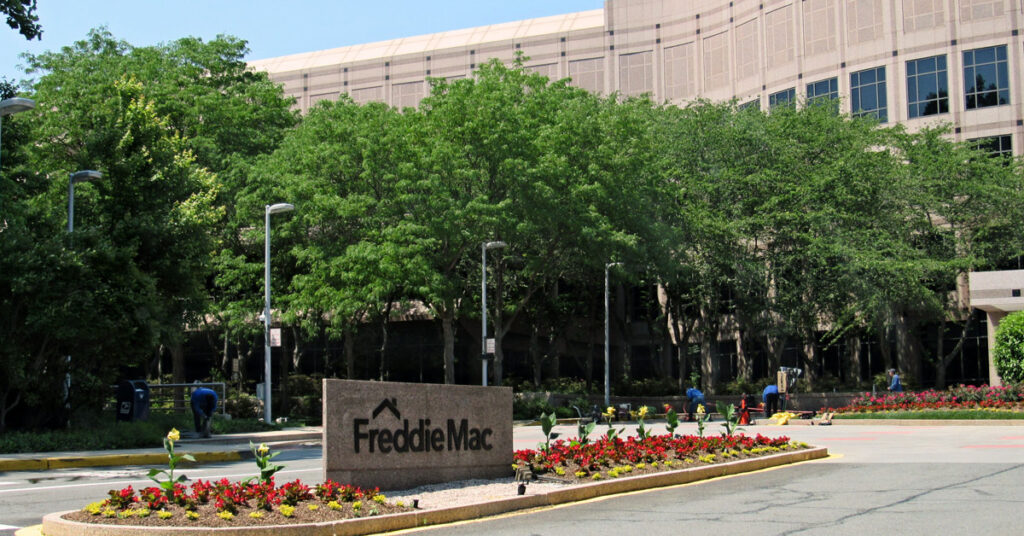
Freddie Mac concluded a strong first half to 2026 with the release of its second-quarter financial results.
The government-sponsored mortgage investor posted net income of $3.8 billion in the quarter, a 61% increase from year-ago levels. It was driven primarily by what the company described as a “credit reserve release in the current period compared to a credit reserve build in the second quarter of 2025.”
The results follow a first-quarter bounce back that had been aided by a surge in refinance activity. Freddie had closed 2025 posting a 14% yearly decline in the fourth quarter.

The company reported a net worth of $78 billion as of June 30, a 5.4% increase from the first quarter and up 20% year over year. Looking back two years, it’s up 46.6% from Freddie’s net worth of $53.2 billion at the end of 2024’s second quarter.
“Freddie Mac delivered strong second quarter financial results, reflecting the strength of the business, and disciplined execution against our priorities,” commented Bill Pulte, the chair of Freddie Mac’s board of directors and the director of the Federal Housing Finance Agency. He said the net income was “driven by strong revenues, a credit benefit and continued cost discipline.”
Net revenues of $6 billion were an increase of 1% over the year, “primarily driven by higher net interest income, partially offset by lower non-interest income (loss).”
Net interest income was reported at $6 billion, up 13% year over year. Freddie attributed the gain to the “increase in the balance of fully guaranteed securitizations in the Multifamily mortgage portfolio due to the change in Multifamily business strategy and continued mortgage portfolio growth in Single-Family.”
The mortgage portfolio of $3.7 trillion at the end of the quarter was up 2.7% from $3.6 trillion at the end of the second quarter of 2025.
Kenny Smith, Freddie Mac’s CEO, broke down the results.
“In the second quarter, together with lenders of all sizes, we helped nearly 439,000 households buy, refinance or rent a home, including 97,000 first-time homebuyers,” commented Smith. “Nearly 91% of the rental units and 54% of the single-family homes we supported were affordable to families earning 120% or less of area median income.”