
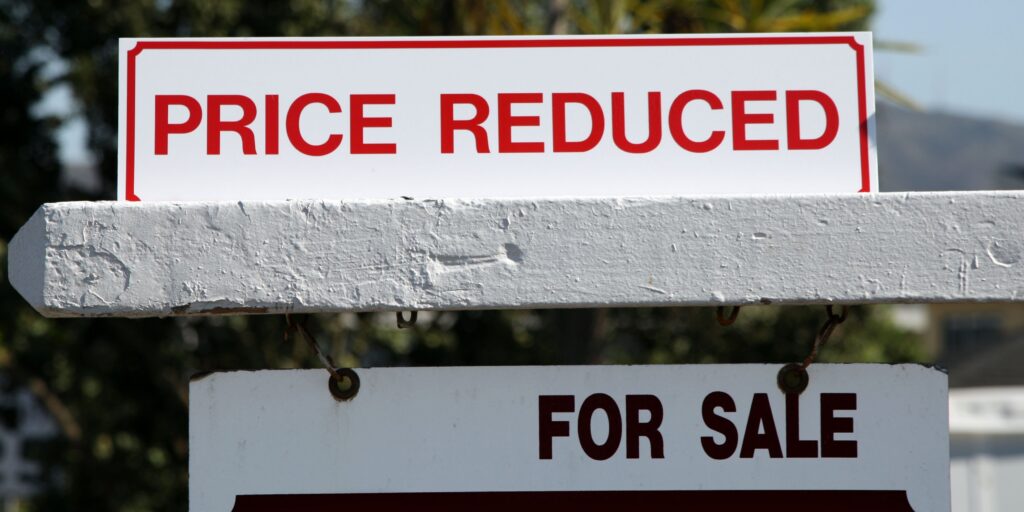
U.S. home prices continued a trend of muted though modest gains in July as Midwest and Northeast markets outperformed counterparts across the South and West.
Real estate analytics firm Cotality reported Tuesday that national home prices rose 1.4% year over year in July while posting no growth from June.
“While prospective buyers may feel squeezed by volatile mortgage rates, slower home price appreciation should gradually help ease affordability pressures,” noted Selma Hepp, chief economist of Cotality, “especially if wage growth remains consistently stronger.”

How gradual those affordability gains may emerge remains to be seen. Since early 2025, sustained softening in home prices on a regional basis — and even outright declines — has improved affordability for buyers in markets largely concentrated across the South and West.
Rising mortgage rates in 2026, however, have meaningfully eroded purchasing power. Data from the Mortgage Bankers Association shows average mortgage rates for typical 30-year home loans started July around 6.58% and ended the month above 6.8% as attempts to negotiate an end to the Iran war broke down.
While average hourly wages were 3.1% higher than a year ago in August, according to the latest government jobs report, that marked the slowest pace of annualized growth this year, reflecting a steady decline from a yearly peak of 3.8% annual wage growth in February.
Adding insult to injury for homebuyers, the annual pace of inflation as measured by the consumer price index has consistently outpaced annual wage growth in 2026. While workers may be earning more dollars, broader spending capacity has diminished relative to earnings, hurting household budgets.
Connecticut and Illinois posted the strongest annual home price growth in July, with prices surging 6.8% in both states. Indiana, New Jersey and Nebraska followed with annual gains around 5%.
However, Cotality flagged a momentum shift in July that may benefit shoppers heading into the typically slower end-of-year sales season.
Compared to just 10 in June, 19 metros recorded negative three-month price momentum in July, with rising mortgage rates cited as keeping downward pressure on prices.
The most notable three-month declines occurred in the West, including in San Jose, Calif., Austin, Texas, and Everett, Wash. On a year-over-year basis, Texas, Colorado and Washington led the country in declines, with prices sliding 0.8%, 0.7% and 0.4% in those states in July.
Still-robust appreciation in the Northeast led Cotality to flag those markets as most at risk to future price declines, especially given that “affordability has deteriorated significantly relative to local incomes.”
“As we move through the remainder of the year, local labor market dynamics and affordability constraints will continue to shape housing market performance as much as broader macroeconomic shifts, especially the direction of mortgage rates,” added Hepp.