The U.S. housing market is experiencing regional home price divergence as inventory disparities present contrasting sales conditions for buyers and sellers across the country.
Experts tell Scotsman Guide that regional splintering in the post-pandemic U.S. housing market reflects “multiple housing cycles” happening simultaneously amid a fourth year of three-decade-low sales and plunging investment in single-family home construction.
Eyeing a shrinking production pipeline, housing economists cautioned in May that single-family supply imbalances in the U.S. stand to worsen before they improve, widening regional home sales and price performance divides as the Iran war piled additional pressure onto home builders.
“Looking ahead, I am not convinced that market expectations are fully accounting for the persistence of these regional divergences,” said Selma Hepp, chief economist at real estate analytics firm Cotality, in a recent email to Scotsman Guide.
U.S. housing inventory has steadily increased since the pandemic-era homebuying frenzy tightened supply conditions in an already underbuilt single-family sector. Realtor.com said in early July, however, that total active inventory remained nearly 10% below June 2019 levels at the end of the second quarter.
New listings, meanwhile, were nearly 17% below their June 2019 mark and just 2.4% higher than year-ago levels. But much of that growth was concentrated in the Northeast, with 12.6% more new listings than last June compared to 1% growth in the Midwest, 0.4% growth in the South and a 0.8% decline posted in the West.
Those regional supply imbalances are colliding with historically poor purchase affordability, leaving first-time and low-to-moderate income homebuyers with increasingly limited access to homeownership under current market conditions.
Regional gaps widening in starter-home prices
Homebuyers still active in the housing market in mid-July — near the early start of the usual summer slowdown — are contending with borrowing costs that have risen to their highest levels since last August and spent eight straight weeks over 6.5%, since mid-May.
The erosion of purchasing power and mortgage eligibility is disproportionately affecting first-time and low-to-moderate income borrowers — cohorts characterized by lower downpayments and thinner finances — who have also been squeezed by five years of persistently high inflation.
A new report published Monday by Realtor.com offers an even closer look at how regional divergence in supply and pricing trends are manifesting specifically for entry-level homebuyers who have watched price gains on “starter-home” inventory outpace income gains by a wide margin in recent years.
The typical starter home cost $344,000 in June 2026, up from $256,000 just seven years ago, the report indicated. Nationwide, the minimum recommended income needed to purchase that typical starter home was about $78,000, a more than 80% increase from $43,000 in 2019. Median household income has risen 28.3% over that period, from about $69,000 to $88,100.
In June 2019, more than 55% of active listings nationwide were priced below $350,000, a share that has decreased to 37.6% as of June 2026. Typical prices for two- and three-bedroom listings have posted 44.5% and 41% appreciation since 2019 compared to nearly 37% and 34% for four- and five-or-more-bedroom properties.
But starter-home price tiers — reflecting homes listed below $350,000 nationally or under 80% of an area’s median list price — have fallen in the South and West since 2022 while continuing to rise sharply in the Northeast and Midwest, creating widely varied conditions for entry-level buyers depending on geography.
Construction trends entrench regional divergence
“In the South and West, builders spent the last few years chasing demand at the entry level, and buyers there are actually seeing more choices and better prices than they had two years ago,” said Hannah Jones, senior economist at Realtor.com, in the report.
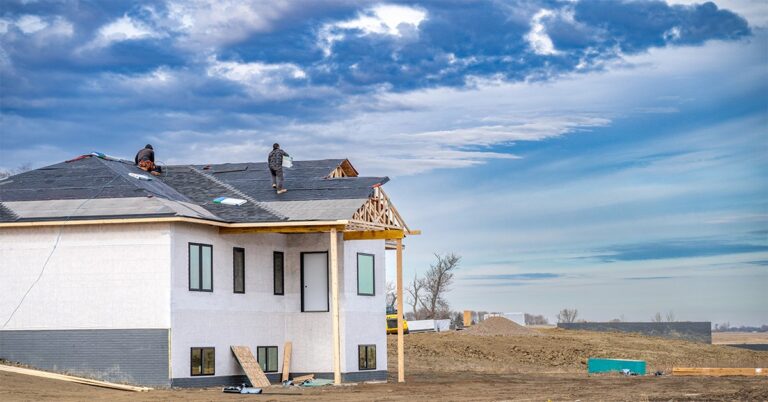
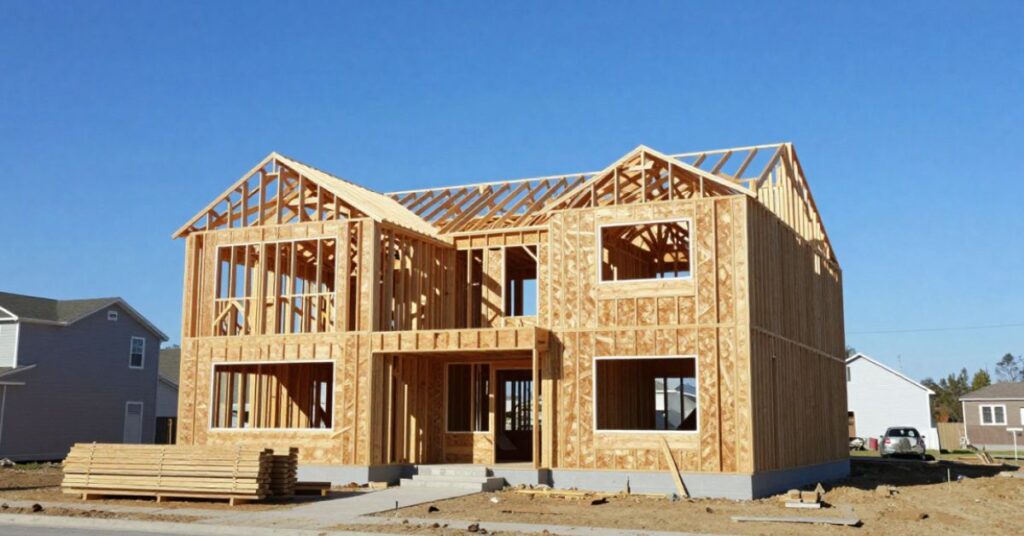
Roughly 6 in 10 new homes added since early 2020 have been built in the South, reflecting momentum supported by population growth, regulatory flexibility, lower construction-cost overhead and better buyer affordability.
U.S. Census Bureau estimates indicate about 20% of new homes have been constructed in the West since early 2020, with less than 15% added in the Midwest and under 10% in the Northeast. Uneven supply and demand pressures will likely persist amid a pullback in single-family construction activity.
“In the Northeast, that construction response never happened,” added Jones, “prices kept climbing even as the rest of the housing market cooled.”
The latest government estimates show single-family permits fell 4.3% year to date through the end of June compared to the first half of 2025, while single-family starts were down 5.3%. Starts were 14.3% lower year to date in the Northeast and 7.1% lower in the Midwest, showing fewer homes in builder pipelines.
From around $237,000 in June 2019, the starter home threshold in the South peaked at $323,000 in 2022 before declining 3.5% to $311,000 this past June. Starter-home thresholds charted a similar course in the West, rising from $368,000 in 2019 to $518,000 in 2022 before sliding 7.3% to $480,000 in June 2026.
In contrast, the Midwest starter-home threshold rose from $192,000 to $240,000 in 2022, then climbed to $264,000 this spring. The Northeast, presenting the most difficult purchase conditions for lower-income and first-time buyers in the U.S., saw its starter-home threshold rise from $296,000 in 2019 to $394,000 in 2022 and $444,000 as of June 2026.
“Unlike the South and West, there’s been no pullback there — the trend is still moving in the wrong direction,” said Jones.