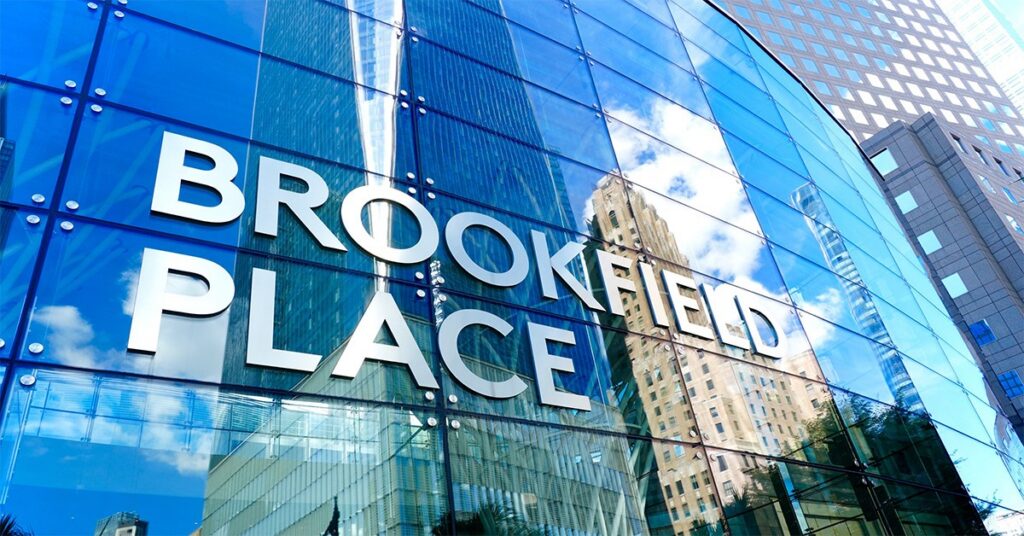
Signs of distress in the commercial real estate sector continue to pop up as even the biggest landlords face difficult decisions when refinancing.
The latest major surprise was the announcement that Brookfield Corp., the Canadian real estate giant, had walked away from the $600 million Beaudry apartment tower in downtown Los Angeles. The sleek 64-story high-rise opened in 2023 and is one of the tallest residential towers in California. The building offers such amenities as a saltwater swimming pool, a pet spa and a golf simulator.
Brookfield gave back the property to lender Bridge Investment Group, a subsidiary of Apollo Global Management, rather than face refinancing the building’s estimated $360 million loan, which would require hefty additional fees, according to The Wall Street Journal. Brookfield’s cost of debt had wiped out its equity in the property, giving it little reason to pursue refinancing options.
It is estimated that landlords are facing the problem of refinancing $1.8 trillion in debt over the next decade. Nearly half of that amount is due between this year and 2028. Many of those landlords are staring at refinancing costs that may be more than double that of the original loans.
While the troubled office market has long faced default troubles, now the issue is shifting into the multifamily sector, where delinquency rates are on the rise. Delinquencies for multifamily loans in commercial mortgage-backed securities have risen from 1% in 2023 to 8.02% in September, the highest level since late 2020, according to Trepp.
The Beaudry default was only the latest move by Brookfield, which walked away from more than $1 billion worth of loans to downtown Los Angeles office properties in 2024 alone. The defaults were “a chilling signal that even institutional-grade assets were not immune,” wrote REoptimizer, a real estate software company.
Brookfield’s moves are part of a pivot away from office towers. Last year, the company announced plans to sell $10 billion worth of office properties by 2030.
The decision to default on the Beaudry building highlights the difficulties facing landlords in cities like LA, where they are fighting negative perceptions of downtown living and must offer discounts to lure renters. At the same time, landlords are facing capital markets challenges as interest rates remain high and refinancing lurks in the future.
The irony of the Beaudry property is that it seemed to be a success. The tower’s 785 units were roughly 95% occupied. Bisnow reports that rents for the building, which run from about $2,600 for a studio to $8,900 for a three-bedroom unit, are high for downtown Los Angeles, but below what Brookfield had targeted.
Los Angeles isn’t the only major city struggling with downtown properties.
In Chicago, a 27-story office tower along the iconic Magnificent Mile shopping strip is heading for a foreclosure auction at the end of November after landlord Golub & Co. defaulted on a $51 million loan.
And the 31-story office tower at 225 W. Wacker Drive in the Windy City, which is home to the global headquarters of Cushman & Wakefield, was sold at the end of October for just over $115 million. That represented a 45% discount on the $210 million it sold for in 2020.