Consumers’ economic outlooks took a bath in early August, according to preliminary survey results published by the University of Michigan on Friday.
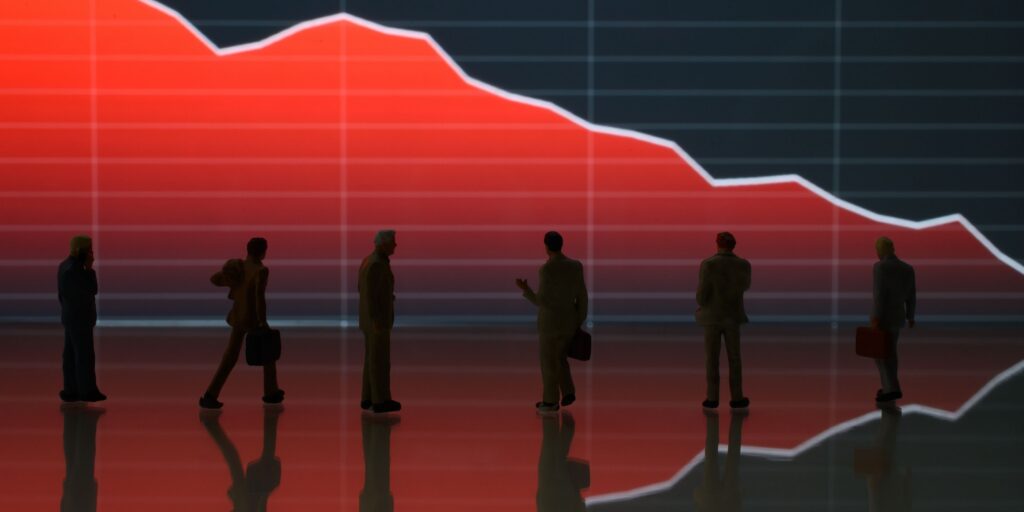
Views on short-term and long-term U.S. business conditions drove the sharp decline in the university’s index of consumer sentiment, which fell 7.6% from July to land at 51.
Reversing two consecutive months of improving outlooks, the index as of early August remained 12.4% below year-ago levels, with sentiment among respondents who identify as Republican hitting its lowest mark since the 2024 presidential election.
Consumers’ views on current economic conditions fell 5.5% over the month and were 16% lower than a year ago. The index tracking future economic expectations declined 8.7%, landing almost 10% below the year-ago reading.
“Decreases in sentiment were seen across the political spectrum, with Republicans exhibiting the strongest month-to-month decline in August,” noted Joanne Hsu, director of consumer surveys at the university, in analysis accompanying the report.
Inflation that has risen sharply since the start of the Iran war in late February continued to weigh on sentiment across all demographics, but disproportionately darkened the outlooks of older people, lower-income consumers and those without college degrees.
“These groups are all particularly vulnerable to any erosion of purchasing power stemming from inflation,” added Hsu.
While the pace of consumer price increases eased slightly in June and July amid brief cooling in U.S.-Iran tensions, the resumption of active fighting in late July and subsequent disruptions to global oil and bond markets risks igniting further cost pressures for households and businesses.
The consumer price index clocked 3.4% growth from a year ago in July, down from 3.5% in June but well above the 2.4% annual growth posted in January and February.
Survey findings from the first two months of the year indicate tariff policies and employment concerns around AI-related job losses dominated consumer sentiment on the economy.
Hsu noted in January that “consumers do not appear to be connecting foreign developments to their views of the economy.” The war in Iran, which shows no signs of abating, has shifted that calculus for consumers.
With inflation having remained above the Federal Reserve’s stated 2% target for more than five years, only 8% of survey respondents in August said they expect their income growth to exceed inflation in the year ahead. Year-ahead inflation expectations rose slightly to 4.3% in August from 4.2% in July, compared to 3.4% in February before the war.
But Hsu said Friday that respondents’ present concerns over personal finances were secondary to souring outlooks on expected business conditions, which plunged 11% over the near term and 17% for the long run.
The report did not indicate what aspect of current economic conditions specifically undermined business outlooks, but job growth turned negative in July, according to government figures, and year-over-year wage growth lagged inflation for the third time in the past four months.