After a strong 2025, luxury retail leasing in the first half of 2026 has cratered, falling 46% year over year, according to a report from JLL.
Luxury leasing activity surged to more than 510,000 square feet in 2025, the highest in recent years, and more than 100,000 square feet above 2024’s level of 407,396 square feet of new stores.
But 2026 has been a different story, with openings of new locations in the first half of 2026 slowing to 123,000 square feet, down from 227,000 square feet in the first half of 2025.

The slowdown is partly due to luxury retailers becoming more strategic and selective with store openings. They are also downsizing as retail executives prioritize a smaller number of high-quality locations.
JLL reports that 48.4% of new store openings this year were under 2,500 square feet. Another 29.5% were between 2,500 and 5,000 square feet. Stores in the 5,000- to 10,000-square-foot range comprised 16.8% of new openings, while a mere 5.3% of stores were larger than 10,000 square feet.
Another change is fewer mono-brand openings, which are new stores that sell products from a single company or brand. This year, mono-brand openings are running 15% to 20% below 2022 levels.
Malls were a major destination for the new, smaller stores, housing 61% of stores under 2,500 square feet. Jewelry and watch stores comprised 43.5% of these smaller locations.
Overall, the new stores were pretty evenly split between malls, which absorbed 51.6%, and street retail locations, which accounted for 46.3% of the stores. Hospitality locations, such as resorts and hotels, comprised 2.1% of the new stock.
Street locations averaged 5,850 square feet, while mall stores measured 3,144 square feet. JLL writes that the nearly 2-to-1 size gap is partly because of the small number of outsized flagship stores anchoring corridors in New York City and Los Angeles. Three of the five store openings above 10,000 square feet were on streets in those two markets. Street activity was concentrated in a few established retail hubs rather than spread across many retail street locations.
The top city in North America for new openings was Vancouver in British Columbia, which saw 30 luxury store openings this year thanks to the redevelopment of Oakridge Park, a remodeled high-end retail location that opened in mid-2026 with 30 luxury and luxury-lite tenants. It was followed by New York City, with 18 new stores, and Miami, with 11.
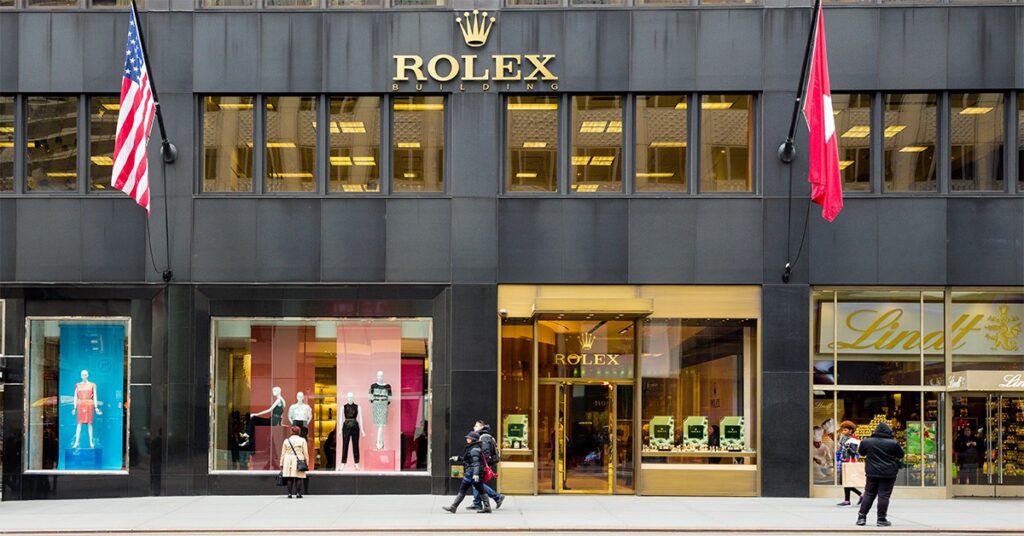
Miami’s Design District was the top prime retail corridor in the U.S. for new luxury stores in the first half of this year with eight openings, including locations for the Rolex, Bvlgari and Vacheron brands.
Other top luxury spots included New York City’s Madison Avenue and the SoHo neighborhood in lower Manhattan, each with five new luxury stores. The Beverly Hills Triangle and New York City’s Meatpacking District each had three new luxury stores.
JLL writes that even with the year’s soft start, 2026 could still end up being a decent year for luxury retail expansion. Quarterly data shows that store openings tend to spike in the second half of the year, as brands often time their new openings for the holiday season.