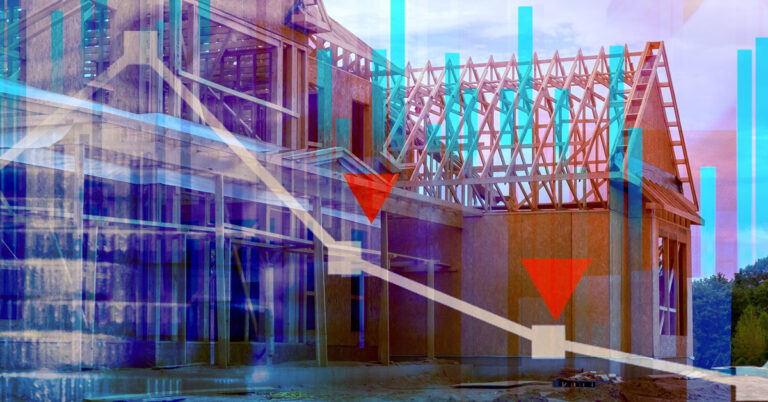

Pending home sales posted an even steeper year-over-year decline in October than the previous month as surging mortgage rates drove prospective buyers to the sidelines.
The National Association of Realtors (NAR) said Wednesday that pending sales declined about 4.7% from September and were 17% below year-ago levels. No regions of the U.S. recorded monthly or annual gains.
A nonplussed Lawrence Yun reflected on the wreckage of a late summer surge in Treasury yields and mortgage rates in commentary accompanying the monthly report.

“Two consecutive months of record-low pending contracts point to very sluggish fourth-quarter home sales closings,” said NAR’s chief economist. He projects annual existing-home sales are likely to remain around levels last seen in the mid-1990s for the fourth consecutive year in 2026.
The pace of existing-home sales fell to 16-year lows in October. That reflects closed contract volumes from pending sales signed in September, when mortgage rates for typical 30-year loans rose from 6.7% to about 7.3% over the course of the month, according to Freddie Mac data.
“It is somewhat puzzling that home sales would fall to levels last seen three decades ago, even as the U.S. population has grown by roughly 75 million,” added Yun. He offered one of two explanations for the trend: a sizable demand bottleneck or “the dream of homeownership” slipping increasingly out of reach for typical earners.
Democrats inherit legacy of COVID-era policies
Democrats won back majorities in both chambers of Congress during recent midterm elections, with affordability — and especially housing affordability — dominating concerns among voters.
Consumers who clearly want little to do with 7% mortgage rates but remain eager to access homeownership will now look to new legislative leadership for answers.
The landmark housing bill that became law in July, the 21st Century ROAD to Housing Act, is not expected to yield tangible gains in housing supply or affordability for years, reflecting the procedural nature of implementation and the longer-term reforms it strives to achieve.
Experts say enacting policies to rein in inflation driven by widening federal deficits and tariffs is one method to address near-term pressures from higher rates, in addition to any housing assistance programs new congressional leadership may push to implement.
Homebuying demand has shifted structurally lower since the COVID-19 pandemic, in large measure due to entrenched mortgage rate lock-in effects born of overly stimulative pandemic-era fiscal and monetary policies enacted from 2020 to early 2022, when Democrats controlled the White House and half of Congress.
Since the end of the third quarter of 2022, typical mortgage rates have exceeded 6% for all but one week last February. Meanwhile, roughly half of existing mortgages carried rates under 4% as of the end of September, per ICE Mortgage Technology. That incentivizes millions of homeowners with those subsidized rates to protect the savings they accrue, many of whom likely cannot afford to purchase at currently elevated rates and homes prices.
Cost pressures expected to persist
A report published last week by Realtor.com found that purchasing a home at the median price above $410,000 and a mortgage rate north of 7% would add roughly $1,100 to monthly principal and interest payments compared to current median principal and interest payments for existing homeowners.
That mortgage payment gap underscores the financial hit to repeat buyers trading in pandemic-era rates in the current market. It also shows the higher earnings and reserves thresholds that first-time and low- to moderate-income households must meet to become homeowners.
In other words, housing demand is trapped behind severe bottlenecks, and access to homeownership is increasingly unattainable. On a yearly basis, NAR reported pending home sales in October were down 11% in the Northeast, 14% in the Midwest, 19% in the South and 20% in the West.
Sam Williamson, senior economist for First American Financial Corp., said “buyers everywhere are running into the same affordability wall” in a reaction to Wednesday’s pending sales data shared with Scotsman Guide.
“Still, a meaningful rebound looks unlikely any time soon,” he added, “with further rate hikes by the Federal Reserve likely to keep a floor under rates as it keeps up its fight against inflation.”