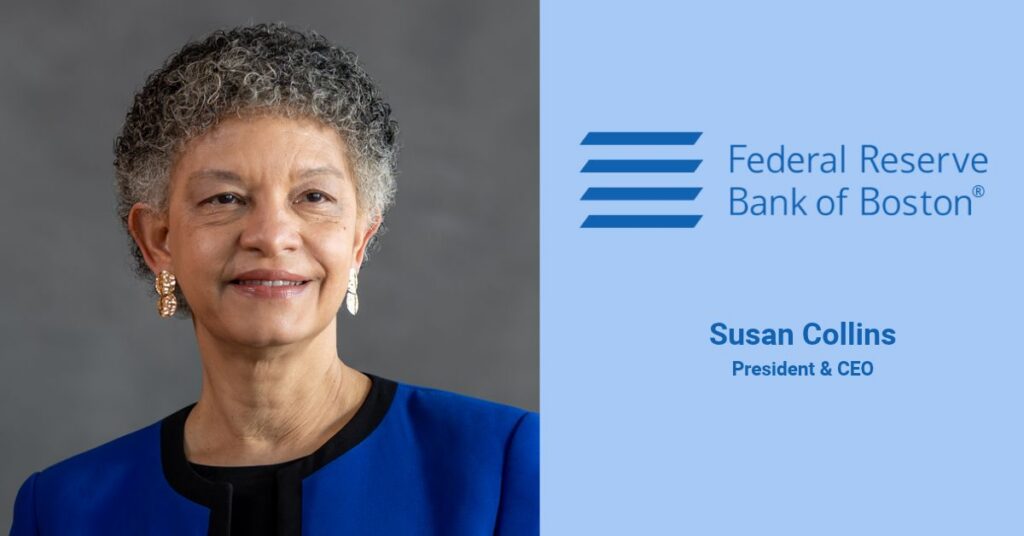
Boston Fed President Susan Collins did not mince words describing the state of a sustained slowdown in the U.S. housing market at her bank’s annual economic conference Friday.
“There is no ‘silver bullet’ that will solve the many challenges facing housing today,” Collins said in prepared remarks. “It will take constructive collaboration among many parties.”
From elevated mortgage rates to a multiyear contraction in single-family construction activity, the U.S. housing market continues to face a range of demand and supply pressures that have kept home sales at multidecade lows for four straight years following the COVID-19 pandemic.

Collins echoed a point recently made by Federal Reserve Governor Michael Barr that beating inflation should lead to long-term housing affordability gains by putting downward pressure on mortgage rates. She conceded, however, that the need to tighten financial conditions to combat inflation will likely hurt housing activity in the near term.
“It can also affect consumers’ willingness and ability to obtain a mortgage and, hence, housing demand,” said Collins, who discussed potential policy adjustments at the upcoming Federal Open Market Committee (FOMC) meeting in December during an interview with Bloomberg’s Michael McKee on the sidelines of the conference.
“Healthy growth” in the broader economy and a labor market that Collins described as being on “solid footing” contrast with inflation that is “too high and has been for too long,” she said. The Federal Reserve has a dual mandate to achieve price stability and full employment.
Collins, who was not a voting member of the FOMC in 2026, will cycle into that role in 2028. She said recent months of inflation data show price pressures broadening out across the U.S. economy.
A pair of inflation reports published by the Bureau of Labor Statistics this week revealed the consumer price index rose more than economists had forecast for October, while the producer price index, which tracks wholesale inflation, posted its largest annual gain since 2022 last month.
Those data points came on the heels of a trio of reports from September that also showed resurgent inflation pressures amid ongoing impacts of the Iran war, tariffs, artificial intelligence expenditures and strong consumer spending.
Collins said she isn’t only worried about broadening inflation, but is also “concerned about persistence and how quickly inflation may come back down or stay elevated.”
However, she declined to say whether she believes a jumbo half-point rate hike in December, as recently floated by Fed Governor Christopher Waller, is the appropriate action. Chicago Fed President Austan Goolsbee, who will take a voting role on the FOMC next year, has also declined to endorse a half-point hike next month.
“The appropriate direction for monetary policy is clear,” said Collins on Friday, telling Bloomberg that the latest inflation data have shifted her forward-looking projections from September and a “tighter policy path” may be necessary.