“Mild degradation” was how Federal Reserve Chairman Jerome Powell described the condition of economic data supplied by the federal government in June, during a congressional grilling by the U.S. House Committee on Financial Services.
At the time, the Fed had just held rates steady for the fourth time in 2025, much to the displeasure of President Donald Trump. The House hearing also occurred against the backdrop of a rapidly declining federal workforce, with the Department of Government Efficiency (DOGE) terminating large swaths of the government’s rank-and-file staffers.
Among the departments hit by DOGE cuts was the Bureau of Labor Statistics (BLS), a division of the U.S. Department of Labor that supplies consumer price index (CPI) data, a widely tracked measure of inflation.
The Wall Street Journal reported in June that the BLS shared an email with economists, explaining that the bureau had to rely on imputed CPI data estimates to an unusual degree “due to a staffing shortage in certain CPI cities.”
The potential degradation of CPI data received another jolt this week when the BLS reported that consumer prices rose at an annual rate of 2.7% in November. Economists polled by Dow Jones had expected a much hotter 3.1% annual increase.
Economists and market observers immediately seized on the data release as likely being compromised by the 43-day federal government shutdown, which began Oct. 1 and limped to a halt on Nov. 12.
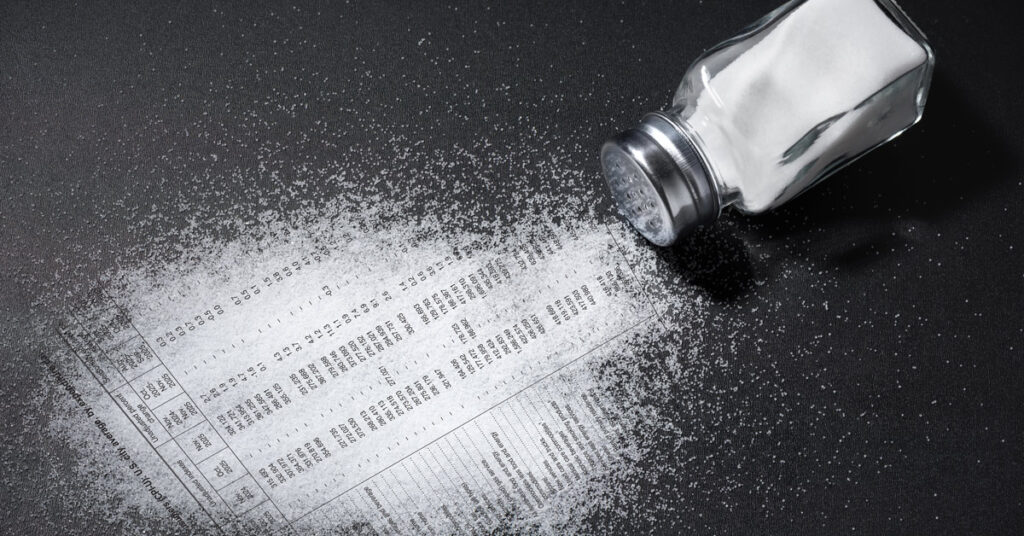
“Take it with the entire salt shaker,” suggested a team of Wells Fargo economists, tongues firmly in cheeks.
The Wells Fargo economists — Sarah House, Michael Pugliese and Nicole Cervi — had predicted a 3% CPI gain. Similarly, core CPI excluding food and energy prices clocked in at 2.6%, well below their 2.9% forecast.
They cautioned against reading too much into the report, noting they believe the data “will be noisy for at least another month or two” due to the data gap created by the shutdown, when the BLS ceased collection activities.
“A bounce back in prices in the December CPI report to be released on January 13 is probably coming,” the Wells Fargo team wrote in an analysis released Thursday. “Through the noise, we believe inflation is slowing on trend, even if today’s reading overstates the magnitude of the slowdown. We remain comfortable with our current projection of rate cuts from the FOMC in March and June of next year.”
The FOMC refers to the Federal Open Market Committee, a 12-member contingent of the Federal Reserve that sets monetary policy.
One of those FOMC members, New York Fed President John Williams, said during an interview with CNBC on Friday that there were some “technical factors” stemming from the pause in data collection during October and the first half of November that distorted the November CPI reading.
“Because of that, I think the data were distorted in some of the categories, and that pushed down the CPI reading, probably by a tenth or so,” he said.
Williams added that the latter half of November encompassed the Black Friday holiday shopping period, when consumer price discounts were prevalent, which also likely created a “downward bias” to the inflation print.
The New York Fed chief was among the nine FOMC members to prioritize the slowing labor market over inflation concerns in voting for a quarter-point reduction to the federal funds rate at the December meeting.
Despite the shortcomings of the CPI report, Williams told CNBC that “some of the data that we’re seeing is actually pretty encouraging,” adding that “I think it represents a continuation of the disinflationary process we’ve seen.”