
National home price growth has stabilized in the low single-digit range, according to early estimates of November price trends released last week by title insurance giant First American Financial Corp.
Amid a national affordable housing shortage that most analysts measure in the millions of homes, the price performance of entry-level properties can act like a bellwether for local market conditions.
The dearth of affordable listings often brings home investors and first-time buyers into direct competition for the same lower-priced listings, amplifying price pressures.

Price resilience persists where buyers can find a measure of relative affordability and competition kicks up price gains. Where budgets have been stretched in recent years, softening has accelerated.
First American’s monthly Home Price Index showed average house prices fell 0.2% from October to November after slipping 0.3% over the previous month. Annual gains came in at 0.7%, the fourth consecutive month of annual home prices gains under 1%.
Mark Fleming, chief economist at First American, said in a statement accompanying the data that the U.S. housing market is adjusting to “a new normal for mortgage rates and a constrained affordability environment.”
Housing economists project that in 2026, mortgage rates will remain around or slightly below current levels in the low-6% range — meaning improved affordability for homebuyers will likely need to come from a combination of price declines and wage growth.
“The new housing market normal is characterized by minimal price appreciation and, in some regions, outright decline,” said Fleming.
Real estate analytics firm Cotality recently reported that price declines that began the year in just six of the 100 largest U.S. metros had expanded to 32 metros by October.
In the 30 largest metro markets First American tracks, annual price declines outnumbered markets with annual price growth.
However, the concentration of price gains and losses last month underscored regional price trends that have unfolded over the course of 2025, including the signals being sent by starter-home performance.
“Notably, there is a growing divide in price appreciation between markets in the Rust Belt and Sun Belt,” Fleming noted.
Pittsburgh home prices were nearly 7% higher year over year in November, while prices in Warren, Mich., and Newark, N.J., were up 5.4% and 3.6% respectively.
Oakland, Calif., home prices were nearly 7% lower year over year, on the other hand. Miami home prices fell an average of 4% annually, while Denver prices fell 3.3% and prices in Phoenix and Tampa, Fla., each slipped 2.9%.
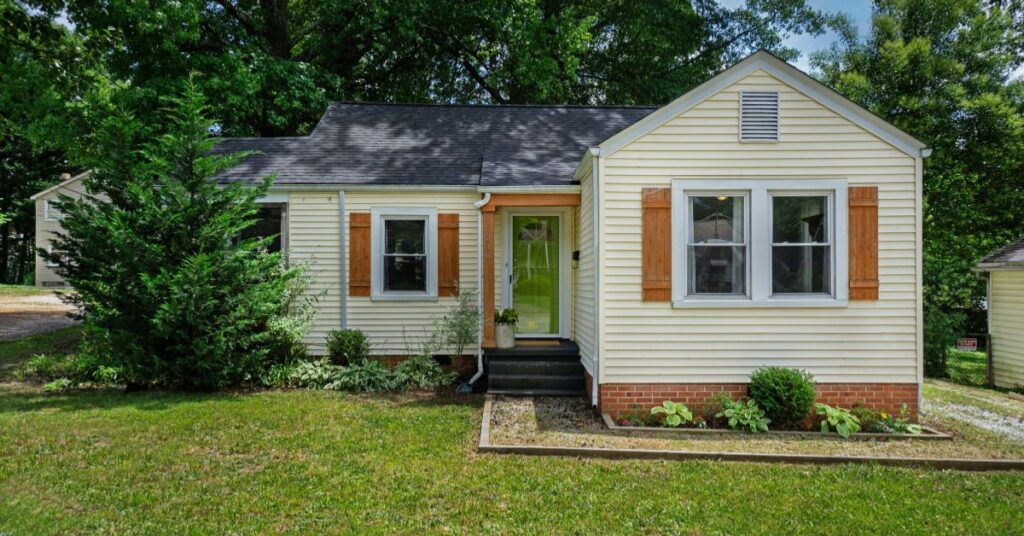
In relatively affordable markets like Pittsburgh and Warren, Mich., which led the U.S. in annual price gains last month, starter homes in an entry-level price tier exhibited the most robust price gains.
Starter homes were 12.5% and 7.6% higher in those cities, respectively, compared to 6.1% and 3.1% gains for mid-tier homes and 1.7% and 3.2% gains in the luxury category.
The opposite was true, however, in cities that experienced the largest annual home price declines last month, with luxury-tier homes demonstrating the most resilience and starter homes yielding fastest in markets shedding values.
Starter-home prices fell 9.3% compared to losses of 3.9% for luxury-tier homes in Oakland, Calif., last month. In Miami, starter-home prices fell 3% compared to luxury-tier losses of 1.7%. In Denver, too, starter homes lost 6.7% compared to 0.7% declines for luxury homes.
“When it comes to house price appreciation, where the home is matters as local market performance varies widely,” Fleming concluded.