The industrial sector continued its strong showing in the third quarter, leasing nearly 203 million square feet, according to a report from JLL, which is up 38.5% from a year ago.
Because of the demands of data centers, the industrial sector was in major growth mode, with leasing in the first three quarters of 2026 reaching 523.5 million square feet, almost equaling the full-year leasing in 2025.
Net absorption during the quarter was 71.4 million square feet, up nearly 87% year over year. So far this year, net absorption has already surpassed the 151.5-million-square-foot level reached for all of last year.

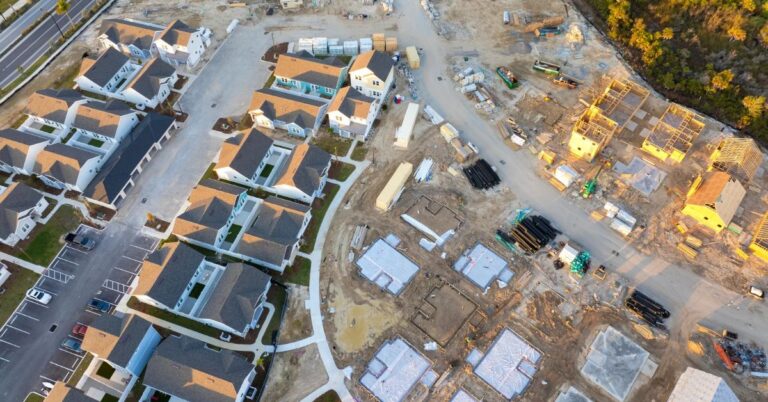
The industry’s construction pipeline expanded to 317 million square feet, the highest level since the beginning of 2024. Properties under construction increased nearly 29% year over year and nearly 15% from the previous quarter. Completions reached 60.7 million square feet and remained in line with absorption.
Vacancy rates were at 6.8%, down 80 basis points from a year ago, and asking rents rose 3.2% to $10.55 per square foot. It was the fastest annual growth in rents since the second quarter of 2024. Warehouse supply was limited in various hubs, including Chicago, California’s Inland Empire and New Jersey.
The industry continued to see a flight to quality, with Class A warehouse absorption rising to 75.7 million square feet, up from 50.5 million square feet one year ago. All big-box leasing segments exceeding 500,000 square feet recorded year-over-year increases. Tenants sought large-format buildings that would enable them to consolidate operations into single-location hubs, reducing costs and supporting delivery models that require extensive storage near major population areas.
JLL reports that much of the industrial growth reflects “cascading space requirements from data center development, as equipment suppliers, construction vendors and power infrastructure companies establish distribution hubs near hyperscale facilities, with concentrated activity in Dallas/Fort Worth and Metro [Washington] D.C.”
The industry is also seeing new warehouse demand in secondary markets where land and power is available to build data centers. Cold storage and temperature-controlled facilities also are in strong demand, driven by pharmaceutical distribution, food safety regulations and direct-to-consumer grocery delivery.
“Nearshoring and onshoring of production continue to expand, with manufacturing tenants prioritizing facilities that offer heavy power infrastructure, high clear heights and proximity to skilled labor markets,” JLL writes.
Despite the strong showing in the third quarter, the industrial sector is facing an uncertain future. Increasing diesel prices — which have surged 66% year over year — along with other rising costs and geopolitical complexities could hamper growth. But prices are expected to moderate as global supply conditions stabilize.
“Trade policy uncertainty, tariff volatility and international conflicts continue to shape occupier strategies,” JLL reports, “while new risks, including cybersecurity threats to supply chain infrastructure and severe weather events disrupting transportation networks, are testing operational resilience.”