
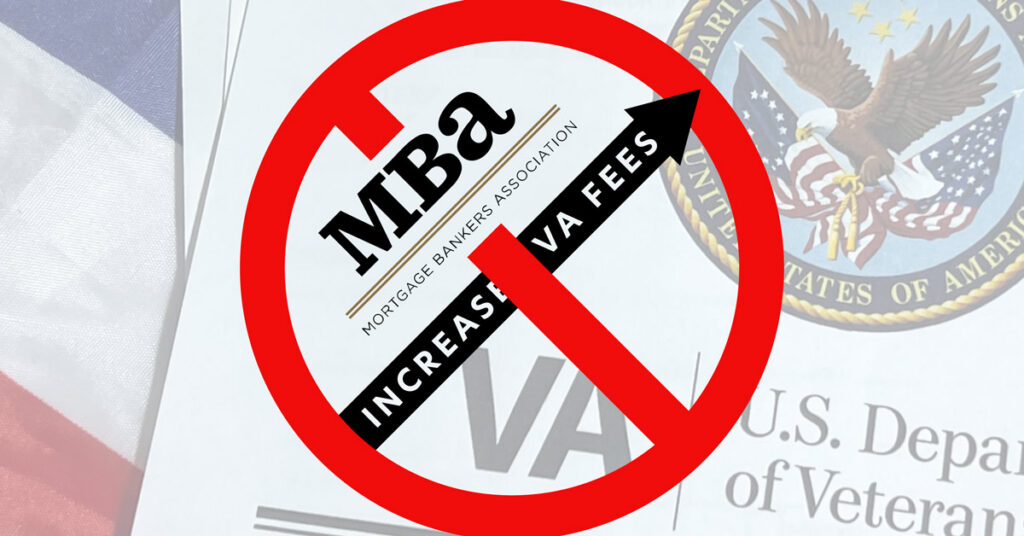
The housing finance industry’s largest trade group is calling on lawmakers to remove a controversial mortgage fee hike that the Republican-controlled House of Representatives included in a recently passed bill addressing a range of veterans’ issues.
Introduced in June by Rep. Mike Bost, R-Ill., who chairs the House Committee on Veterans’ Affairs, the Take Care of America’s Veterans Act would raise benefits for severely disabled veterans and surviving spouses, among other reforms.
But the bill would help pay for that expansion by nearly tripling the fee on refinance mortgages backed by the Department of Veterans Affairs (VA) for active-duty service members and eligible veterans, raising it from 0.5% to 1.4%.

While applauding the broad aims of the bill — which includes reforms to taxes and pensions for veterans, education and employment programs, healthcare delivery systems and an outdated appeals process — the Mortgage Bankers Association (MBA) said in a letter sent Wednesday to Senate leadership that it cannot support the bill in its current form.
“The funding fee offsets in Section 104 of H.R. 9237, if enacted, would have an inverse and negative impact on veteran homeowners and homebuyers (and other eligible servicemembers) who rely on their earned VA Home Loan benefit to achieve the American Dream of homeownership,” wrote Bill Killmer, senior vice president of legislative and political affairs for the MBA.
The remarks echoed those of other industry advocates who favor the bill’s varied ends but not its means of achieving them.
“The problem is that the way that they are funding those increased benefits is on the backs of active-duty service members and other veterans,” Brendan McKay, owner of McKay Mortgage Co. and chief advocacy officer of the Broker Action Coalition, said in a note to Scotsman Guide last week.
In addition to hiking the fee on interest rate reduction refinance loans (IRRRLs), Section 104 proposes to raise fees on loan assumptions. Those less common products enable a new borrower to take over an existing borrower’s mortgage at their presumably lower mortgage rate.
Democratic lawmakers in the House took issue with the way they said Republican counterparts pushed through a vote on the bill with a simple voice vote when not all voting members were present. With the bill now waiting to be taken up in the Senate, the mortgage industry has made clear where it stands on the legislation.
“Homeownership is a foundational component of long-term financial stability, and it should not be treated as a source of revenue to fund non-related policy changes — no matter how well intended — outside of the VA Home Loan program,” wrote Killmer.