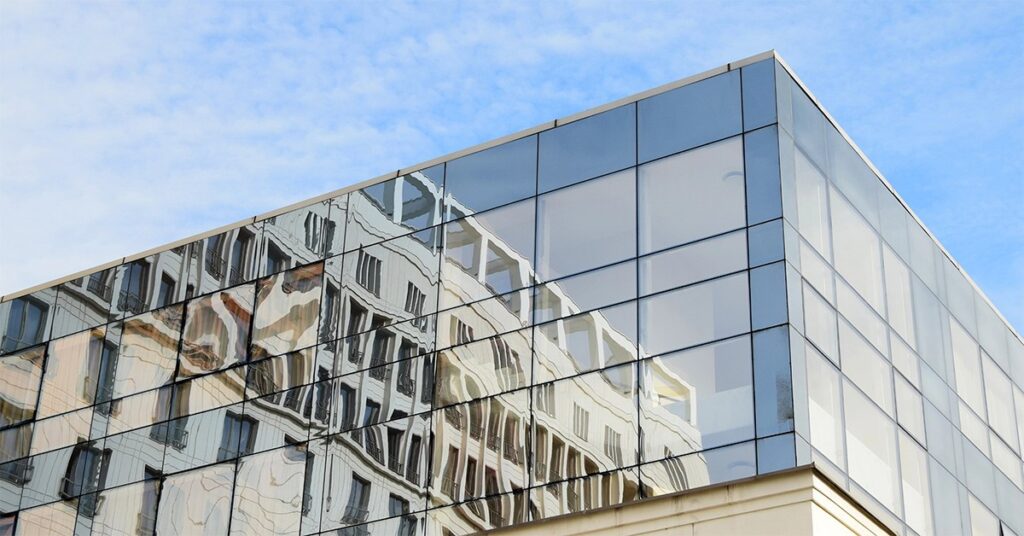
Chicago’s Millinery Mart Building is about to reinvent itself once again. According to the Chicago Sun-Times, the nearly 100-year-old Wacker Place high-rise, which started out as a center for hat manufacturing and later became an office for Esquire magazine, is on the cusp of becoming a 252-unit apartment building.
Slated to open this August, the terra cotta, limestone and brick-clad building is one of the Windy City’s latest examples of bringing new life to empty downtown office buildings.
The long-promised dream of adaptive conversion for some of the country’s financially unviable office properties continues to gain momentum. RentCafe reports that at the beginning of this year, planned office-to-residential conversion projects had reached 90,300 units, a 28% increase from the year before and nearly four times more than in 2022.

Office-to-residential conversions are now estimated to account for 47% of all adaptive reuse projects in the country, with large metropolitan areas hosting most of these projects.
Hotel conversions are estimated to account for 18%, and industrial sites make up 16%. While it is not feasible to convert all office space to apartments, it is estimated that more than 1.9 billion square feet of office space, or about 24% of total inventory, is considered suitable for conversion.
The New York City metropolitan area is the most active, with projects in the pipeline that would create 16,358 apartments through conversions. That includes the building at 111 Wall St., where more than 1,500 apartments are planned. The next most active urban center is Washington, D.C., with plans for 8,479 apartments, followed by Chicago, with 4,360 apartments.
Conversion trend is nationwide
It is not clear how much the conversion process has impacted nationwide office vacancy rates, which were at 17.6% in May, down 180 basis points from a year ago. Office vacancy rates have fallen due to many variables, including employer back-to-office mandates and growing technology companies involved in the artificial intelligence boom.
Still, even with an invigorated real estate market, many cities have more office space than needed, increasing the interest in the conversion process. RentCafe notes that in early 2025, national office vacancy rates were close to 20%, while physical occupancy in many buildings was only between 50% and 55%. That means millions of square feet of office space were still going unused.
That has resulted in conversion projects spreading to all parts of the country. The Northeast leads all markets with plans to create 28,552 units. But not far behind is the South, where conversion projects are expected to create 26,527 units. The Midwest is home to projects projected to create 19,945 units, and the West is scheduled to build 15,300 units.