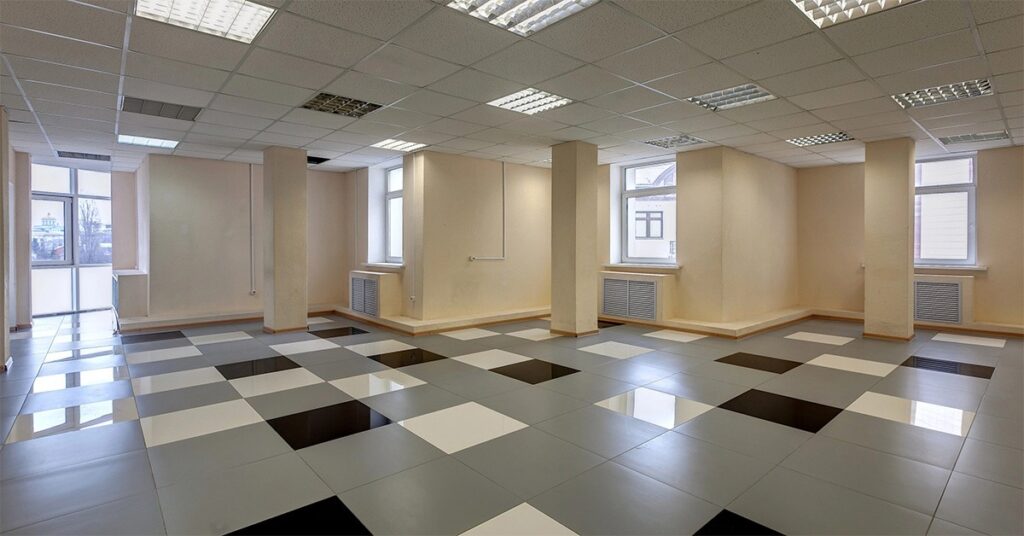
The U.S. office vacancy rate declined to 17.6% in May from 19.4% one year ago, according to the most recent Yardi Matrix national office report.
While the vacancy rate appears to be in decline, the general office sector may not be improving in a meaningful way. Yardi Matrix reports that office utilization has increased little during the past year. The corporate security firm Kastle Systems International reports that office attendance has remained at about 55% for the past few years.
Yardi Matrix writes that the core problems facing the office sector — including hybrid work and the declining number of white-collar jobs — have persisted, making the chances of a sustained decline in vacancy rates low. The company estimates that since 2024, 19.4% of office space transactions (based on square feet) were for properties in distress, usually suffering from high vacancies or financial problems or both.
Properties in urban centers are being hit even harder, with 34.6% of office transactions in commercial business districts (CBDs) considered distressed, compared to 24.5% in urban areas and 12.1% of suburban areas.
The average size of a distressed transaction has doubled, from 100,000 square feet before the COVID-19 pandemic to 200,000 square feet today. Yardi Matrix explains that larger properties are more vulnerable because they are less flexible and have greater difficulties handling the swings in demand.
Properties in CBDs have also struggled to maintain their value as flight to quality has persisted. Since 2024, 73% of properties sold in CBDs, with two or more sale prices for comparison, were discounted. At the same time, only 48% of urban properties and 42% of suburban transactions were discounted.
Another drag on CBD office space is the decline in white-collar jobs in city centers. Office-using sectors of the labor market — which include financial activities and information services — have lost a combined 18,000 jobs in May, according to the Bureau of Labor Statistics.
The one bright spot in this group was professional and business services, which gained 6,000 jobs during the month. In the past year, office-using sectors have lost 170,000 jobs nationally.
Seattle is one of the cities where the commercial real estate market is feeling the pain from the compound impact of hybrid work and mass layoffs in the technology sector. Spear Street Capital is in negotiations with Blackstone subsidiary Perform Properties to buy Seattle’s 44-story U.S. Bank Center for $280 million. The price is a 54% discount from the $612 million Blackstone paid for the building just seven years ago in 2019.
Among the 25 top metropolitan areas Yardi Matrix analyzed in the report, Austin, Texas, suffered from the highest CBD vacancy rate in May at 24%, followed by San Diego at 23.6%. Detroit, Houston, San Francisco and Seattle all posted 23.3% vacancy rates.
San Francisco saw its vacancy rate fall 520 basis points year over year, the most of any city in the report. The city’s office vacancy rate peaked at 29.3% in January 2025.