One of the safest bets going this week is that the Federal Reserve will hold interest rates steady when the clock strikes 2:00 on Wednesday.
So sure are investors on this course of inaction that CME FedWatch assigned the odds of a Fed rate hold at 100% as of Monday afternoon.
“Higher energy prices have clouded the disinflation outlook, raising the risk that inflation expectations drift higher,” explained Sam Williamson, senior economist at First American Financial Corp., in commentary shared with Scotsman Guide. “At the same time, softer hiring and consumer spending leave growth more exposed if the shock persists.”
Noting that the market-implied monetary path now calls for no rate cuts at all in 2026, Williamson sees two distinct policy possibilities playing out in the months ahead.
“Oil-market disruptions could fade, reopening the case for cuts, or the shock could begin to weigh more visibly on real incomes, hiring and output growth,” he observed. “Until that picture becomes clearer, markets are no longer treating easing as the default path.”
Will Powell step down?
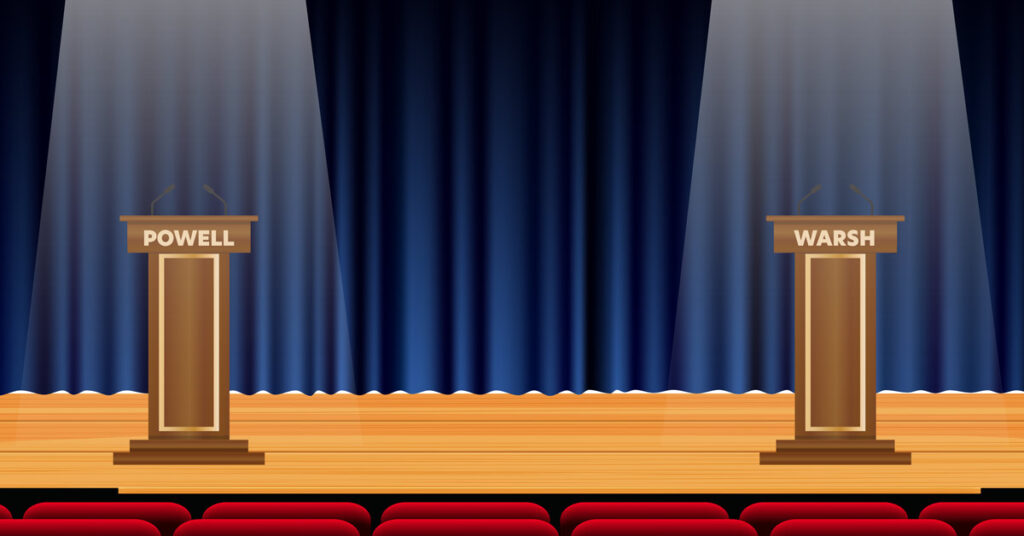
This week’s Federal Open Market Committee (FOMC) meeting will likely be Jerome Powell’s last as Fed chairman. His chair term expires May 15, but congressional opposition to a Department of Justice investigation of the top central banker had threatened to delay a Senate vote on Powell’s likely successor, Kevin Warsh.
On Friday, U.S. Attorney Jeanine Pirro announced that her office was dropping the federal probe into Powell’s handling of a costly renovation of the Fed’s headquarters. That prompted Sen. Thom Tillis, R-N.C., to announce his intention to lift his blockade of Warsh’s confirmation.
“I have been clear from the start: the U.S. Attorney’s Office criminal investigation into Chair Powell was a serious threat to the Fed’s independence, and it needed to end before I could support Kevin Warsh’s confirmation,” Tillis wrote in a statement issued Sunday.
The outgoing North Carolina senator, who holds a seat on the powerful Senate Banking Committee, added that he is taking the DOJ at its word that the Powell investigation is closed and only a referral from the central bank’s Office of Inspector General would reopen it.
“With these assurances, I look forward to supporting Kevin Warsh’s confirmation,” Tillis stated. “He is an outstanding nominee, and it is time for the Federal Reserve to move beyond this distraction and return its full attention to its mission.”
The Senate Banking Committee has scheduled a vote for Wednesday morning — just hours before the FOMC meeting concludes — on whether to advance Warsh’s nomination to the full Senate.
Should Warsh be installed prior to the FOMC’s June 16-17 meeting, the only remaining question for Powell is whether he will choose to retire or remain on the Fed’s Board of Governors for the duration of his 14-year term, which expires in 2028.
Powell hasn’t tipped his hand regarding his intentions, adding a layer of drama to his post-meeting press conference Wednesday.
“I wouldn’t say it’s a slam dunk right now,” Deutsche Bank Senior Economist Brett Ryan said of Powell’s chances of stepping down, according to Bloomberg. “Pirro kind of left open the possibility of taking up the case again, and that may give Powell some pause in terms of leaving his board seat.”
Monetary tensions
Besides Powell’s future employment plans, his press conference will be closely parsed for clues as to what degree the FOMC is “looking through” energy supply shocks and inflation pressures stemming from the ongoing war in Iran.
In commentary published Friday, a team of Wells Fargo economists, led by Tom Porcelli, noted that “the Fed’s dual mandate remains in tension,” referring to the central bank’s charge of promoting stable consumer prices and maximum employment.
Porcelli and company expect both headline inflation to strengthen in the near term and “hiring to slow further in coming months as renewed geopolitical uncertainty restrains labor demand.”
With those concerns in mind, the Wells Fargo economists believe Powell will stress a patient approach to navigating heightened uncertainty — but they still think the FOMC will deliver two quarter-point rate cuts this year, though not until September and December.
Williamson, the First American economist, noted that the housing market, as “one of the economy’s most rate-sensitive sectors,” will be watching closely for signs of whether future rate easing will help overcome widespread economic anxiety to unlock pent-up demand.
“For homebuyers, the question is not just whether rates fall, but why — that is, whether falling rates reflect improving affordability and stability or signal a deteriorating economic outlook that makes households more cautious,” he commented.