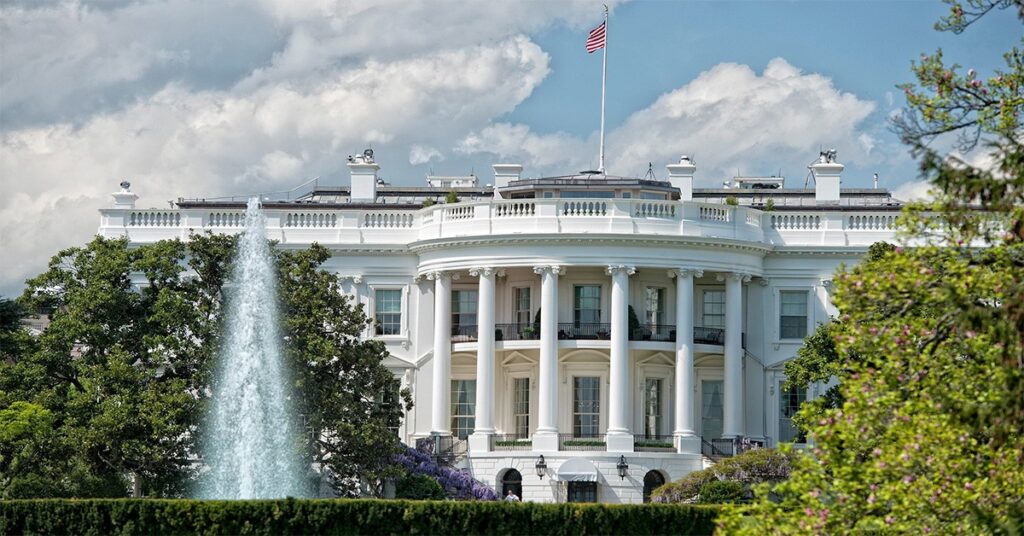
Stephen Miran is resigning from his role as chair of the White House Council of Economic Advisers (CEA), from which he had been on leave since September, to continue serving in his role as a Federal Reserve governor, a turn of events first reported by Barron’s.
With President Donald Trump naming Kevin Warsh as his choice to replace Jerome Powell as Fed chair when his term expires in May, the length of Miran’s tenure on the board depends on whether Powell serves out the rest of his governorship through 2028, as Scotsman Guide explained on Monday.
The unexpired term of Adriana Kugler that Miran stepped into in September technically ended last weekend, but Miran can legally continue serving until a replacement is installed. A formal nomination of Warsh has not been sent to the Senate by the White House yet.
But the news that Miran had resigned from the CEA follows his receipt of a letter sent and signed by all 11 Democrats serving on the Senate Banking Committee, demanding his resignation from the CEA amid their perception he intended to fill both roles indefinitely.
Miran testified during his confirmation process that there was no need for him to resign from his role at the CEA because the expired term he was confirmed to complete was only about four months long. The Senate Democrats on the Banking Committee pointed out that window had closed.
They were also harshly critical of Miran’s performance at the Fed thus far, citing various speeches and his voting record on the Federal Open Market Committee (FOMC) that the senators said made him “appear beholden to the President while he controls your future employment at the CEA.”
“We therefore request you put our Nation’s economic well-being and the public’s trust in the Federal Reserve over your political ambitions and the President’s personal interests and immediately resign from the Federal Reserve,” their letter concluded.
The White House confirmed Miran’s resignation from the CEA to numerous media outlets late Tuesday, leaving Miran now just in the roles of Fed governor and voting member of the FOMC. In the latter role, he has consistently voted for larger rate reductions than his fellow policymakers.
The White House had not responded to Scotsman Guide’s request for comment by the time of publication.
Miran followed three consecutive votes for jumbo 0.5% rate cuts in September, October and December with a vote for a 0.25% cut last week, when the Fed ultimately left the federal funds rate unchanged at its target range of 3.5% to 3.75%.
As Scotsman Guide has reported, Miran firmly believes that the bloated balance sheet of the Federal Reserve reflects a state of “regulatory dominance” in the economy, the unwinding of which in the financial sector is a priority for Miran. In November, he said this “often underappreciated overlap” impinges on the Fed’s ability to transmit monetary policy.
Compared to his colleagues, Miran sees a lower threshold for a neutral policy stance at the Fed, at which its benchmark interest rate neither helps nor hinders economic output, once the inflationary effects of regulation are let out of the economic system. The president signed a signature executive order at the start of his second term, “Unleashing Prosperity Through Deregulation,” which requires cutting 10 regulations for every one regulation added.
Miran said last month during a speech in Athens, Greece, that at the Trump administration’s pace of deregulation in 2025, “30% of the regulatory restrictions in the code of federal regulations will be eliminated by 2030, though this may prove to be an underestimate.” In that speech, he also described regulations as an “infinite tax on supply,” underscoring market distortions he sees as direct results, from home building to the rise of private credit.
What may have charged up Democratic senators to insist on Miran’s formal separation from the White House, though it was not mentioned in their letter, is Miran’s recent dismissal of widely held concerns that U.S. central bank independence is under attack.
Also in Athens, Miran responded to a moderator’s question about international partners’ concerns about the loss of Fed independence raising broader questions about the standing of the U.S. dollar.
“I think that’s a story that probably generates a lot of clicks, but I don’t think it’s a story that has a lot of meat on its bones,” responded Miran, adding that “the use of the dollar internationally has been fantastic.”
If Powell retains his governorship when his term as chair ends in May, Warsh would replace Miran on the seven-member board.
Powell recently disclosed a federal criminal investigation against him and the Fed, concerning congressional testimony he made last summer about costs overruns on an ongoing renovation of the Fed’s headquarters. Powell alleged the probe was being used as a pretext to target the Fed for setting benchmark interest rates higher than President Trump’s preference.