
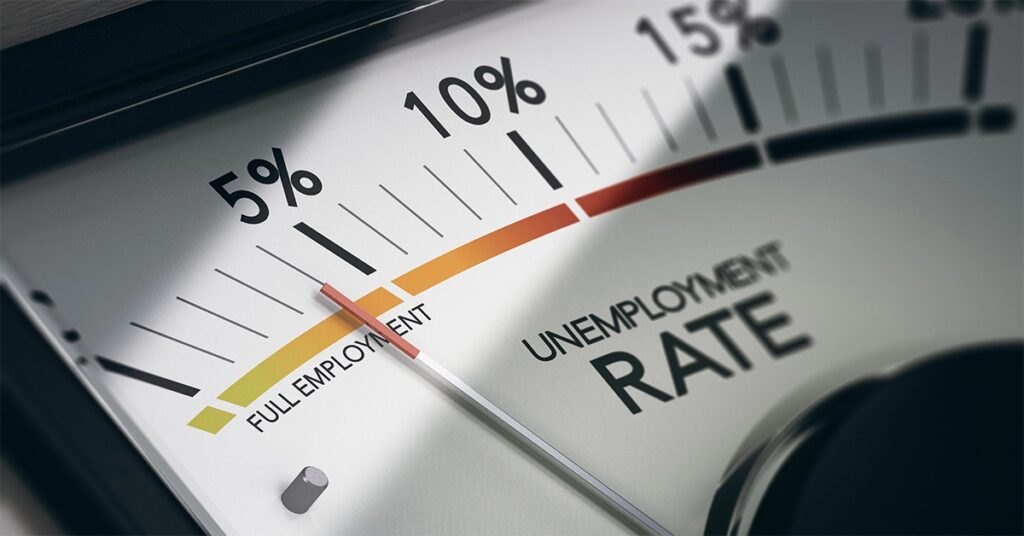
The unemployment rate continued to rise in November even as that month’s payroll gains beat consensus estimates, new government data shows.
Shutdown-delayed reporting from the U.S. Bureau of Labor Statistics reveals employers added 64,000 jobs in November after shedding 105,000 positions in October.
About 700,000 more people were jobless in November than the same month last year, sending the unemployment rate to 4.6%, the highest level in four years.
Economists polled by FactSet had predicted just 40,000 jobs added in November, though they forecast a steady unemployment rate of 4.4%.
Sam Williamson, senior economist at title insurance giant First American Financial Corp., said “the picture of the labor market remains mixed after today’s jobs report,” in a statement shared with Scotsman Guide.
He attributed October’s job losses to the Trump administration’s implementation of a deferred-resignation program to shrink the federal workforce, which cut employment by as much as 162,000 positions, per Williamson’s estimate. More than 270,000 federal jobs have been lost over the year.
A belated September jobs report showing 119,000 job gains that month was the last government jobs report policymakers at the Federal Reserve had in hand when they voted to lower the federal funds rate by 0.25% last week, for the third consecutive meeting.
The employment figures released Tuesday included a downward revision to 108,000 job gains in September, which the 105,000 job losses in October effectively offset. The unemployment rate was 4.4% in September, up from 4.3% in August and 4.2% in July.
Mike Fratantoni, chief economist at the Mortgage Bankers Association (MBA), described the rise in unemployment as “the most significant news” from Tuesday’s report. He noted that most November job gains were concentrated in health and social services and construction.
“The net is that the job market is softening more rapidly than markets had anticipated, but in line with MBA’s forecast,” wrote Fratantoni in remarks shared with Scotsman Guide.
Fed officials who have voiced support for additional easing have cited concerns of intensifying weakness in the labor market that could quickly spiral into mounting job losses. Proponents of a rate-cut pause cite elevated inflation and stabilizing labor conditions.
Forward-looking projections released in conjunction with last week’s decision revealed Fed officials’ estimates of the nationwide unemployment rate peaking at 4.5% at the end of 2025, before declining through 2026.
Those projections include median estimates of just one quarter-point rate cut next year.
The newly released jobs figures complicate those projections. A December employment summary is scheduled to be published on Jan. 9, ahead of the Fed’s next policy meeting at the end of January, which will shed light on whether more aggressive easing is called for.
Some in the housing industry have cited economic headwinds as a stimulant to increased home sales activity and mortgage loan production next year, should a broader downturn cause mortgage rates to fall substantially.
Forecasts by economists at the MBA, Zillow, Realtor.com and Redfin all project mortgage rates remaining in their current low-6% range for 2026.
“For the 2026 housing market, it is going to be a tug of war between the labor market and the mortgage market,” according to Lisa Sturtevant, chief economist of multiple-listing service Bright MLS, sharing her reaction with Scotsman Guide.
“Cooling economic conditions are likely to lead to lower mortgage rates in 2026,” she said, while adding that job market anxiety among workers “could temper housing demand, offsetting the benefits of lower rates.”