
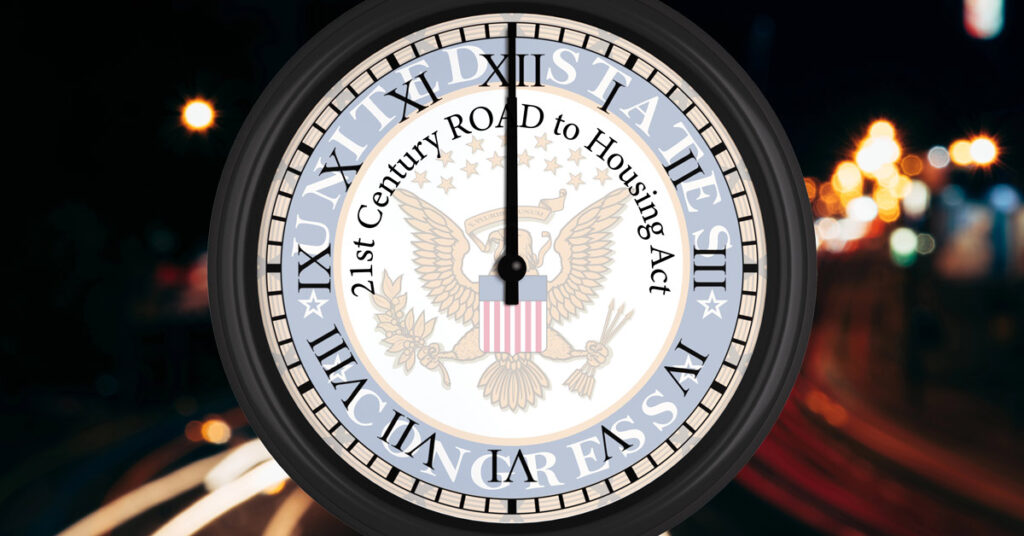
The 21st Century ROAD to Housing Act — a bipartisan housing reform bill awaiting President Donald Trump’s signature — will become law at midnight tonight unless he signs or vetoes it first.
On Friday morning, the president made his intentions clear in a social media post.
“I will not sign the Housing Bill, which has been fully approved by Congress and sent to the White House, in PROTEST over the fact that the United States Senate is not capable of passing THE SAVE AMERICA ACT,” wrote Trump on Truth Social, referring to a controversial bill that would establish voter ID requirements for federal elections.
Trump did not say he would veto the housing legislation, suggesting he will simply let it become law, barring an eleventh hour change of mind.
The housing and mortgage industries say that fast-tracking construction of single-family homes through regulatory relief and permitting reforms — which the ROAD Act was drafted to do — is a primary way to deliver home price relief to consumers amid structural supply shortages keeping prices elevated.
Other provisions of the housing package will expand small-dollar mortgage liquidity and modernize guidelines for the production and financing of manufactured housing, revitalizing a dormant pathway relied on by first-time and low-to-moderate income buyers to access homeownership.
“When you lower construction costs and expand financing access at the same time, you’re not making a marginal improvement,” said Shawn King, head of national sales and co-founder of Arrive Home, a downpayment assistance network that often partners with government agencies. “You’re changing the economics of the entire category.”
The political economics of a White House bid to hold up the housing bill in exchange for cooperation on voter ID requirements have not shifted, however, since the president abruptly canceled a signing ceremony for the housing legislation in late June.
After the bill passed with overwhelmingly bipartisan majorities in the House of Representatives and Senate, Republican Speaker of the House Mike Johnson of Louisiana delivered the bill to Trump for his signature on June 29, saying it would become law with or without his approval.
Legislative procedure says presidents have 10 days, excluding Sundays, to sign or veto legislation sent to their desk for signature. That countdown ends at 12 a.m. EDT on Saturday for the housing bill, for which lawmakers have enough votes to override a presidential veto.
“Enactment of the Road to Housing bill into law will be a major bipartisan accomplishment and great news for American home buyers and renters stressed by housing affordability challenges,” said Scott Olson, executive director of the Community Home Lenders of America, in a statement shared with Scotsman Guide on Friday.