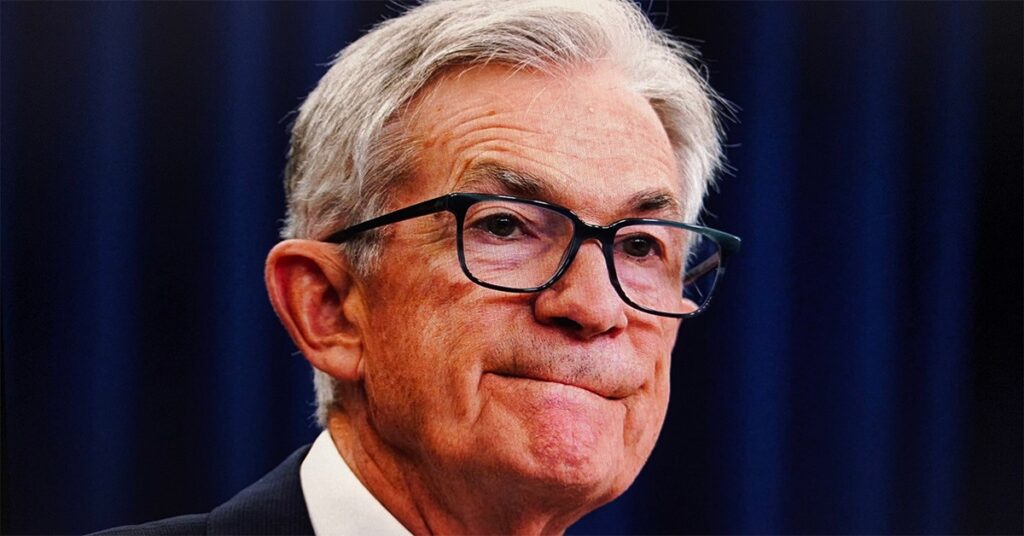
Jerome Powell, the former Federal Reserve chairman, made headlines this spring when he announced that he would not be stepping down from the board of the U.S. central bank when his chair term expired in May.
The move had limited historical precedent. Proponents of the decision saw Powell, whose term as governor expires Jan. 31, 2028, as safeguarding Fed independence, while critics viewed it as a political action to prevent President Donald Trump from nominating a replacement.
“I will leave when I think is appropriate to do so,” Powell said in April during his final Federal Open Market Committee (FOMC) press conference. Powell cited “legal assaults” by the Trump administration as impinging on the Fed’s ability to conduct monetary policy “without taking into consideration political factors.”

Powell specifically noted that his decision had “nothing whatsoever to do with verbal criticism” from administration officials, but was solely driven by legal actions being taken against the central bank.
Last week, Trump and White House lawyers renewed their efforts to unseat Fed Governor Lisa Cook over unproven allegations of mortgage fraud, after the Supreme Court in late June blocked a first attempt at doing so.
A letter to Cook signed by Dan Scavino, the White House’s deputy chief of staff, said the president “has determined that there is reason to believe” the allegations “constitute cause to remove you from your position on the Board of Governors of the Federal Reserve.” The letter gave Cook 21 days to respond.
Cook’s attorneys Abbe Lowell and Norm Eisen said in a statement Friday that there is “no valid cause for removing Governor Cook,” calling the White House’s move an attempt to “interfere with the independence of the Federal Reserve.”
Earlier this year, the Department of Justice dropped a criminal probe into Powell linked to renovations of the Fed’s main office building after a federal judge quashed grand jury subpoenas in the matter. The judge said the DOJ’s threat of a criminal probe was designed to “harass and pressure” Powell into either lowering interest rates or resigning.
Powell and the administration are now awaiting the results of an inquiry by the Fed’s Office of Inspector General, an internal watchdog group, into the cost overruns for the renovation project.
While the former chair said he received assurances from the Justice Department that its investigation would not be reopened unless the inspector general report results in a criminal referral, Trump previously threatened to fire Powell if he did not resign his seat on the board following his term as chair.
The combination of renewed legal pressure on Cook and the timing of competitive midterm elections in November have the potential to delay a Powell replacement even further, pending the outcome of the cost-overruns inquiry and the administration’s handling of those findings.
Republicans, who hold a slim 53-47 majority in the U.S. Senate, are narrowly favored to maintain their majority in the upper chamber, polls indicate.
If Democrats flip the Senate, however, the White House may struggle to win Senate confirmation for a Powell replacement when his governorship ends in early 2028, should Powell decide to stay on through the end of his term. Unless they resign, Fed governors can continue serving past the end of their term until a Senate-confirmed replacement is installed.
While Powell has not publicly addressed the inspector general inquiry or legal developments at the Fed since stepping down as chair, he noted during his final FOMC presser that “ongoing threats of additional such action” also factored into his decision to remain on the board.
Of the seven current governors, three were nominated by Trump, including Michelle Bowman and Christopher Waller during his first term, and the board’s newest member and chair, Kevin Warsh. Lisa Cook, Michael Barr and Philip Jefferson were nominated for their respective 14-year terms by President Joe Biden.
Powell, meanwhile, was initially a nominee of President Barack Obama who was renominated for the chair role by Trump in 2018. Trump soured on Powell almost immediately after tapping him for the top job after the Fed raised rates in 2018, which the president perceived as undercutting his economic policies.