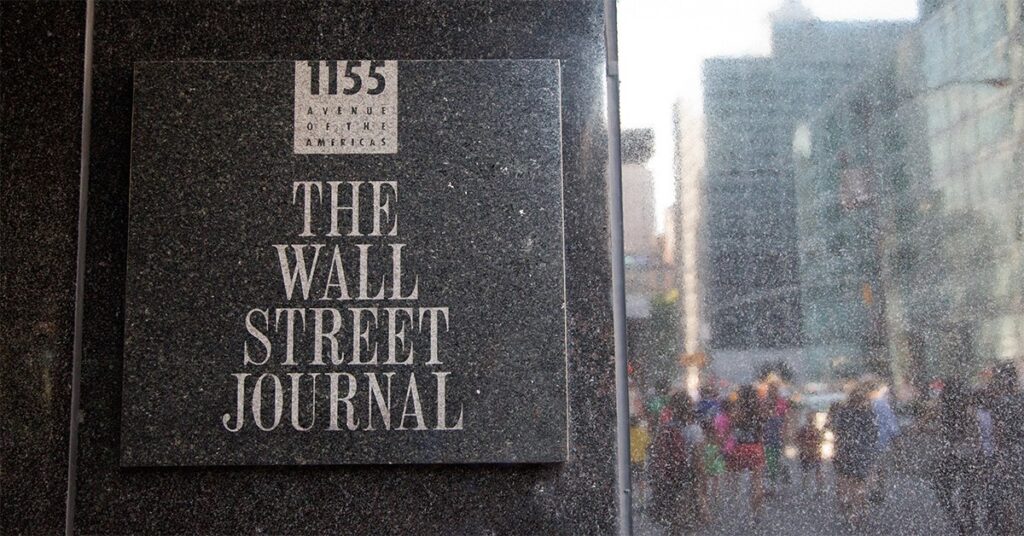
In fewer than 250 words, Bob Broeksmit took on the editorial board of The Wall Street Journal on Thursday to rebut a widely panned column printed earlier this month concerning a $603 million hedging loss reported by United Wholesale Mortgage (UWM).
“UWM Is a Government Mortgage Canary,” read the title of the Journal’s editorial.
The president and CEO of the Mortgage Bankers Association (MBA) said that “seeks to link two unrelated stories under one alarmist headline,” taking issue with the Journal’s insinuations that the second-quarter loss by one of the country’s largest mortgage lenders was symptomatic of broader distress on government mortgage portfolios insured by the Federal Housing Administration (FHA).
“That is the product of one company’s own misjudged bet on rates, not any indication of poorly underwritten FHA mortgages,” wrote Broeksmit.
FHA distress explained
FHA delinquencies have risen steadily since late 2025 as congressionally mandated emergency loss mitigation programs authorized during the COVID-19 pandemic expired.
As of March, FHA borrowers represented 55% of all seriously delinquent home loans nationwide — a record share — according to ICE Mortgage Technology, landing 164,000 higher compared with March 2025.
Some portion of that increase has also been driven by temporary changes to delinquency reporting by Ginnie Mae, a government-run mortgage aggregator and issuer, for distressed borrowers working through new servicing procedures following the expiration of the pandemic-era programs.
Ginnie Mae’s single-family FHA serious delinquency rate was 6.14% as of June 2026, according to the agency’s latest reporting, which includes loans 90 days or more past due or in the foreclosure process.
“While the increase in FHA delinquencies reflects the challenges of high housing costs, slower home price appreciation and a slower pace of job growth, it is also due to the orderly unwinding of congressionally mandated Covid-era forbearance programs,” said Broeksmit in his letter.
Scotsman Guide has previously reported that many FHA borrowers had come to rely on the emergency program on a repeat basis, stacking partial claims against their properties as the relaxed loan modification programs allowed.
Equity erosion fueled by the repeat-claim process has been a driver of higher foreclosure rates through 2025 and the first half of 2026, experts say, compounded by rising homeownership costs like property taxes and insurance.
Higher volumes of partial claims from 2023 through 2025 — as opposed to immediately during or after the pandemic — underscore how the program had become a mechanism for addressing broader affordability issues impacting distressed FHA borrowers.
“We were never allowed to ask a borrower if they even have a job, and so then they would fall behind again in four or five months and maybe they’d make one payment, maybe they’d make two, many didn’t make any,” said Donna Schmidt, a longtime servicing veteran, earlier this year. Some borrowers had up to five partial claims.
However, Broeksmit sought to clarify to the Journal’s editors that the FHA’s Mutual Mortgage Insurance Fund, which backstops those underwritten balances, does not face imminent solvency concerns — and in fact is capitalized well above mandated thresholds.
“Elevated delinquencies don’t indicate a program in distress,” he said.
Where UWM fits in
While a bad bet on interest rates ultimately forced UWM to ink a $1.5 billion deal for rescue financing — while also producing a shareholder lawsuit alleging violations of federal securities law — Broeksmit portrays that as activity isolated to one company, not indicative of broader industry pain.
Nonbanks like UWM have originated an overwhelming portion of home loans produced since depository banks stepped back following the 2008 financial crisis and the subprime mortgage meltdown that precipitated the economic collapse.
The latest Ginnie Mae reporting indicates nonbanks originated roughly 86% of all FHA loans in June, compared to nonbank origination shares of about 71% for Fannie Mae loans and about 68% for Freddie Mac loans.
“Conflating a single firm’s hedging misstep with FHA’s program-wide performance makes for an eye-catching headline,” concluded Broeksmit, “but what you describe neither informs readers about the health of the FHA program nor the strength of the independent mortgage bank sector.”