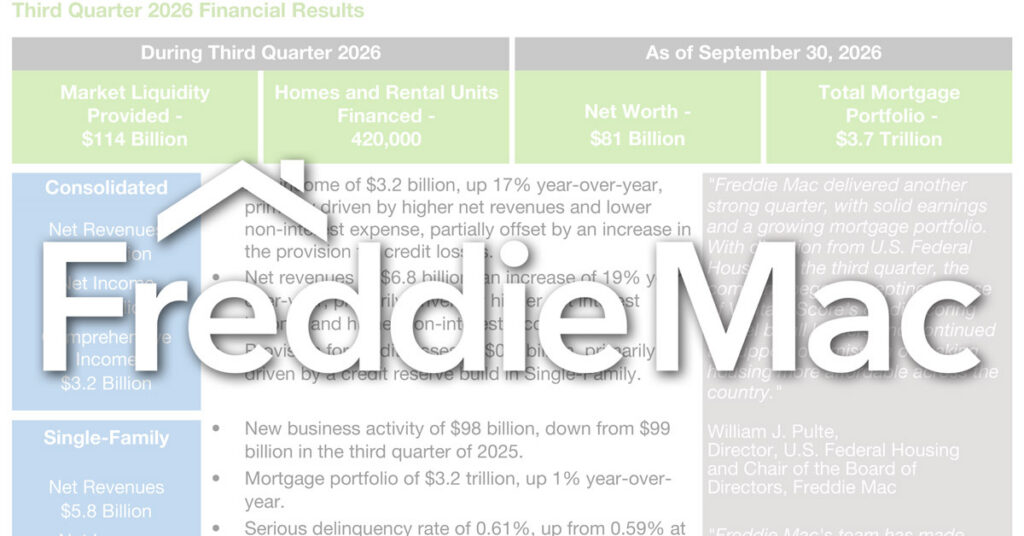
Freddie Mac reported third-quarter net income of $3.2 billion on Thursday, representing a 17% year-over-year gain despite a contraction in new business activity.
The government-sponsored mortgage investor saw new single-family activity decline more than 10% from the second quarter to $98 billion, causing single-family net income to fall by 17% from July through September.
But company revenues expanded to $6.8 billion, up almost 14% over the quarter and nearly 19% higher than a year ago. Single-family net income was 16% higher year over year, while single-family net revenues of $5.8 billion reflected 19% annual growth.

“Through the first three quarters of 2026, net income has increased 34% compared with the same period a year ago,” said Kenny Smith, CEO of Freddie Mac, in a statement accompanying Thursday’s earnings release.
The company said higher third-quarter earnings were driven by increased net revenues and lower noninterest expenses. Those were partially offset by increases in the provision for credit losses, stemming from projections for future increases in mortgage rates.
Building those credit reserves led Freddie to record a $685 million provision for credit losses during the third quarter compared to a $118 million provision the year prior. Multiple years of elevated mortgage rates, which are projected to remain above 7% through next year, have reinforced a yearslong trend of structurally lower refinance demand and multidecade lows in housing turnover.
“Higher projected mortgage rates increase the period over which we are exposed to potential credit losses by extending the expected life of the loans due to lower prepayments,” said Jim Whitlinger, chief financial officer at the firm, in prepared remarks during an earnings call with investors.
Fannie Mae reported third-quarter earnings Wednesday that reflected a similar retreat in production to year-ago levels, despite resilient growth in revenue and net income.
Improvement or further deterioration in the rate environment will be a primary driver of broader sector performance heading into next year, as mortgage rate lock-in effects narrow the addressable market of existing borrowers and many typical first-time buyers remain priced out of the market.
The Mortgage Bankers Association and Fitch Ratings have recently flagged looming liquidity risks for the industry amid years of low production volumes.
Mortgage rates for typical 30-year home loans have been between 6% and 8% since the third quarter of 2022, but half of existing mortgages carry rates below 4%. Payment pressures have increased for borrowers who purchased during the higher rate environment of the past four years.
“Still, each year from 2024 to 2026 saw small refinance rallies as rates temporarily fell close to 6%, and Fitch does not expect operating results to similarly benefit in 2027,” said the ratings firm in a sector analysis published last week.
Across Freddie Mac’s new single-family activity, refinance production fell by half to $18 billion in the third quarter, comprising less than 19% of production share, the company said. That compares to about 33% refinance share in the previous quarter.