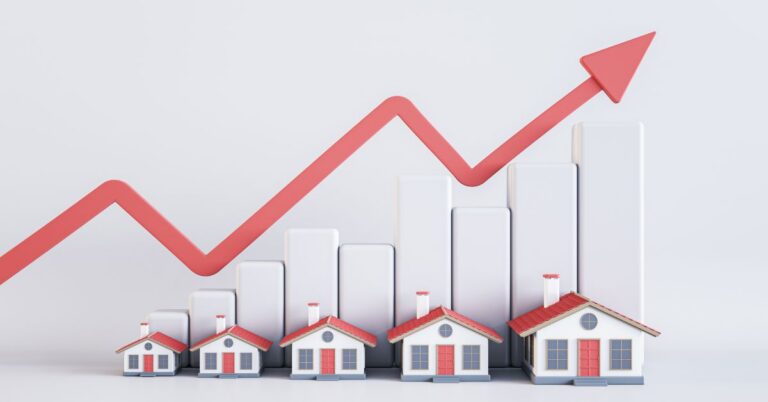

Mortgage affordability improved, albeit slightly, for the seventh consecutive month in December, new data released Thursday by the Mortgage Bankers Association (MBA) shows.
According to the MBA’s Purchase Applications Payment Index, an income-sensitive measure of variations in new mortgage payments, the national median payment applied for by homebuyers seeking home loans last month decreased to $2,025 from $2,034 in November, down $102 or about 4.8% from a year ago.
Edward Seiler, associate vice president of housing economics at the MBA, attributed the consistent gains in affordability to lower mortgage rates and growth in household earnings.

“MBA expects that moderating home-price appreciation, combined with even lower mortgage rates, will continue to gradually ease affordability constraints and support increased housing market activity,” said Seiler in a statement accompanying Thursday’s update to the new-payment index.
Rising homebuyer purchasing power was further underscored in house price data published by title insurance provider First American Financial Corp. this week, showing that how much house typical consumers can afford to buy rose $36,000 annually in November.
“Income growth alone increased house-buying power by roughly $13,100,” said First American’s report, with another $23,500 lift in purchasing power stemming from mortgage rates that were about 0.57% lower in November than a year earlier.
But improvements in the economics of homebuying that may support increased housing market activity do not automatically translate to a closed loan — and the mortgage and housing sectors appear destined to continue knocking their heads against lackluster enthusiasm from prospective homebuyers sidelined by affordability concerns.
Survey results recently released by IPX1031, a subsidiary of title insurance provider Fidelity National Financial, indicated that 62% of respondents said purchasing a home in 2026 appears “unrealistic” — a sharp jump from 49% in 2025, driven by high costs and limited inventory.
Conducted in December, the survey of 1,003 adults underscores how mortgage rates are only one aspect of broader affordability challenges quashing homebuying sentiment. More than one-third of respondents said high home prices and the associated downpayments were the primary barrier to buying, while 30% said general affordability was their key concern.
A growing borrower divide
Outside of homebuying, broader economic pessimism worsened to start the year, according to The Conference Board, which published its widely cited consumer confidence index on Wednesday. The index fell to its lowest level since May 2014 in January, even lower than during the depths of the COVID-19 pandemic.
What this suggests is that mortgage and housing professionals have a steep hill to climb in convincing prospective homebuyers that the consistent improvements in purchase affordability showing up on paper can translate into attainable homeownership.
Behind the headline statistic of December’s 4.8% annual decline in median mortgage application payment amounts, the MBA’s index shows that not all borrower segments are seeing the same degree of improvement in mortgage affordability, with December’s improvements weighted toward wealthier borrowers.
Borrowers applying for conventional mortgages backed by Fannie Mae and Freddie Mac, which typically require a 20% downpayment and therefore do not include mortgage insurance as a portion of monthly mortgage payments, saw applied-for mortgage amounts decline 4.3% from a year ago and 1.3% from November.
Borrowers applying for government mortgages insured by the Federal Housing Administration (FHA), which typically accepts downpayments as low as 3.5% and thus requires mortgage insurance, saw applied-for mortgage amounts decline by 3.4% from a year ago, though they rose 1.4% from November.
What primarily separates FHA borrowers from Fannie-Freddie borrowers is the size of the downpayment they can raise, hence why more than 80% of FHA borrowers in any given year are first-time homebuyers.
The median downpayment for first-time buyers was 10% in 2015, up from 5% in 2013, according to data from the National Association of Realtors. For all buyers, the median downpayment rose to 19% in 2015 from 10% in 2013.
Consider, too, that multiple years of easing shelter inflation is “increasingly concentrated among higher-priced rentals, leaving many lower-cost renters with little relief,” according to a Realtor.com report published in mid-January.
“Many renters shopping for more affordable homes may not feel much change,” said Danielle Hale, chief economist at the listings platform, “because lower-priced rents have risen more since 2019 while the biggest markdowns have shown up at the high end.”
This helps to explain why around half of Gen Z and millennial renters who responded to an Experian survey in November, immediately preceding MBA’s most recent mortgage affordability report, said they believe they will not be prepared to purchase a home until 2029. Lack of sufficient downpayment funds were cited as a primary homeownership barrier by 67% of current renters, with high home prices cited by 66% of respondents.
Access to homebuying in the post-pandemic housing market has thus been defined by typical downpayments that rose 118% from the third quarter of 2019 to the third quarter of 2025 — rising with spiking home prices — erecting barriers to mortgage qualification beyond higher interest costs from elevated mortgage rates.
Average 30-year fixed mortgage rates for FHA loans were consistently 20 to 30 basis points lower than rates for conventional mortgages through the last several months of 2025, according to weekly application data from the MBA.
Seiler, the MBA economist, noted the association expects moderating home-price appreciation to continue in 2026. But with a supply shortage of affordable entry-level homes likely maintaining upward price pressure in competitive markets for starter-home price tiers, affordability gains for borrowers who need it most could be the slowest to arrive.