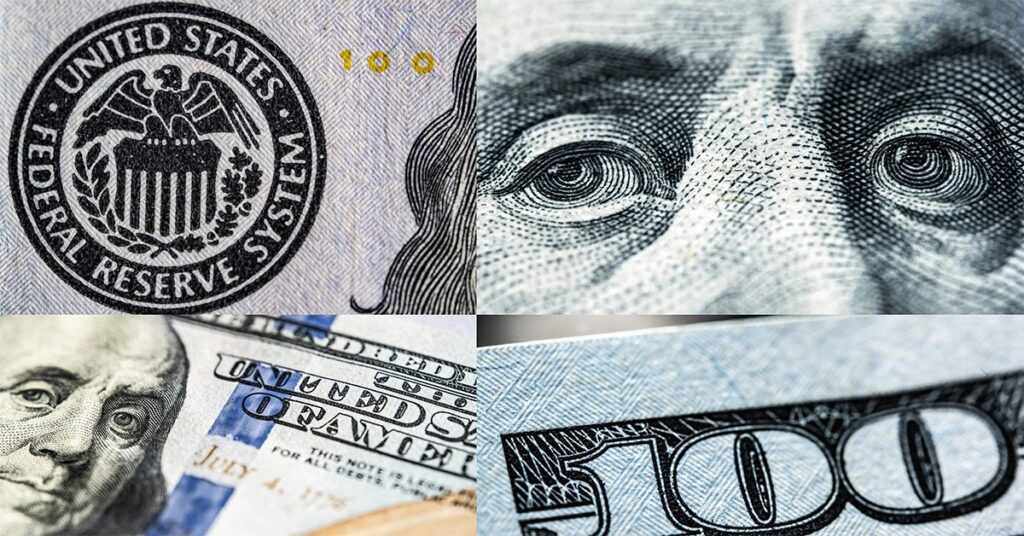
On the cusp of Halloween, the Federal Reserve avoided trickery, providing a potential treat for rate-weary mortgage borrowers.
Wednesday’s decision by the Federal Open Market Committee (FOMC) to hold interest rates steady following September’s quarter-point rate hike was expected by more than 90% of futures traders tracked by CME FedWatch.
Widely seen as a safe play by Fed policymakers ahead of November’s midterm elections — with another FOMC meeting on deck in December to close the books on 2026 — the rate hold represents a pause in the U.S. central bank’s fight against 3%-plus inflation.

“While uncertainty remains elevated owing, in part, to geopolitical developments, domestic spending has been resilient,” the Fed’s official policy statement read. “Productivity growth is strong, and capital investment is robust. Job gains have kept pace with the workforce, and the unemployment rate has changed little.”
The statement concluded: “Inflation remains elevated. The accumulation of more information will help the Committee determine the policy stance appropriate to ensure a timely return of inflation to the Committee’s 2% goal. The Committee will deliver price stability.”
The meeting produced dissents from Fed Governor Lisa Cook and Cleveland Fed President Beth Hammack, each of whom voted for a quarter-point rate hike.
The 10-2 vote to leave interest rates unchanged comes despite a pair of recent reports showing inflation trending in the wrong direction.
In September, the consumer price index registered 3.7% growth from a year ago, reflecting a 0.6% monthly gain. The producer price index, which measures supply-chain inflation, surged by 1.3% last month — its largest monthly gain since March 2022.
But the labor market also showed cracks in September, with U.S. employers adding just 29,000 positions.
Heading into the October FOMC meeting, Melissa Cohn, regional vice president of William Raveis Mortgage, expected no action from the Fed. In commentary shared with Scotsman Guide on Tuesday, she said the December decision will be closely tied to oil prices and how fixed-income markets digest October’s inaction.
“It all depends on how the bond markets react to the Fed’s decision this week, and what happens with oil prices,” Cohn said. “Domestic oil is above $100 per barrel. Brent is up at $115 per barrel. That’s wildly inflationary. The 10-year Treasury is below 5% for the first time in over a month, but at some point, the high rising oil prices are going to bite us.”
For Charles Goodwin, vice president of investor mortgage sales at Kiavi, the October decision matters less than the tone set by Fed policymakers in post-meeting remarks. In emailed comments Tuesday, Goodwin noted that bond markets had already priced in one Fed rate hike in either October or December.
“If the Fed holds but accompanies it with a hawkish tone, it could hurt mortgage rates more than a hold with softer language,” he said, with hawkish referring to language implying a more restrictive rate environment.
Goodwin believes a hawkish stance could leave 30-year mortgage rates hovering in the mid-7% range or higher.
On the flip side, “If there is a hold but with a softer tone, for example referencing a softer jobs report, we might see a relief rally in yields,” he added.