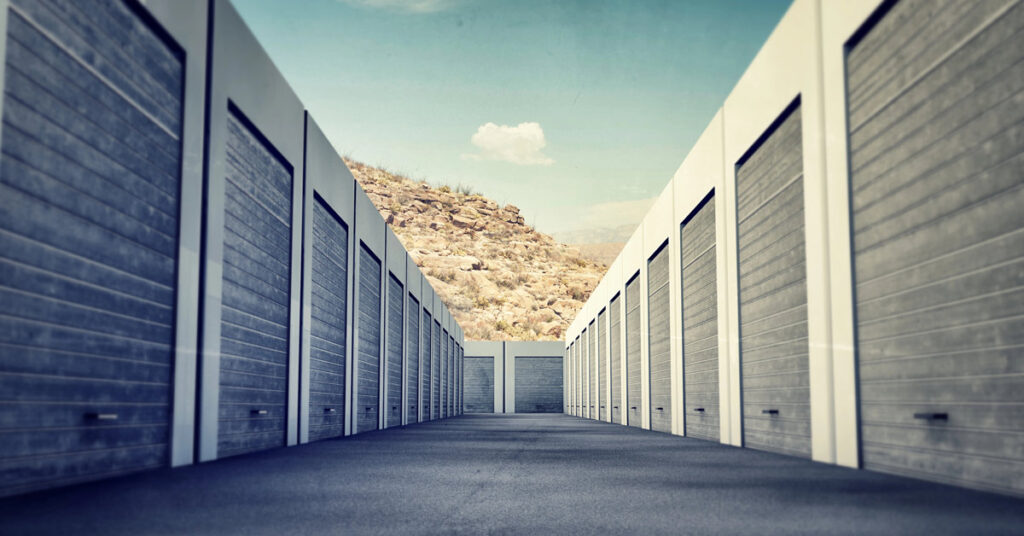
The self-storage sector is experiencing excess supply and flagging demand as U.S. migration slows and home sales fall, according to a report from Yardi Matrix.
Advertised rates in May declined nationally by an average of 1.8% year over year for both climate-controlled (CC) and non-climate-controlled (NCC) storage facilities. Yardi Matrix found that declining rates had moderated slightly in recent months after falling by an average of about 2% in March. The downturn is blamed on weaker housing turnover, less migration and constrained consumer confidence.
Most of the hardest-hit markets were in the Sun Belt, where demand was slowing just as new supplies of storage units were coming online across the southern United States. Florida was at the center of the downturn in May. Tampa, Fla., experienced the largest decline in prices, with CC storage rents dropping more than 6% year over year.

Tampa was followed by the Sarasota-Cape Coral area of Florida, where CC storage rents fell by more than 5%. Los Angeles was third, with rates down more than 4%; and Houston was next with rates declining about 4%. Both Houston and Los Angeles are feeling the impact of slowdowns in the number of new residents coming to the cities, which is putting increasing price pressures on storage facilities.
Among the 30 top metropolitan areas, advertised rates for storage units increased year over year only in Minneapolis and Indianapolis. Minneapolis led the way with CC unit rent increases of about 1% year over year. Indianapolis saw a CC unit rent gain of less than 1%.
Storage unit rates per square foot inched up nationally by 0.8% between April and May of this year. Yardi Matrix reports that rate increases are accelerating going into the busy summer leasing season. The industry, however, is still recovering from eight straight months of rent price declines between July 2025 and February 2026.
The strongest month-over-month rent increases in May were seen in Boston, which was up 2.1%; followed by Washington, D.C., with gains of 2%; and Indianapolis up 1.6%. Chicago and Nashville, Tenn., both gained 1.5%.
Phoenix was the only city recording a decline in month-over-month rental rates in May, with prices dropping a scant 0.1%. The cities of Detroit, San Diego and Seattle all registered no change.
The report also focused on the storage sector in Texas, home to some of the nation’s largest storage markets. The sector boomed in 2021 and 2022 as strong migration and home sales pushed up demand. This was particularly true in Austin, Texas, Dallas and San Antonio. Developers built aggressively, while investors and real estate investment trusts acquired smaller owners.
The current state of the storage sector has changed dramatically. Today, home sales have fallen to multi-decade lows, leaving many storage submarkets with too much supply and weak demand. Increased competition has pressured rents and investment returns.
In May, Texas advertised rental rates were down an average of 2.5% year over year, and down 13.3% from their 2022 peak levels. May’s rates were also 3.1% below storage rent levels from May 2020. While the Texas market appears to be stabilizing as new supply moderates, Yardi Matrix writes that recovery remains uneven and could take years in some areas.