
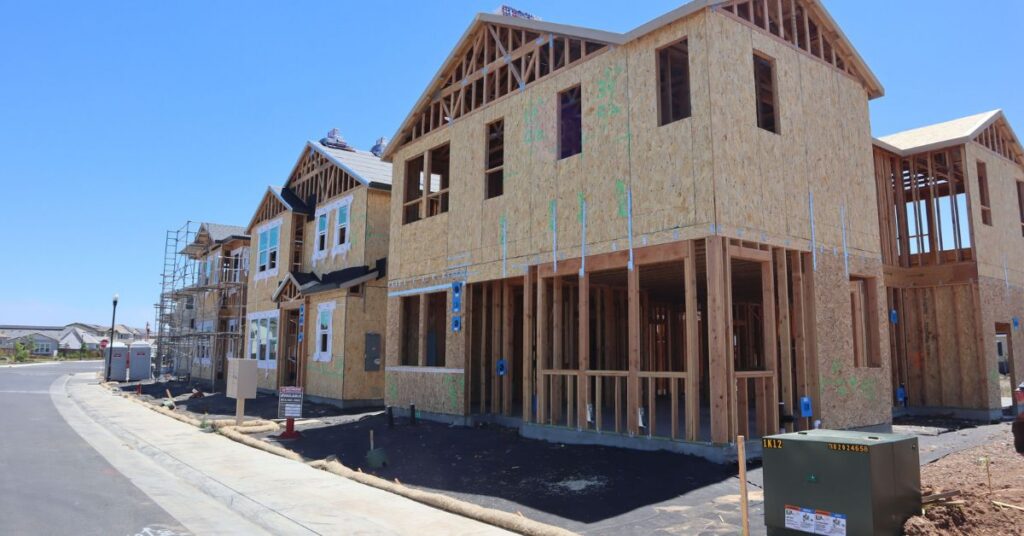
New-home sales declined in September on both a monthly and yearly basis as affordability pressures continued to weigh on homebuying demand.
Declining 0.6% from the previous month, the seasonally adjusted annual rate of 676,000 new-home sales was 5.3% lower than a year ago in September, the U.S. Department of Housing and Urban Development and Census Bureau said Tuesday, releasing their latest tallies.
That amounted to 56,000 homes sold last month, just 1,000 fewer than August. The pace of new-home sales in August was revised slightly lower to 680,000 from an initial estimate of 684,000.

“New-home sales were essentially unchanged in September, holding up better than expected even as mortgage rates rose,” said Odeta Kushi, deputy chief economist at title insurance giant First American Financial Corp., sharing her reaction to the data with Scotsman Guide.
That resilience — in the wake of multiple years of slow sales — will continue to be tested in the months ahead.
Higher rates drive falling sales
Since 2023, U.S. home builders have been partially offsetting persistent affordability challenges facing homebuyers with the heavy use of sales incentives like mortgage rate buydowns, closing cost assistance and price reductions.
Even though buyers of newly built homes can sometimes secure favorable upfront financing terms through lenders’ use of forward commitments, builders watching typical 30-years rates rise from about 6.7% to 7.5% during September nevertheless still felt the squeeze on borrowers and consumer sentiment.
The National Association of Home Builders (NAHB) reported earlier this month that sentiment among builders in the market for new-home sales deepened to more than 14-year lows in October. About 43% of survey respondents said they cut prices in October compared to 38% in September, already around multiyear highs.
“Builders are meeting buyers’ budgets with price cuts, financing incentives and smaller, more affordable homes,” added Kushi. “That is helping sustain sales, but it also shows how hard builders are working to keep buyers engaged.”
The drop-off in engagement during September was reflected in what the Mortgage Bankers Association said was the “chilling effect” of higher borrowing costs driving an 8% contraction in new-home purchase mortgage applications compared to August.
New-home sales outperformed in the Northeast and West, rising more than 20% on a monthly basis in the country’s smallest and second-largest new-home markets. Sales were down 17% from a year ago in the West, however, while rising 10% in the Northeast.
Midwest sales fell 7.3% over the month, landing 8% lower than a year ago, while sales in the dominant South were slightly lower year over year after retreating 6.6% in September. Sales of newly built homes nationwide remain about 3% lower year to date.
Construction woes expected to persist
“Looking ahead to the final few months of the year, demand is likely to remain subdued as buyers prioritize financial certainty and affordability,” said Sarah Bonnarens, director of economic research at the builder-focused data platform Zonda.
In commentary shared with Scotsman Guide, Bonnarens underscored the small pool of homebuyers positioned to reliably transact.
“Those with more financial flexibility, particularly at the higher end of the market, will remain better positioned to move forward,” said Bonnarens.
Analysis of the latest sales data published on NAHB’s website Wednesday confirmed the outlooks for sustained pressure on buyers and builders in the months ahead. Projections from the trade group’s chief economist, Robert Dietz, are pointing to a third consecutive year of declining single-family construction activity in 2027, he recently warned.
“Bond yields have recently eased, but the fundamental constraints on housing production remain,” said Dietz.
Completions of newly built single-family homes were down nearly 11% in 2026 as of September, the government said earlier this month, reflecting the more than 7% decline in single-family starts in 2025 compared to the year prior.
“With single-family construction already declining in 2026, the current environment raises more concerns for 2027,” Dietz said. He added that the outlook for monetary policy, interest rates and housing demand “will largely depend on the status of the Iran war, which may potentially intensify after the midterm elections.”