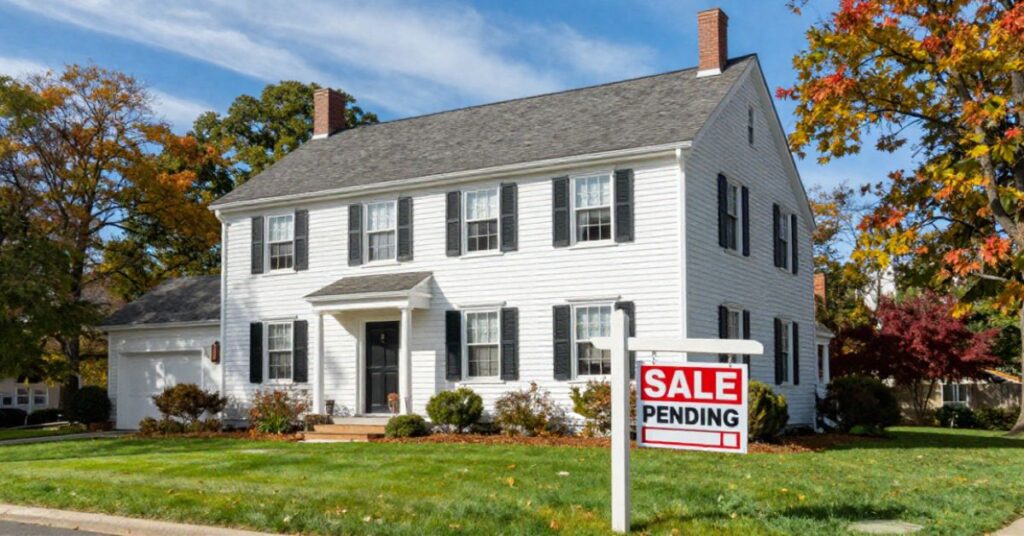
Pending home sales posted a second straight month of year-over-year growth in May for the first time since late 2024.
The National Association of Realtors (NAR) reported Wednesday that contract signings in May were 4.8% higher than the same month last year, adding momentum to the 3.2% annual growth recorded in April.
Gains were broad-based, with monthly and yearly increases recorded in all four major U.S. regions tracked by NAR. The figures signal resilient homebuying demand despite rising affordability pressures since the ongoing war with Iran began in late February.
“A late spring buyer rush — even with mortgage rates not budging — is an indication of pent-up housing demand and consumers’ acceptance of above-6% mortgage rates as the new normal,” said NAR Chief Economist Dr. Lawrence Yun in a statement.
Mortgage rates on typical 30-year home loans were above 6.5% through most of May, according to Mortgage Bankers Association data, as inflationary impacts of the Middle East conflict have accelerated in recent months. Mortgage rates began the year around 6%.
But by and large, affordability has improved for buyers across most U.S. markets this spring, particularly for those seeking mortgage loans to finance purchases. Mortgage rates spent last May around or above 6.9%, as volatility spiked in the aftermath of President Donald Trump’s “Liberation Day” tariff announcements.
The 1.4% monthly rise in April pending home sales gave way to a more robust 3.8% increase in May. Among the 50 largest U.S. metros, Kansas City, San Antonio and Minneapolis observed the largest annual spikes in contract activity last month, notching 20%, 15% and 14% increases, respectively.
“Homebuyers are proving more resilient than expected,” said Odeta Kushi, chief economist at title insurance giant First American Financial Corp., sharing her reaction to the updated contract data with Scotsman Guide. “The latest increase adds to a growing list of indicators suggesting that housing demand has firmed this spring.”
Pending sales provide an indicator of upcoming closed transactions, reported as existing-home sales by NAR on a monthly basis. The duration between pending contracts and completed sales can vary from a few weeks to a few months, with some pending contracts falling through and never translating to closed sales.
Other housing economists, while acknowledging spring momentum, have tempered their expectations for the second half of the year, however. Zillow recently reported that new listings were 4% lower than a year ago in May, while competing listings platform Realtor.com has reported that new listings were roughly 19% below May 2019 levels.
But even in inventory-constrained markets like the Northeast, sales pipelines filled last month at a pace that well surpassed expectations of just 0.8% monthly growth, according to economists polled by Reuters.
The Northeast and Midwest saw the sharpest monthly uptick in buying activity, rising 8.7% and 8.1% from April. They also posted the largest annual increases of 6.1% and 9.3%. In contrast, the South and West posted monthly increases of 1% and 0.7%, along with yearly increases of 3.3% and 1.2%, according to NAR data.
With Fannie Mae recently updating its housing forecast to present a bullish case for mortgage originations in the second half of the year, First American’s Kushi believes the higher financing costs that have sidelined many buyers have simultaneously stacked the bench.
“Pent-up demand remains significant after years of constrained affordability and limited inventory,” she said. “Instead, many households appear willing to move forward with purchases as inventory improves and the reality of higher-for-longer mortgage rates becomes more widely accepted.”